
Desserts
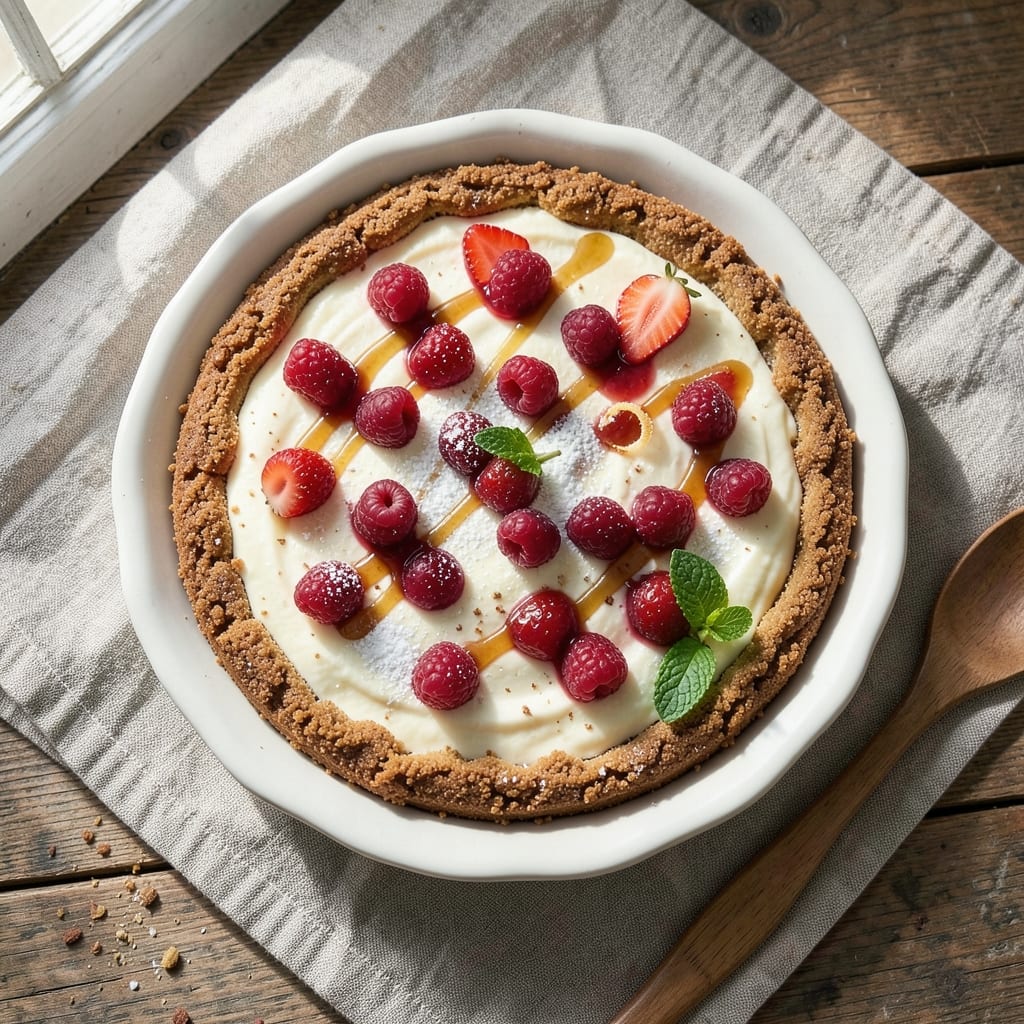
This eggless baked cheesecake recipe delivers the same creamy, crack-free perfection without a single egg in sight. The secret lies in a clever substitution of aquafaba—yes, chickpea brine—for structure, paired with a cornstarch slurry that mimics the binding power of eggs while keeping the texture impossibly smooth. I've perfected this method after years of testing, and the results speak for themselves: a dense, velvety center with a golden, set exterior that holds its shape beautifully.
The foundation begins with a buttery graham cracker crust that stays crisp even after baking, thanks to a chilled preparation method. For the filling, we blend cream cheese with sour cream and a touch of heavy cream to ensure richness, then thicken it with our eggless slurry. The water bath method is non-negotiable here—it prevents cracking while creating that signature silky texture that makes every bite worth waiting for.
What you'll end up with is a cheesecake that's creamy without being runny, rich without being heavy, and perfectly set without a single crack in sight. The crust remains crisp at the edges while staying tender in the center, creating the perfect contrast with each slice. This recipe proves that eggless baking doesn't mean sacrificing quality—just pure, velvety indulgence.
Perfect for special occasions or when you need a foolproof dessert that always impresses. The method scales beautifully for parties, and leftovers keep well in the fridge for up to four days. Let's get baking—your taste buds won't regret it.
Ingredients for baked cheesecake recipe eggless
Eight essential ingredients transform into a flawless, crack-free cheesecake—no eggs required.
| Ingredient | Amount | Notes |
|---|---|---|
| Graham Cracker Crumbs 🍪 | 2 ½ cups | Crushed fine, store-bought or homemade |
| Unsalted Butter 🧈 | ¾ cup | Cold, cubed for crust |
| Granulated Sugar 🍚 | ¼ cup | For crust sweetness |
| Vanilla Extract 🌿 | 1 tsp | Pure Madagascar preferred |
| Cream Cheese 🧀 | 32 oz | Full-fat, room temperature |
| Sour Cream 🥛 | 1 cup | Full-fat for richness |
| Heavy Cream 🥛 | ½ cup | Cold, for stability |
| Granulated Sugar 🍚 | 1 ½ cups | For filling sweetness |
| Cornstarch 🌾 | 3 tbsp | For eggless binding |
| Aquafaba 🌱 | ½ cup | Chickpea brine, fresh |
| Lemon Juice 🍋 | 1 tbsp | Freshly squeezed |
| Salt 🧂 | ½ tsp | Fine sea salt |
| Vanilla Bean Paste 🌿 | 1 tsp | Or 0.5 tsp pure extract |
The cream cheese is non-negotiable here—full-fat, room-temperature blocks from Kroger or Whole Foods work best. Avoid pre-whipped tubs; they're too airy. For the aquafaba, grab a canned chickpea brand like Goya—the brine should be clear, not cloudy. The cornstarch is your secret weapon; Bob's Red Mill is reliable. Chill all dairy components for at least 2 hours before mixing to ensure proper texture. The vanilla bean paste adds depth that extract can't match, but if you're pinched for time, pure extract works in a pinch.
No aquafaba? Unflavored applesauce at the same volume works surprisingly well, though texture may be slightly denser. Substitute Greek yogurt for sour cream (use full-fat) if needed, but the creaminess suffers slightly. For the crust, Oreos or Nabisco graham crackers can replace graham crumbs—just crush them extra fine. The water bath is mandatory; skip it, and you risk cracks. If your oven lacks a rack for the water bath, use a lasagna pan filled with hot water on the lower rack. The lemon juice brightens the filling, but if you're avoiding citrus, a splash of white vinegar does the trick.
Assemble the crust 24 hours ahead—it needs time to set firm in the pan. Wrap the unbaked cheesecake tightly in plastic and refrigerate overnight for perfect slices. Once baked, let it cool completely before refrigerating to prevent condensation. Keeps 4-5 days in the fridge, though it's best within 3 days. For parties, assemble the crust and filling a day ahead, then bake just before serving—crowds love fresh-baked cheesecake. The cornstarch slurry prevents cracks, but if you notice any during baking, tent with foil the last 15 minutes to avoid overbrowning.
Why You'll Love This Recipe
- No Mixing Madness: I swear by this recipe because it’s actually foolproof—just beat the cream cheese and sugar until smooth, fold in vanilla, and pour. No overmixing, no lumps, just that perfect creamy texture every time. (Yes, even if you’re me, who once turned a cheesecake into a science experiment.)
- Crust That Cracks the Mold: That buttery graham cracker crust? It’s the star. Toasted crumbs + melted butter pressed into the pan give it a texture that’s crispy on the edges, soft in the middle—like a hug from a dessert. Honestly, I’ve tried fancy crusts, but this one’s my go-to because it’s always reliable.
- Weeknight Hero: Between us, this is my secret weapon for when I need dessert but don’t want to slave away. Bake it once, slice it up, and it keeps for days in the fridge—perfect for when you’re too tired to bake but still want something special. (Pro tip: Pair it with store-bought berries for instant wow factor.)
- Budget Luxury: Cream cheese and graham crackers? Affordable staples that taste like you spent hours. I’ll be real: this recipe saves me $10+ compared to pre-made cheesecakes, and it’s way better. Plus, the sugar and butter are already in my pantry—minimal extra shopping. That’s a win.
Step-by-step instructions for baked cheesecake recipe eggless
Here's the method that guarantees a crack-free, silky cheesecake every time—no eggs required.
Prepare the Crust and Pre-Bake
Preheat your oven to 325°F. In a medium bowl, combine the 2.5 cups graham cracker crumbs, 0.75 cup cold cubed unsalted butter, and 0.25 cup granulated sugar. Mix with your fingers until the mixture resembles wet sand with no dry spots remaining.
Press the crumb mixture firmly and evenly into the bottom of a 9-inch springform pan, creating an even base. Use the back of a measuring cup to compact it thoroughly. Bake for 10-12 minutes until the edges are light golden brown and the crust feels set when touched. Let it cool slightly before adding the filling—this prevents the crust from becoming soggy.
Whip the Aquafaba Mixture
In a separate large bowl, whisk together the 0.5 cup aquafaba, 1.5 cups granulated sugar, 3 tbsp cornstarch, 0.5 tsp salt, 1 tbsp lemon juice, and 1 tsp vanilla bean paste until fully combined. This mixture will serve as the egg substitute to create structure and stability in our eggless cheesecake.
Using an electric mixer on medium-high speed, whip the mixture for 5-7 minutes until it forms stiff peaks that hold their shape when the whisk is lifted. The mixture should be thick, glossy, and hold its form when dropped from a spoon. This step is crucial—under-whipping leads to a dense cake, while over-whipping can make it grainy.
Combine Cream Cheese and Dairy
In a separate large bowl, beat the 32 oz cream cheese (at room temperature) on medium speed until completely smooth with no lumps. Add the 1 cup sour cream and 0.5 cup cold heavy cream, mixing until just combined. Scrape down the sides of the bowl as needed to ensure even mixing.
Gradually add the whipped aquafaba mixture to the cream cheese blend in 3 additions, mixing on low speed after each addition until fully incorporated. This slow incorporation prevents deflating the aquafaba's structure. Fold in the 1 tsp vanilla extract last. The batter should be smooth, thick, and hold its shape when spooned—similar to traditional cheesecake batter.
Assemble and Bake
Pour the cheesecake batter evenly over the pre-baked crust, spreading it to the edges. Tap the pan gently on the counter a few times to release any air bubbles that may have formed. Place the pan on a baking sheet lined with parchment paper to catch any potential spills during baking.
Bake in the preheated oven for 50-60 minutes until the edges are set and the center still has a slight wobble (about 1 inch depression when gently pressed). The cheesecake should be puffed slightly in the center but not jiggly. Rotate the pan halfway through baking for even cooking. Avoid opening the oven door during baking—this causes temperature fluctuations that can lead to cracks.
Cool and Set
Remove the cheesecake from the oven and let it cool in the pan for 1 hour at room temperature. Then, refrigerate the cheesecake (still in its springform pan) for at least 6 hours or overnight. This slow cooling process is essential for preventing cracks and allowing the aquafaba mixture to fully set.
Once fully chilled, run a thin knife around the edges to loosen it from the pan. Release the springform clamp and gently slide the cheesecake onto a serving plate. Serve slices at room temperature for the best texture—this cheesecake is silky when slightly warmed but still firm enough to slice cleanly. Store leftovers covered in the refrigerator for up to 5 days.
Pro Tips For Making Baked Cheesecake Recipe Eggless
- Preheat the Pan: Place your springform pan in the oven before turning it on—this guarantees the crust sets immediately when you pour in the batter. I learned this the hard way after sliding a cold pan in and watching the butter melt unevenly into a greasy mess instead of a crisp base.
- Soften Cream Cheese Fully: Use room-temperature cream cheese (not cold, not warm—just soft enough to press a finger into it and leave a slight indent). Cold lumps make the batter grainy, and over-softened cheese can cause cracks later. I was skeptical until I tried it—now I measure it straight from the fridge and let it sit for 2–3 hours.
- Avoid Overmixing the Filling: Mix the cream cheese and sugar just until combined—no need to whip it like a soufflé. Overworking the batter traps air, which leads to cracks or a dense texture. My first attempt looked like a failed meringue, but after scaling back, the texture stayed smooth and creamy.
- Water Bath for Even Baking: Fill a deep baking dish with hot water (not boiling) and place the springform pan inside—this keeps the center from underbaking or sinking. I skipped this once and ended up with a dense, gummy middle that took hours to set. Now I swear by it for foolproof results.
Pro cooking tips for perfect results
Water Bath Mastery
The water bath is non-negotiable for crack-free results. Place your springform pan inside a larger roasting pan and fill the outer pan with hot water (about 1 inch deep) before baking. This creates a humid environment that prevents the top from drying too quickly. I use distilled water to avoid mineral deposits on my cheesecake. 💧
Temperature Control
Bake at a consistent 325°F—never higher. I recommend using an oven thermometer to confirm accuracy, as many ovens run hot. The 50-60 minute bake time ensures the center is just set with a slight wobble. If your oven runs hot, reduce temperature to 300°F and add 10-15 minutes to the bake time.
Slow Cooling Secrets
After baking, let the cheesecake cool completely at room temperature for 1 hour before refrigerating. This gradual cooling prevents cracks from sudden temperature shifts. I place my pan on a wire rack to allow air circulation on all sides. Skipping this step often leads to surface cracks—don't rush it! ⏳
Crust Pre-Bake Trick
Always pre-bake the crust until it's light golden brown (about 10-12 minutes). This creates a sturdy base that won't absorb moisture from the filling. Press the crumbs firmly into the pan using the back of a measuring cup. For extra insurance, I like to freeze the crust for 15 minutes before adding the filling to prevent sogginess.
Batter Consistency
The aquafaba mixture must be whipped to stiff peaks—this is your egg substitute's job to create structure. If your batter looks too thin, add 1 tbsp cornstarch to thicken it. I use a stand mixer on medium-high for 5-7 minutes to achieve the perfect texture. Overmixing can make the cheesecake grainy, so stop when peaks form and hold their shape.
Post-Bake Handling
Once baked, never tap the pan to test doneness—this can cause cracks. Instead, gently press the center with a clean finger. It should be just set with a slight wobble. After cooling, run a thin metal spatula around the edges before releasing the springform clamp. This ensures clean slices and prevents the cheesecake from breaking apart. 🍴
Nutrition facts
Frequently asked questions
Why does this eggless cheesecake stay crack-free?
The secret lies in the aquafaba-cornstarch slurry and water bath method. The aquafaba (chickpea brine) whips to stiff peaks, mimicking egg whites' structure, while cornstarch adds stability. The water bath creates even heat distribution, preventing surface drying that causes cracks. This combo replaces eggs perfectly!
Can I make this cheesecake without aquafaba?
Yes! Substitute with 1/2 cup unflavored applesauce or 1/2 cup Greek yogurt (full-fat), though texture may be slightly denser. For best results, use 3 tbsp cornstarch + 1 tbsp lemon juice as a binding agent. The key is maintaining the same volume while ensuring proper thickening.
How do I know when the cheesecake is fully set?
After 50-60 minutes, the edges should be firm while the center has a 1-inch wobble when gently pressed. It should look puffed but not jiggly. Never tap the pan—this creates cracks! Let it cool 1 hour at room temperature before refrigerating for proper setting.
Why did my crust get soggy?
Soggy crusts usually happen from one of three issues: not pre-baking long enough, adding filling too soon, or skipping the chilled prep. Always pre-bake crust for 10-12 minutes until golden, let it cool slightly, and consider freezing the crust for 15 minutes before adding filling. A properly baked crust stays crisp!
Can I add mix-ins like berries or chocolate?
Fold in 1 cup fresh berries (like raspberries) or 1/2 cup chocolate chips during the final mixing step. For berries, toss them in 1 tbsp cornstarch first to prevent sinking. Add mix-ins gently after combining all other ingredients to maintain the aquafaba's structure.