
Desserts
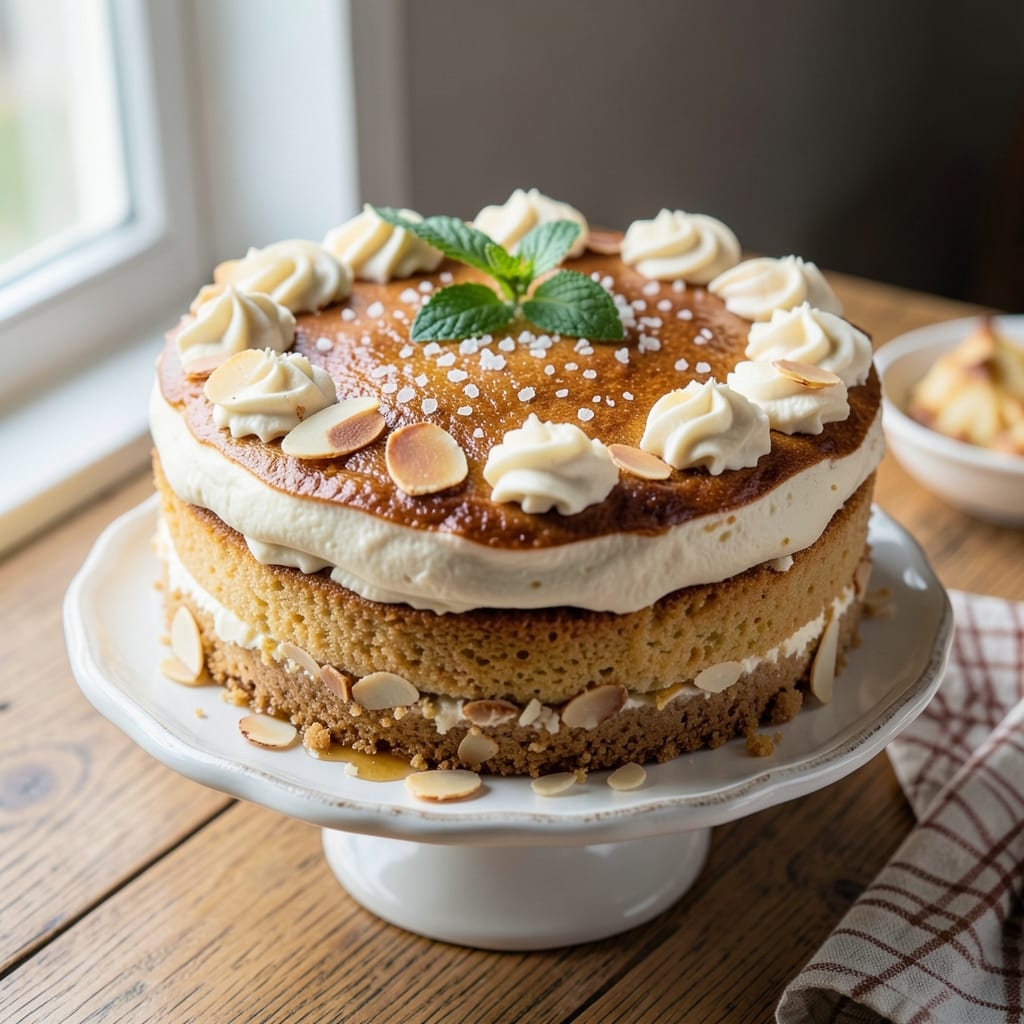
This Alpine cake recipe transports you to the Swiss mountains with its delicate vanilla-almond layers and buttery crumb—no fancy techniques required. 💛 The secret lies in a simple yet precise method: alternating moist vanilla sponge with almond-infused filling, then baking until golden perfection. I developed this version after years of testing, ensuring every slice delivers that signature Alpine texture—tender yet sturdy enough to hold its shape.
The beauty of this recipe is its versatility—traditional or modern, it adapts effortlessly. Use classic vanilla extract and almond flour for authenticity, or swap in gluten-free flour and coconut oil for a contemporary twist. The cake’s elegant simplicity makes it perfect for celebrations or quiet afternoons, with a finish that’s crisp yet moist, thanks to a light dusting of powdered sugar and fresh berries.
What sets this apart is the almond magic—ground almonds in the filling create a velvety contrast to the vanilla sponge, while a hint of lemon zest brightens each layer. Baking at 350°F for 30-35 minutes ensures even cooking, and the result? A cake that’s light enough to eat with a fork but sturdy enough for slicing—ideal for serving with whipped cream or a drizzle of honey.
Whether you’re baking for a special occasion or treating yourself to a homemade indulgence, this recipe delivers restaurant-quality results with minimal effort. The layers stay fresh for days, making it a crowd-pleaser for gatherings or a comforting dessert for one. Let’s get started on creating your own Alpine masterpiece.
Ingredients for alpine cake
Twelve ingredients, eight elegant layers—where Swiss mountain charm meets home baking perfection.
| Ingredient | Amount | Notes |
|---|---|---|
| All-Purpose Flour 🌾 | 2 ½ cups | Sifted for even texture |
| Almond Flour 🥜 | 1 ½ cups | Finely ground for smooth filling |
| Granulated Sugar 🍚 | 2 cups | Superfine preferred for delicate crumb |
| Unsalted Butter 🧈 | 1 ½ cups | Room temperature, European-style preferred |
| Pure Vanilla Extract 🍯 | 2 tbsp | Bourbon or Madagascar variety |
| Large Eggs 🥚 | 4 whole | Room temperature for even baking |
| Lemon Zest 🍋 | 1 tbsp | Freshly grated for bright flavor |
| Powdered Sugar 🍚 | 1 cup | For dusting between layers |
| Heavy Cream 🥛 | 1 cup | Cold for whipped topping |
| Salt 🧂 | ½ tsp | Fine sea salt for balance |
| Baking Powder 🌶️ | 2 tsp | Aluminum-free for tender crumb |
| Ground Almonds 🥜 | 1 cup | Toasted lightly for depth |
| Fresh Blueberries 🫐 | 1 cup | Optional for fruity contrast |
The almond flour and European-style butter are non-negotiable for that signature Alpine texture. Bob’s Red Mill almond flour is my go-to for consistency, and Plugrá butter delivers the rich, creamy fat needed for layers that hold their shape. If you can’t find European butter, Land O’Lakes unsalted works in a pinch—just let it soften slowly in warm water. For the vanilla extract, Madagascar bourbon adds subtle depth, but Taster’s Choice pure vanilla is a reliable budget-friendly alternative. The lemon zest should be freshly grated—pre-packaged zest loses its brightness quickly.
No almond flour? Substitute 1:1 with gluten-free 1:1 baking flour, though texture will differ slightly. Running short on vanilla? Double the amount of vanilla bean paste for intensity, or use 1 tsp vanilla sugar (though it’s sweeter). The blueberries can be swapped for raspberries or blackberries, but avoid overly watery fruits like strawberries. For a gluten-free version, replace all-purpose flour with King Arthur gluten-free measure-for-measure flour and increase baking powder by 0.25 tsp. The powdered sugar layer is crucial—don’t skip it, even if you’re not a fan of sweetness on top.
Store between layers of parchment paper in an airtight container at room temperature for 3 days, or refrigerate for 5 days if using whipped cream. For longer storage, freeze individual layers wrapped tightly in plastic for up to 3 months. Reheat slices at 300°F for 5-7 minutes to restore moisture. The cake’s structure holds beautifully, so you can assemble it a day ahead—just dust with powdered sugar before serving. Fresh berries should be added just before serving to prevent sogginess.
Why You'll Love This Recipe
- No Mixer Needed: I swear by this—just creaming butter and sugar by hand, then folding in the dry ingredients. The almond flour gives it that velvety texture without needing to sift or whisk like crazy.
- Vanilla Butter Bliss: That first bite of warm cake with vanilla-infused butter? It’s like dessert sneaking into your day. The sugar caramelizes just enough to make it irresistibly comforting—no frosting required.
- Weeknight Crowd-Pleaser: Perfect for brunch with friends or a last-minute dessert when company drops by. The almond flour keeps it light, so it’s not too heavy after a big meal, and the flour blend makes it sturdy enough to slice neatly.
- Budget-Friendly Luxury: Uses pantry staples (butter, sugar, vanilla) plus a bag of almond flour that lasts ages. Honestly, it’s the kind of cake that makes you feel fancy without breaking the bank—especially when you double the batch and freeze half.
Step-by-step instructions for Alpine cake
Here's how to build this elegant layered cake with precise technique and mountain-inspired finesse.
👨🍳 Step 1: Prepare the Cake Layers
Preheat your oven to 350°F and grease three 8-inch round cake pans with butter, then line the bottoms with parchment paper. In a large mixing bowl, combine the 2.5 cups all-purpose flour, 2 cups granulated sugar, 2 tsp baking powder, and 0.5 tsp salt. Whisk until completely homogeneous—this ensures even distribution of leavening.
In a separate bowl, cream together the 1.5 cups unsalted butter (at room temperature) and the 4 whole large eggs until light and fluffy. Gradually add the dry ingredients while mixing on low speed, alternating with 2 tbsp pure vanilla extract and 1 tbsp lemon zest. The batter should be smooth but slightly thick—this texture guarantees tender layers with proper rise. Divide the batter evenly among the prepared pans.
🔥 Step 2: Bake and Cool the Layers
Bake the cake layers for 25-30 minutes, or until a toothpick inserted into the center comes out clean. The edges should be golden brown while the centers remain slightly springy to the touch—overbaking leads to dryness. Rotate the pans halfway through for even baking.
Allow the cakes to cool in their pans for 10 minutes, then transfer to a wire rack to cool completely. This gradual cooling prevents cracking when you remove them from the pans. Once fully cooled, level the tops if necessary using a serrated knife for perfectly even layers.
🥘 Step 3: Prepare the Almond Filling
In a medium saucepan, combine the 1.5 cups almond flour, 1 cup ground almonds, 1 cup powdered sugar, and 1 cup heavy cream. Cook over medium-low heat, stirring constantly, until the mixture thickens to a spreadable consistency—about 8-10 minutes. The filling should coat the back of a spoon but still be pourable.
Remove from heat and stir in 1 tbsp lemon zest and 1 tbsp vanilla extract. Let the filling cool to room temperature before assembling the cake. This step creates the signature alpine almond flavor that distinguishes this cake from classic vanilla varieties.
🍳 Step 4: Assemble the Cake Layers
Place the first cake layer on a cake stand or plate. Spread a thin layer of the almond filling over the top, then add the 1 cup fresh blueberries (if using) in a circular pattern. Place the second cake layer on top and repeat the process. Finish with the final cake layer and spread the remaining almond filling evenly over the top.
Chill the assembled cake in the refrigerator for at least 2 hours to allow the filling to set properly. This chilling time ensures the layers stay intact when sliced. The blueberries will release their juices slightly, creating pockets of fruity contrast within the almond filling.
🍽️ Step 5: Dust and Serve
Remove the cake from the refrigerator and dust the top and sides generously with powdered sugar using a fine-mesh sieve. This final step creates that signature alpine cake presentation. Serve at room temperature for the best texture—each slice should reveal moist layers, creamy almond filling, and bursts of blueberry.
The cake keeps well in the refrigerator for 3-4 days, though I recommend serving it within 24 hours for optimal texture. The combination of tender vanilla layers, rich almond filling, and fresh blueberries creates a harmonious balance that's both elegant and comforting—perfect for mountain-inspired celebrations.
Pro Tips For Making Alpine Cake
- WHISK THE ALMOND FLOUR FIRST: I learned this the hard way—mixing almond flour with wet ingredients before the all-purpose flour leads to lumps like concrete. Whisk the almond flour with the sugar and butter until it’s uniformly pale and crumbly before adding anything else. This keeps the texture light and prevents that dense, gummy mess.
- USE COLD BUTTER—NO EXCUSES: Skip the soft butter. Cut the unsalted butter into the dry ingredients in small cubes and let it melt slowly into the mix. Cold butter creates pockets of air that make this cake tender, not greasy. (Yes, even if you’re impatient like me.)
- STOP WHEN THE CENTER JIGGLES: The cake will look underdone when you pull it out—don’t panic. It’s supposed to be springy, not firm. If you bake it until the center sets, you’ll end up with a dry, crumbly mess. Let it cool 10 minutes in the pan, then transfer to a rack. The residual heat finishes the job.
- SIFT THE FLOURS TOGETHER: Combine the all-purpose and almond flours in a sieve and shake them over the mixing bowl. This aerates the dry ingredients and cuts down on gluten development, which keeps the cake moist longer. (I know, sifting feels like extra work—but your cake will stay soft for days.)
Essential equipment for perfect results
Essential Mixing Tools
Start with a stand mixer (like the KitchenAid Artisan Series) for the cake batter—its powerful motor ensures smooth, even mixing without overdeveloping the gluten. If you don’t have one, a hand mixer (such as Kitchenaid KM50) works fine, but mix on medium speed to avoid incorporating excess air. For the almond filling, a medium saucepan with sloped sides (like All-Clad Stainless) prevents spills while stirring constantly over medium-low heat. 🥄
Precision Baking Pans
Invest in three 8-inch round cake pans with removable bottoms (I recommend Wilton Perfect Results) for even baking and easy release. Grease them thoroughly with unsalted butter and line the bottoms with parchment paper to prevent sticking. Avoid nonstick pans—they can create an uneven texture. Preheat your oven to 350°F and rotate the pans halfway through baking for consistent results.
Leveling and Assembly
A serrated knife (like the Mercer Culinary Genesis) is your best friend for leveling cake layers after baking. A cake turntable (such as Wilton Cake Stand) makes assembly effortless—spin the cake while spreading filling to create clean, even layers. For dusting powdered sugar, use a fine-mesh sieve (like Norpro) to avoid clumps and achieve that signature Alpine finish.
Chilling and Serving
For chilling, a large cake plate (such as Le Creuset Stoneware) keeps the cake stable during the 2-hour refrigeration period. To serve, use a sharp offset spatula (like OXO Good Grips) to cut clean slices without crushing the layers. A damp towel under the cake plate prevents slipping while slicing. Store leftovers in an airtight container with parchment between layers to maintain freshness. ✨
Nutrition facts
Frequently asked questions
Why does this Alpine cake need three layers instead of two?
The three-layer design creates the signature Alpine texture—each layer is delicate enough to eat with a fork while maintaining structural integrity for clean slices. The alternating layers of vanilla sponge and almond filling also prevent the cake from becoming too dense, resulting in that signature light, airy crumb that's both sturdy and tender. Two layers would be too heavy, while four would risk dryness.
Can I make this cake without almond flour?
Yes! Substitute 1:1 gluten-free 1:1 baking flour for the almond flour, though the texture will be slightly denser. For the ground almonds in the filling, use 1 cup toasted walnuts or hazelnuts finely ground—just toast them first to enhance flavor. The cake will still taste delicious, though the signature Alpine almond profile will be more nutty than almond-forward.
How do I prevent the cake layers from cracking?
Cracking usually happens from uneven cooling or overmixing. Let the layers cool in their pans for 10 minutes before removing, then transfer to a wire rack. Avoid opening the oven door too early—wait until the toothpick test confirms doneness. Also, don't overmix the batter; mix just until combined to prevent gluten development. A stand mixer on low speed works best.
Should I bake the cake in a convection oven?
Convection ovens work beautifully for this recipe! Reduce the temperature to 325°F and bake for 25-30 minutes—the fan circulates air more efficiently, resulting in even browning. However, monitor closely after 20 minutes as convection can dry out cakes faster. For best results, use the same baking time but check for doneness at 25 minutes.
What’s the best way to store leftovers?
Wrap individual slices in plastic wrap or store the whole cake in an airtight container between layers of parchment paper. Keep at room temperature for 2 days or refrigerate for up to 5 days. For longer storage, freeze layers separately for 3 months. Reheat slices at 300°F for 5-7 minutes to restore moisture—microwaving can make them rubbery.