
Desserts
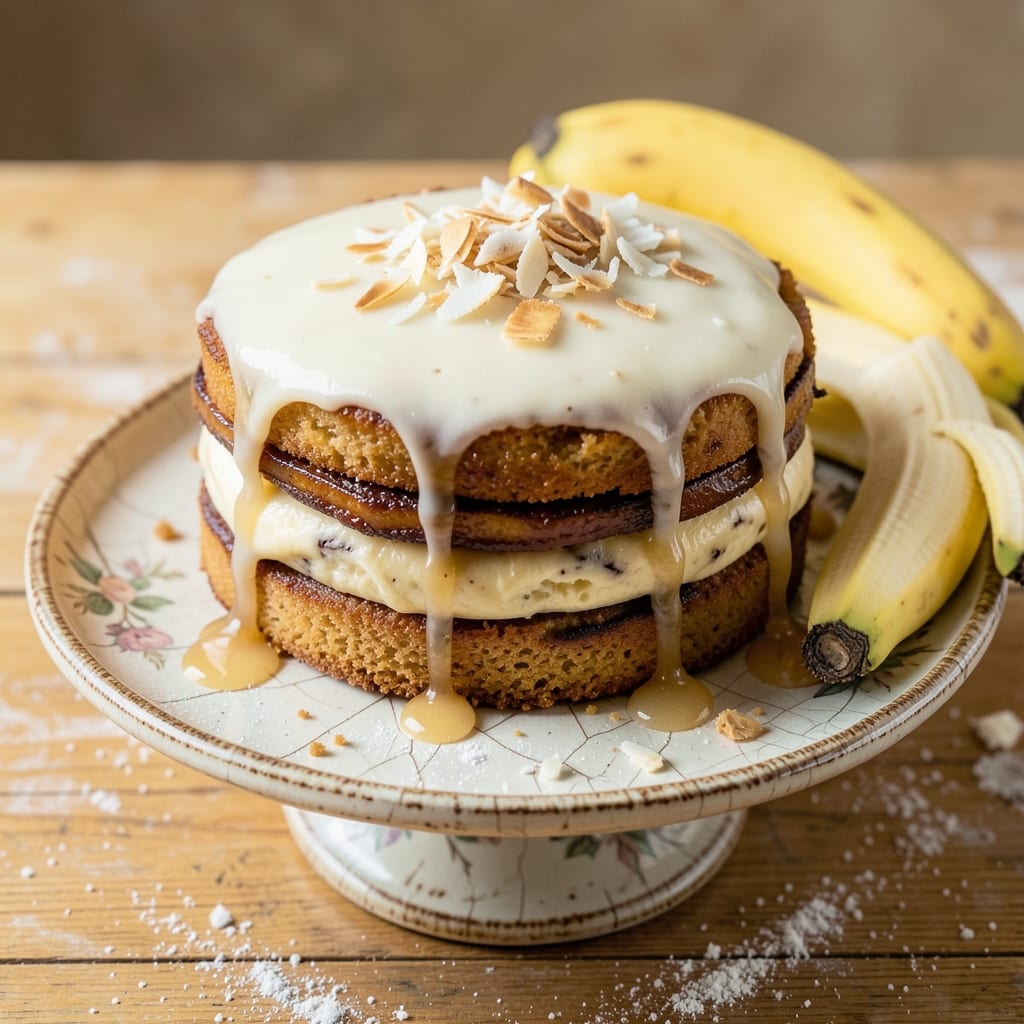
This banana cake recipe Cameroon brings together the rich flavors of ripe plantains and bananas with warm spices for a dessert that’s both comforting and uniquely African. 🌟 The secret lies in blending traditional West African ingredients—like coconut milk and cinnamon—with classic baking techniques to create a moist, spiced cake that’s perfect for celebrations or cozy family gatherings.
What sets this recipe apart is the fusion of textures: tender, caramelized plantains and bananas baked into a cake with a subtle crunch from toasted coconut. The spices—cinnamon, nutmeg, and a hint of clove—add depth without overpowering, while the coconut milk keeps the crumb soft and flavorful. It’s the kind of dessert that feels special but doesn’t require advanced baking skills.
The result is a golden-brown cake with a fragrant aroma that fills your kitchen, offering a balance of sweetness and spice in every bite. Whether you’re serving it at a holiday feast or enjoying a slice with afternoon tea, this recipe delivers restaurant-quality flavor at home.
Ready to bake? This spiced plantain and banana fusion delight comes together in layers of warmth and texture—perfect for those who love bold flavors with a touch of tradition. Let’s get started!
Ingredients for banana cake recipe cameroon
These West African-inspired ingredients blend sweet plantains, ripe bananas, and warm spices for a uniquely fragrant cake.
| Ingredient | Amount | Notes |
|---|---|---|
| Ripe Plantains 🍌 | 2 large | Peeled and sliced into 1-inch pieces |
| Ripe Bananas 🍌 | 3 medium | Mashed, no brown spots |
| All-Purpose Flour 🌾 | 2 cups | Sifted for even texture |
| Granulated Sugar 🍚 | 1 ½ cups | White or brown preferred |
| Unsweetened Coconut Milk 🥥 | 1 cup | Canned, full-fat preferred |
| Vegetable Oil 🫒 | ½ cup | Light or canola works |
| Large Eggs 🥚 | 2 whole | Room temperature for blending |
| Baking Powder 🧂 | 2 tsp | Diamond Crystal preferred |
| Ground Cinnamon 🌿 | 2 tsp | Freshly ground preferred |
| Ground Nutmeg 🌿 | ½ tsp | Freshly grated preferred |
| Ground Cloves 🌶️ | ¼ tsp | Freshly ground for warmth |
| Salt 🧂 | ½ tsp | Kosher or sea salt |
| Toasted Coconut Flakes 🥥 | ½ cup | For crunchy topping |
The plantains and bananas are the heart of this recipe. Look for firm but ripe plantains—they should yield slightly to gentle pressure. Cameroonian markets or Latin grocery stores often carry the best varieties, but any ripe plantains will work. Bananas should be speckled with brown but still firm inside. Toast the coconut flakes in a dry pan until golden—that nutty aroma is essential. For the spices, Penzeys or bulk bins offer the freshest ground cinnamon and nutmeg, which make all the difference in that West African warmth. Skip pre-ground spices if possible—they lose potency quickly.
No ripe plantains? Use extra bananas plus 1 tbsp lemon juice to mimic the texture, though the flavor won't be identical. Running short on coconut milk? Substitute with evaporated milk or almond milk, but reduce by 2 tbsp to account for the thinner consistency. The baking powder must be fresh—test by mixing with water; if it doesn't bubble, toss it. For the toasted coconut topping, unsweetened flakes work best—sweetened versions can make the cake too cloying. Want extra richness? Add 2 tbsp melted butter to the oil measurement, but keep it at room temperature when mixing.
Store the cake in an airtight container at room temperature for up to 3 days, or refrigerate for 5 days if you prefer it firmer. It reheats beautifully—30 seconds in the microwave restores that fresh-from-oven warmth. The toasted coconut topping stays crisp for 2 days if stored separately in a sealed container. For best results, bake the cake in a 9x13-inch pan—it spreads slightly, which is perfect for slicing thick portions. Leftovers freeze well for 3 months; wrap tightly in plastic and thaw at room temperature before serving.
Why You'll Love This Recipe
- Uses what you’ve got: overripe fruit that’d otherwise go bad, basic flour, and sugar. Between us, I’ve made this for under $3 a serving, and it still feels like a treat. Leftovers? Toast them for a lazy morning.
- No Mash Needed: I swear by this trick—just slice the ripe plantains and bananas thin, layer them in the pan, and pour the batter over. No food processor, no sticky mess, and the caramelized edges? Chef’s kiss.
- Sweet-Savory Magic: That coconut milk keeps it moist without being cloying, while the plantains add a subtle earthy depth. It’s like dessert and breakfast had a baby—rich, but not heavy, with just enough natural sweetness to satisfy.
- Weeknight & Brunch Hero: Serve it warm with a dusting of sugar for breakfast, or pack slices for lunch the next day. Honestly, I’ve even brought it to potlucks—it’s the one dish that disappears fast, no matter the occasion.
Step-by-step instructions for Cameroon-inspired spiced plantain-banana cake
This rich fusion cake balances West African spice warmth with tropical coconut notes—here's how to bake it perfectly.
👨🍳 Step 1: Prepare the Tropical Fruit Base
Start by preheating your oven to 350°F and greasing an 8-inch round cake pan or line it with parchment paper. In a medium bowl, mash the 3 medium ripe bananas until completely smooth—no lumps should remain. This ensures even distribution throughout the batter.
In a separate bowl, slice the 2 large ripe plantains into 1-inch pieces and set aside. The plantains should be soft enough to mash but still hold their shape when sliced. Here's the thing—ripe plantains add natural sweetness and moisture, but their texture is firmer than bananas, so we keep them in chunks for contrast.
🍳 Step 2: Mix Wet Ingredients and Combine
In a large mixing bowl, whisk together the 1 cup unsweetened coconut milk, 0.5 cup vegetable oil, and 1.5 cups granulated sugar until fully combined. Add the 2 whole large eggs one at a time, mixing well after each addition. This step creates a smooth, creamy base that will incorporate all the dry ingredients evenly.
Next, add the mashed bananas and mix until just combined. Fold in the sliced plantains gently with a spatula—you want them distributed throughout but not mashed. The contrast between the soft banana and slightly chewy plantain pieces is what makes this cake special. I like to reserve about 2 tablespoons of the toasted coconut flakes for the final topping.
👨🍳 Step 3: Incorporate Dry Ingredients
In a separate bowl, sift together the 2 cups all-purpose flour, 2 teaspoons baking powder, 2 teaspoons ground cinnamon, 0.5 teaspoon ground nutmeg, 0.25 teaspoon ground cloves, and 0.5 teaspoon salt. These warm spices are what give this cake its distinctive Cameroon-inspired flavor profile.
Gradually add the dry ingredients to the wet mixture, folding gently with a spatula until just combined. Don't overmix—you should still see some flour streaks. The batter will be thick but pourable. Here's where it gets fun—fold in the remaining 0.5 cup toasted coconut flakes and mix just until distributed. The coconut adds a delightful crunch that complements the soft fruit.
🔥 Step 4: Bake to Golden Perfection
Pour the batter into your prepared cake pan and smooth the top with a spatula. Sprinkle the reserved 2 tablespoons toasted coconut flakes evenly over the top for extra texture. Bake in the preheated oven for 40-45 minutes or until a toothpick inserted into the center comes out clean.
Watch for the edges to turn golden brown while the center remains slightly springy to the touch. The plantain pieces will caramelize slightly, adding depth of flavor. Real talk: your oven might run hot, so start checking at the 35-minute mark. If it browns too quickly, tent loosely with foil to prevent over-browning.
⏰ Step 5: Cool and Serve
Remove the cake from the oven and let it cool in the pan for 10 minutes. Then transfer it to a wire rack to cool completely. This resting period allows the flavors to meld and the cake to set properly. The plantain pieces will soften further, creating that perfect balance of texture.
Slice into 8 equal wedges and serve at room temperature. Each bite should deliver moist banana cake with subtle plantain sweetness, warm spice notes, and coconut crunch. This cake pairs beautifully with a dollop of whipped coconut cream or a cup of chai tea for an authentic Cameroon-inspired treat.
Pro Tips For Making Banana Cake Recipe Cameroon
- STEAM THE PLANTAINS FIRST: I learned this the hard way—raw plantains in the batter make the cake dense and gummy. Instead, boil sliced plantains for 8-10 minutes until fork-tender, then mash them into the batter. This keeps the texture light and lets the natural sweetness shine without turning the cake into a brick.
- MASH THE BANANAS COLD: Ripe bananas release liquid fast, and warm mashed bananas make the batter too soupy. Pop them in the freezer for 10 minutes before mashing, then drain excess liquid through a fine-mesh sieve. Your cake won’t sink, and the coconut milk won’t separate like it does when you skip this.
- DON’T OVERMIX THE BATTER: This isn’t a pancake—you’re not trying to build gluten. Mix the dry ingredients and wet ingredients separately, then combine just until the flour disappears. Overmixing turns the cake tough, and trust me, you’ll taste the difference. A few lumps? Doesn’t matter.
- BAKE IN TWO STAGES: Start at 350°F (175°C) for 20 minutes to let the cake rise evenly, then crank the oven to 375°F (190°C) for the last 15-20 minutes. This prevents a domed top (a classic Cameroon cake fail) and gives the edges that perfect golden crust without burning the center. Yes, it’s two oven trips—but it’s worth it.
Perfect pairings for banana cake recipe cameroon
West African Tea Pairings
This spiced plantain-banana cake shines with traditional Cameroon teas like ginger tea or hibiscus-lemon brew. The warmth of ginger complements the cinnamon and clove notes perfectly, while hibiscus adds a tart contrast to the sweetness. I always brew Cameroonian mint tea (with fresh spearmint) for a refreshing, aromatic pairing that balances the cake's richness. 🌿
Coconut Cream Topping
For a restaurant-worthy finish, whip ½ cup coconut cream with 1 tbsp powdered sugar until fluffy. Fold in 1 tsp vanilla extract and dollop generously over each slice. The cool, creamy texture contrasts beautifully with the warm spiced cake. Store-bought Goya coconut cream works perfectly, but homemade is even better if you have time. ✨
Spiced Rum Glaze
Heat ¼ cup honey with 2 tbsp spiced rum (like Diplomático Reserva Exclusiva) and 1 tsp cinnamon in a small saucepan until bubbly. Drizzle over warm cake slices for an adult-friendly twist. The rum's vanilla notes enhance the clove and nutmeg flavors while adding a subtle kick. Use 1 tbsp per slice for balance. 🍹
Fresh Fruit Contrasts
Serve slices with mango slices or passion fruit pulp to cut through the richness. The tropical acidity refreshes your palate after each bite. I also recommend toasted cashews (¼ cup, lightly salted) for crunch. For a festive touch, arrange fruit in a circular pattern around the cake on a platter. 🍈
Coffee Pairings
Cameroon's robusta coffee pairs wonderfully with this cake, especially if you add a pinch of cinnamon to your brew. The bold, earthy notes complement the cake's spices without overpowering. For a lighter option, try Arabica with cardamom—the floral notes create a beautiful contrast. Serve coffee slightly warmed for the best experience. ☕
Seasonal Adaptations
In summer, swap the toasted coconut topping for fresh grated coconut and serve chilled with lychee sorbet. During winter, add orange zest to the batter and pair with warm spiced apple cider. The citrus brightens the warm spices perfectly. These small tweaks keep the cake exciting year-round. 🍊
Nutrition facts
Frequently asked questions
Can I substitute plantains with regular bananas?
You can try, but the texture and flavor won't be the same. Plantains add a firmer, slightly chewier bite and deeper caramelized sweetness when baked. For a closer substitute, use 2 extra ripe bananas plus 1 tbsp lemon juice to mimic the plantain's texture, though the flavor will be milder. The cake will still be delicious but less authentic to Cameroon's tropical profile.
How do I know when my plantains are ripe enough?
Look for plantains that are yellow with black spots—they should yield slightly to gentle pressure but not be mushy. The black spots indicate peak ripeness for baking, while green plantains are too firm and unripe ones will be too starchy. If you can't find ripe plantains, frozen plantains (thawed) work in a pinch, though texture may vary slightly.
Can I make this cake gluten-free?
Yes! Replace the 2 cups all-purpose flour with a 1:1 gluten-free baking flour blend (like Bob's Red Mill) plus ½ tsp xanthan gum to maintain structure. For best results, also swap the baking powder with a gluten-free version. The cake may be slightly denser but will still be moist and flavorful. Test the blend first with a small batch to adjust liquid measurements if needed.
Why does my cake smell amazing but taste bland?
This usually happens when spices aren't fresh or the cake isn't baked long enough. Use freshly ground cinnamon, nutmeg, and cloves—they lose potency quickly. Also, ensure the cake bakes until a toothpick comes out clean (40-45 minutes). For extra flavor, try adding 1 tsp vanilla extract to the batter or brushing warm slices with simple syrup (equal parts sugar and water).
How can I make this cake extra moist?
For a moist, tender crumb, try these pro tips: Replace ¼ cup of the oil with unsweetened applesauce or Greek yogurt, and add 1 tbsp sour cream to the batter. Also, don't overbake—remove the cake when the edges are golden but the center still jiggles slightly. For serving, always slice when completely cool to prevent crumbling.