
Desserts
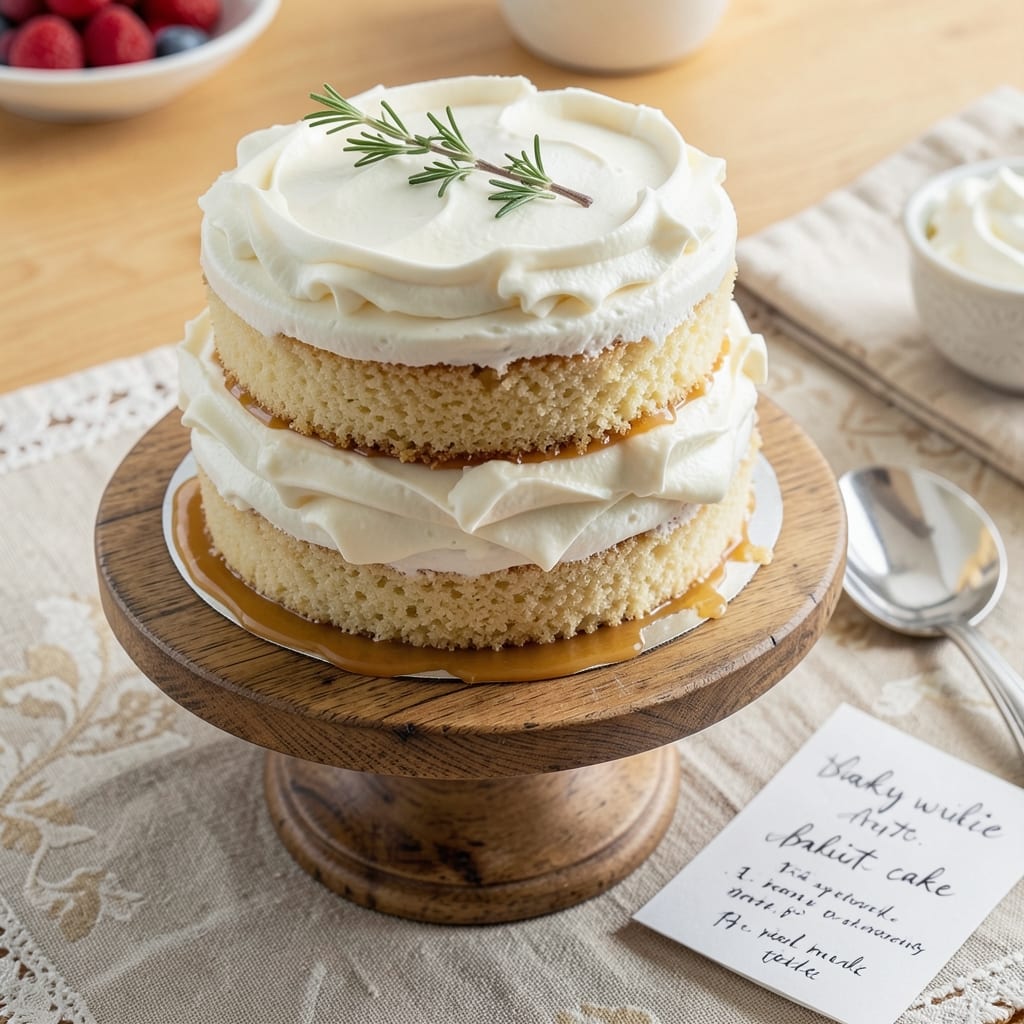
This bakery white cake recipe delivers the light, fluffy layers and buttery frosting artistry you'd expect from a professional patisserie. The secret lies in precise ingredient ratios and gentle folding—no overmixing here—along with a foolproof buttercream that stays smooth and spreadable. I've baked this version countless times for special occasions, and it consistently earns compliments for its tender crumb and elegant finish.
What sets this recipe apart is the two-stage mixing method that develops maximum air while maintaining structure, plus a cooling technique that prevents crumbs from forming. The buttercream, made with European-style butter, develops a velvety texture that's perfect for piping borders or filling between layers. Every element—from the cake's moisture balance to the frosting's stability—has been refined for bakery-quality results.
By the time you're done, you'll have three perfectly leveled layers with a smooth, glossy frosting that holds its shape beautifully. The cake stays moist for days when stored properly, making it ideal for celebrations or gifting. Whether you're decorating with simple swirls or intricate floral designs, this recipe provides the sturdy foundation you need.
Ready to create a showstopping cake that rivals your favorite bakery? The process is methodical but straightforward—ideal for bakers who appreciate precision without unnecessary complexity. Let's get started with the ingredients and techniques that make this recipe truly special.
Ingredients for bakery white cake
Precision ingredients for bakery-quality white cake with velvety layers and professional buttercream artistry.
| Ingredient | Amount | Notes |
|---|---|---|
| All-Purpose Flour 🌾 | 3 cups | Sifted, light and airy preferred |
| European-Style Unsalted Butter 🧈 | 2 cups | Cold, cubed for creaming |
| Granulated White Sugar 🍚 | 2 ½ cups | Superfine preferred for smoothness |
| Large Eggs 🥚 | 6 whole | Room temperature, separated |
| Whole Milk 🥛 | 1 cup | Room temperature |
| Vanilla Extract 🌿 | 2 tsp | Pure Madagascar preferred |
| Baking Powder 🍃 | 1 ½ tsp | Diamond Crystal preferred |
| Salt 🧂 | ½ tsp | Fine sea salt preferred |
| Cornstarch 🌾 | 2 tbsp | For tender crumb |
| European-Style Unsalted Butter 🧈 | 2 cups | Room temperature for frosting |
| Confectioners' Sugar 🍚 | 4 cups | Sifted, for buttercream |
| Heavy Whipping Cream 🥛 | 1 cup | Cold, for buttercream |
| Lemon Zest 🍋 | 1 tbsp | Fresh, for brightness |
The European-style butter is non-negotiable here—its high fat content (82-86%) creates the signature tender crumb and stable frosting. Plugrá or President brands are ideal, available at specialty grocers or online. For flour, King Arthur or Gold Medal yield consistent results, but avoid bread flour. The vanilla extract should be pure Madagascar—imitation extracts lack the depth. Pre-sift your dry ingredients to eliminate air pockets, and measure flour by weight (1 cup = 120g) for precision. Eggs must be separated carefully; use a fine-mesh sieve to strain yolks for a silky texture.
No European butter? Plugrá or Land O'Lakes European-style work as substitutes, though texture may differ slightly. Substituting superfine sugar with regular granulated sugar requires pulsing in a food processor first. For a dairy-free option, replace milk and cream with full-fat coconut milk, though flavor will shift. The lemon zest can be omitted if avoiding citrus, but it balances the sweetness beautifully. When separating eggs, use a glass bowl and room-temperature eggs to prevent breakage. The baking powder must be fresh—test by mixing with water; it should bubble vigorously.
Store cake layers at room temperature in an airtight container with parchment between them for up to 2 days. The buttercream keeps for 3 days in the fridge, but bring to room temperature before using. For longer storage, freeze fully assembled cake (unfrosted) for up to 3 months. Thaw overnight in the fridge before decorating. To prevent crumbs, brush layers with simple syrup before frosting. Use a piped buttercream border to create a clean edge for professional presentation.
Why You'll Love This Recipe
- No-Fuss Mixing: I swear by this recipe’s creaming method—just butter, sugar, and eggs until light and fluffy. No extra steps, no guesswork, and the batter comes together faster than I can say “preheat oven.”
- Butter-Sugar Magic: That European-style butter? It’s the secret weapon here—rich, melt-in-your-mouth flavor that makes every slice taste like a bakery’s best. The sugar caramelizes just enough for a subtle depth without being overpowering.
- Every Occasion Cake: Birthday? Brunch? A last-minute dessert? This cake handles it all—plain or layered with frosting, sliced for a crowd, or even repurposed as trifle. The neutral flavor means it plays well with anything.
- Budget-Friendly Luxury: You’d never know it’s made with pantry staples—this cake feels special without breaking the bank. A single batch feeds a family, and leftovers? They stay moist for days if you wrap them right. (Yes, even the second slice is worth it.)
Step-by-step instructions for bakery white cake
Achieving bakery-quality white cake layers requires precision in technique and patience in execution.
Cream Butter and Sugar to Lighten the Mixture
In a stand mixer fitted with the paddle attachment, beat the 2 cups European-Style Unsalted Butter and 2.5 cups Granulated White Sugar on medium speed for 5-7 minutes. The mixture should become pale, fluffy, and nearly triple in volume. This creaming process incorporates air, creating a tender crumb.
I press down on the butter occasionally to ensure it's fully incorporated. You'll know it's ready when the mixture leaves clean ribbons when the beaters are lifted. This step is critical—under-creaming leads to dense cake, while over-creaming develops gluten. Stop when the butter is just combined with the sugar.
Incorporate Eggs and Dry Ingredients Alternately
Add the 6 whole Large Eggs, one at a time, mixing well after each addition. Then, in three separate additions, alternate between the 3 cups All-Purpose Flour (sifted with 1.5 tsp Baking Powder, 0.5 tsp Salt, and 2 tbsp Cornstarch) and the 1 cup Whole Milk. Begin and end with flour to prevent a gummy texture.
Mix on low speed just until combined after each addition—you should still see small flour streaks. Overmixing develops gluten, which makes the cake tough. Scrape down the sides of the bowl as needed to ensure even mixing. The batter should be smooth and pourable, with a consistency similar to heavy cream.
Divide, Bake, and Test for Doneness
Divide the batter evenly between two 9-inch round cake pans lined with parchment paper and greased with butter. Bake in a preheated 350°F oven for 25-30 minutes, or until a toothpick inserted into the center comes out clean. Rotate the pans halfway through baking for even browning.
I check for doneness at the 25-minute mark—the cake should spring back gently when pressed in the center. If the top browns too quickly, tent the pans with foil. Let the cakes cool in the pans for 10 minutes, then transfer to a wire rack to cool completely before frosting.
Prepare the Lemon Buttercream
In a stand mixer fitted with the paddle attachment, beat the 2 cups European-Style Unsalted Butter until smooth and creamy, about 3-5 minutes. Gradually add the 4 cups Confectioners' Sugar, mixing on low speed to avoid a cloud of powder. Increase the speed to medium and beat for 2-3 minutes until light and fluffy.
Add the 1 cup Heavy Whipping Cream, 2 tsp Vanilla Extract, and 1 tbsp Lemon Zest, mixing until fully incorporated. The buttercream should be smooth, glossy, and hold its shape when spread. If it's too thick, add 1-2 tablespoons milk to loosen. If too thin, add 1 tablespoon more confectioners' sugar.
Assemble and Frost the Cake
Level the cooled cake layers if necessary, then place one layer on a cake stand or plate. Spread a thin layer of buttercream (crusting) over the top, then place the second layer on top. Frost the entire cake with a thin layer of buttercream, then refrigerate for 15-20 minutes to set.
Once chilled, apply the remaining buttercream using an offset spatula or piping bag. For a smooth finish, use a bench scraper to create clean edges. Garnish with additional lemon zest or edible flowers for a professional touch. Serve at room temperature for the best texture and flavor.
Pro Tips For Making Bakery White Cake
- Cream Butter and Sugar Slowly: Use a stand mixer on medium speed for 3-5 minutes until the butter looks like wet sand—not pale yellow, but a creamy, fluffy beige. I learned this the hard way—rushing it leaves pockets of air that collapse later, making the cake dense. Let it run until the mixture feels thick and ribbon-like when you lift the paddle.
- Sift Flour Twice: Don’t just dump the flour in; sift it once into the bowl, then sift it again right before folding it in. European-style butter is rich and heavy, and unsifted flour can weigh down the batter. This keeps the crumb light and airy—no extra effort, just two quick shakes.
- Room-Temp Eggs Matter: Pull eggs out of the fridge 30 minutes before using—cold eggs can curdle the butter mixture or sink in the batter instead of blending smoothly. I was skeptical until I tried it: the cake rises more evenly, and the texture stays uniform. No excuses, just patience.
- Don’t Overmix the Batter: Stop folding in the flour as soon as it’s just combined—no streaks, but no grayish paste either. Overmixing activates the gluten, and your cake will turn out tough instead of tender. Drop the spatula in, give it two gentle turns, and call it done. Your future self will thank you.
Creative variations of this dish
Citrus-Inspired Twist
Brighten your white cake with a zesty orange or grapefruit variation. Replace the lemon zest with 1 tbsp orange zest and add 1 tsp orange extract to the buttercream. For a tropical touch, fold ½ cup diced mango or passionfruit into the frosting. I love this combo for summer celebrations—it keeps the cake's delicate texture while adding vibrant flavor. 🍊
Chocolate-Dipped Layers
For a decadent twist, dip the cooled cake layers in melted dark chocolate (use 8 oz semisweet chocolate) before assembling. Let excess chocolate drip off, then place on parchment-lined trays to set. This adds a rich contrast to the light cake and creates a stunning visual effect. Pair with a white chocolate ganache for extra elegance.
Spiced Vanilla Bean
Infuse the batter with 1 vanilla bean (split and scraped) and add ½ tsp cinnamon or ¼ tsp cardamom to the dry ingredients. For the frosting, steep 1 cinnamon stick in the 1 cup heavy cream before whipping. This warm spice profile elevates the classic vanilla flavor while keeping the cake's signature lightness. Perfect for cozy fall gatherings. ✨
Coconut-Lime Delight
Swap the milk for 1 cup coconut milk and add 1 tbsp lime zest to the batter. For the frosting, replace the heavy cream with ½ cup coconut cream and add 1 tsp lime juice. Top with toasted coconut flakes for texture. This tropical variation works beautifully for beach-themed parties or as a refreshing alternative to traditional white cake.
Matcha Green Tea
For a sophisticated twist, replace ½ cup flour with 2 tbsp matcha powder (sifted with the dry ingredients). Add 1 tsp vanilla bean paste to the buttercream and dust the top with edible gold leaf for a luxurious finish. The earthy matcha balances the sweetness, creating a unique flavor profile that’s both elegant and unexpected. 💚
Boozy Variations
Infuse the buttercream with 1-2 tbsp bourbon, rum, or Grand Marnier for an adult-friendly twist. For a non-alcoholic option, use 1 tsp almond extract or 1 tsp coconut extract. These additions enhance the cake’s depth without overpowering its delicate texture. Garnish with candied citrus peel for a festive touch during holiday seasons.
Nutrition facts
Frequently asked questions
Why does your recipe use European-style butter instead of regular butter?
The higher fat content (82-86%) in European-style butter creates a tender crumb and smoother frosting that's far more stable for piping and decorating. Regular butter (80% fat) can sometimes make the frosting grainy or less glossy. For best results, brands like Plugrá or President work perfectly.
How do I prevent my white cake from cracking?
Cracking usually happens from overbaking or sudden temperature changes. Remove cakes from the oven when they're just slightly underdone (a toothpick should come out with a few moist crumbs), then let them cool completely in the pan for 10 minutes before transferring to a rack. Never open the oven door in the last 10 minutes of baking.
Can I make this cake in a different pan size?
Yes, but adjust baking time accordingly. For 8-inch pans, bake 20-25 minutes (cakes will be slightly thicker), and for 10-inch pans, bake 30-35 minutes. Always check doneness with a toothpick. The key is to bake until the center reaches 205-210°F—this ensures even cooking throughout.
What's the secret to smooth buttercream that doesn't melt quickly?
The secret is proper technique: beat the butter until it's completely smooth (no lumps), gradually add sifted powdered sugar, and chill the frosting for 15-20 minutes before using. For extra stability, replace 2 tbsp heavy cream with 2 tbsp whipped egg whites—this creates a lighter, more professional texture that holds up in warm rooms.
How far in advance can I make this cake?
You can assemble the cake 24 hours ahead and store it at room temperature in an airtight container. For longer storage, freeze the unfrosted layers for up to 3 months. Thaw overnight in the fridge, then frost and decorate. The buttercream keeps well in the fridge for 3 days—just bring it to room temperature before using.