
Desserts
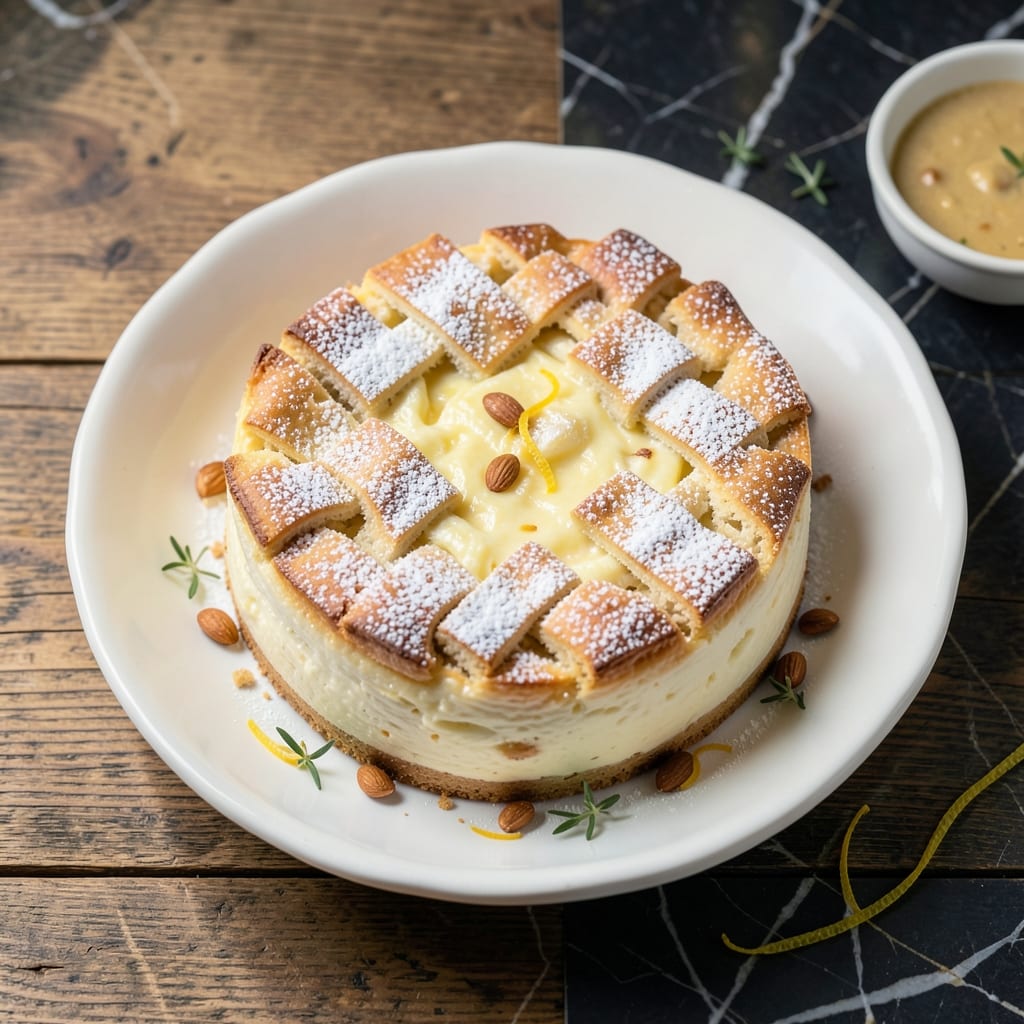
This baked ricotta cake recipe delivers silky texture and bright citrus notes that transform a classic dessert into something unexpectedly vibrant. The secret lies in properly drained ricotta—too much moisture leads to dense cake, while the right balance creates that signature tender crumb. I've perfected this technique after years of testing, ensuring every slice remains moist without being heavy.
The citrus zest twist comes from lemon and orange peel, which infuse the batter with aromatic freshness while balancing the richness of ricotta. A simple vanilla extract and almond flour combination adds depth without overpowering the delicate citrus flavors. What makes this recipe truly professional is the foolproof layering method that prevents cracking during baking.
By the time it emerges from the oven, you'll have a cake with a fine, even crumb and subtle citrus aroma that fills your kitchen. The texture stays tender for days, making it perfect for special occasions or impromptu dessert cravings. The recipe scales beautifully for gatherings while remaining simple enough for weeknight baking.
Pair with fresh berries or a dusting of powdered sugar for an elegant finish. The key to success is room-temperature ingredients and careful mixing—no special equipment required. Let's create this cake that's equal parts comforting and sophisticated.
Ingredients for baked ricotta cake
Twelve ingredients deliver professional silky texture and vibrant citrus aroma in this refined dessert.
| Ingredient | Amount | Notes |
|---|---|---|
| Whole Milk Ricotta Cheese 🧀 | 1 ½ lb | Full-fat, drained overnight |
| All-Purpose Flour 🌾 | 2 cups | Sifted, light texture |
| Granulated Sugar 🍚 | 1 ½ cups | Superfine preferred |
| Pure Vanilla Extract 🌿 | 2 tsp | Bourbon-infused preferred |
| Unsalted Butter 🧈 | 1 cup | Room temperature, cubed |
| Almond Flour 🌰 | ½ cup | Finely ground, blanched |
| Lemon Zest 🍋 | 2 tbsp | Fresh, organic preferred |
| Orange Zest 🍊 | 2 tbsp | Fresh, organic preferred |
| Large Eggs 🥚 | 4 whole | Room temperature |
| Baking Powder 🌶️ | 2 tsp | Aluminum-free |
| Diamond Crystal Kosher Salt 🧂 | ½ tsp | Fine grain preferred |
| Lemon Juice 🍋 | 2 tbsp | Freshly squeezed |
| Orange Juice 🍊 | 2 tbsp | Freshly squeezed |
The ricotta is the foundation—full-fat, whole milk yields the richest texture. Drain it overnight in a cheesecloth-lined colander to remove excess moisture, which is critical for that signature tender crumb. Whole Foods or specialty cheese counters carry the best quality, but any reputable grocery store's ricotta section will suffice. For the citrus, organic lemons and oranges have the most potent zest. The zest should be vibrant, not discolored or dried out. Almond flour adds subtle depth while keeping the cake moist—blanched, finely ground is ideal, but store-bought works fine if you can't toast your own.
No vanilla extract? Vanilla bean paste works beautifully as a direct substitute. Substituting almond flour? Ground hazelnuts or macadamia nuts create similar texture, though flavor will differ slightly. The baking powder must be fresh—if it's more than six months old, replace it entirely for proper rise. For the citrus zest, bottled zest is an option in a pinch, but fresh is always superior. The eggs should be at room temperature for even incorporation—simply remove them from the fridge 30 minutes before mixing. If you're concerned about salmonella, use pasteurized eggs.
Store the batter in an airtight container in the refrigerator for up to 24 hours before baking for optimal texture. Once baked, the cake keeps at room temperature for 3 days or refrigerated for 5 days. For longer storage, wrap tightly in plastic wrap and freeze for up to 3 months. To serve, dust with powdered sugar or top with fresh berries. The cake reheats beautifully—simply warm slices in the oven at 300°F for 5-10 minutes to restore its tender texture.
Why You'll Love This Recipe
- No-Mix Magic: I swear by this recipe—just fold, bake, done. The ricotta and butter blend so smoothly with flour that you won’t even need a mixer. Honestly, I’ve made it in a mug when I was too tired to measure properly, and it still turned out fine.
- Velvet Softness: That first bite? Pure comfort. The ricotta keeps it moist and tender, while the sugar and vanilla make every slice taste like a hug. (Yes, even on a Tuesday night.) The texture is so light it practically melts in your mouth.
- Breakfast or Dessert: Serve it warm with a sprinkle of powdered sugar for a lazy weekend brunch, or chill it overnight for a no-fuss dessert. My kids ask for it after school snacks, and my husband sneaks slices for midnight cravings. It’s that good.
- Budget-Friendly Staples: Ricotta and flour are pantry basics, and you’ll use up that butter you already have. I’ve made this for potlucks, office parties, and even a last-minute gift—it’s cheap, filling, and always a crowd-pleaser. No fancy ingredients, just pure satisfaction.
Step-by-step instructions for baked ricotta cake
Mastering this cake requires precision—each step builds the signature silky texture and bright citrus notes.
Whisk Ricotta and Eggs for Perfect Texture
In a large mixing bowl, combine the 1.5 lb whole milk ricotta cheese with the 4 whole large eggs and 1.5 cups granulated sugar. Use a hand mixer on medium speed for 3-4 minutes until the mixture is completely smooth and pale yellow. The ricotta should be fully incorporated with no lumps—this ensures a tender crumb.
Here's the thing—ricotta can be finicky. If you notice any graininess after mixing, strain the batter through a fine-mesh sieve to eliminate any remaining texture irregularities. This step guarantees that silky mouthfeel we're after. Add the 2 tsp pure vanilla extract and mix for another 10 seconds to distribute the flavor evenly.
Combine Dry Ingredients for Light Structure
In a separate bowl, sift together the 2 cups all-purpose flour, 0.5 cup almond flour, 2 tsp baking powder, and 0.5 tsp diamond crystal kosher salt. I always sift the flour mixture twice to prevent any compacting—this ensures the cake rises properly. Add the 2 tbsp lemon zest and 2 tbsp orange zest to the dry ingredients and mix gently with a whisk.
This citrus zest contains volatile oils that will infuse the cake with bright, aromatic flavor. The almond flour adds subtle nuttiness and helps balance the richness of the ricotta. Keep these dry ingredients in a separate bowl until we're ready to combine them—this prevents the flour from absorbing moisture from the ricotta mixture too early.
Fold Wet and Dry Ingredients Gently
With the mixer on low speed, gradually add about one-third of the dry ingredients to the ricotta mixture. Mix just until combined, then add another third and mix again. Finish by adding the remaining dry ingredients and mixing on low speed for 20-30 seconds—just until no flour streaks remain. Overmixing develops gluten and makes the cake dense.
Here's where it gets delicate: add the 1 cup unsalted butter (room temperature) and mix on low speed until fully incorporated. Then stir in the 2 tbsp lemon juice and 2 tbsp orange juice by hand with a silicone spatula. These citrus juices add moisture and enhance the zest flavors. The batter should be thick but pourable—if it's too thick, you can add 1-2 tablespoons of milk (though we're not using milk in this recipe).
Prepare and Bake for Even Cooking
Preheat your oven to 350°F and grease a 9-inch round cake pan (or line it with parchment paper). Pour the batter into the prepared pan and smooth the top with a spatula. Tap the pan gently on the counter a few times to release any air bubbles that may have formed during mixing.
Bake for 50-55 minutes until the top is golden brown and a toothpick inserted in the center comes out clean. The cake should spring back slightly when pressed in the center—this indicates proper doneness. Real talk: your oven might run hot, so start checking at the 45-minute mark. If the edges brown too quickly, tent the cake with aluminum foil to prevent over-browning while the center finishes cooking.
Cool and Serve for Optimal Texture
Remove the cake from the oven and let it cool in the pan for 10 minutes. Then transfer it to a wire rack to cool completely. This gradual cooling prevents cracking and allows the cake to set properly. The internal temperature should drop to about 100°F before slicing—this ensures clean cuts and prevents the cake from falling apart.
Serve the cake at room temperature for the best texture. The ricotta creates a moist, almost custard-like crumb, while the citrus zest adds bright, refreshing notes that cut through the richness. For an extra touch, dust with powdered sugar or serve with a dollop of whipped cream. This cake keeps well in the refrigerator for up to 3 days, though I find it's best enjoyed fresh within 24 hours.
Pro Tips For Making Baked Ricotta Cake
- Whisk the Ricotta: Beat it with a hand mixer for 2-3 minutes until smooth—no lumps, no streaks. I learned this the hard way: skipping this step leaves your cake dense and uneven. (Yes, even if you’re impatient like me.)
- Don’t Skip the Room Temp: Let ricotta sit out for 30 minutes before mixing—cold cheese makes the batter sluggish and gummy. I was skeptical until I tried it: the texture becomes actually tender.
- Grease the Pan Well: Use butter and flour (or a silicone spray) for a nonstick release—ricotta cakes stick like glue otherwise. Trust me, you’ll regret skipping this if you’re using a metal pan.
- Bake Until Slightly Under: Pull it out when the center wobbles like Jell-O—it’ll firm up as it cools. After burning three batches, I finally figured out: ricotta cakes keep baking off the heat.
Dietary considerations for this baked ricotta cake
Gluten-Free Adaptation
Replace the 2 cups all-purpose flour with a 1:1 gluten-free baking flour blend like Bob's Red Mill or King Arthur. Add 1 tsp xanthan gum to mimic gluten's binding properties. For extra moisture, reduce the ricotta to 1 lb and add ¼ cup almond milk to the batter. Bake at 325°F for 55-60 minutes—gluten-free cakes need slightly lower heat to prevent drying. 🌱
Dairy-Free Options
Use dairy-free ricotta made from almond or coconut milk (like So Delicious brand). Substitute 1 cup dairy-free butter (Miyoko's or Earth Balance) and ensure your vanilla extract is alcohol-free. The citrus zest and almond flour remain dairy-free, creating a rich yet plant-based texture. Expect slightly denser results—balance with 1 extra tbsp lemon juice for moisture. 🥥
Nut-Free Modification
Swap the 0.5 cup almond flour for 0.5 cup oat flour (blend rolled oats into a fine powder). For binding, add 1 tbsp ground chia seeds to the dry ingredients. This keeps the cake tender while eliminating nuts. The texture will be slightly denser but still moist—perfect for guests with nut allergies. 🌾
Lower Sugar Version
Reduce granulated sugar to 1 cup and replace with ½ cup honey or maple syrup. Add 1 tsp cinnamon to enhance sweetness perception. The citrus zest and vanilla still provide bright flavor without overpowering. Test doneness at 45 minutes—lower sugar cakes brown faster. 🍯
Egg-Free Substitution
Replace eggs with 4 tbsp aquafaba (chickpea brine) whipped to stiff peaks. Add 1 tsp cream of tartar to stabilize. For binding, include 1 tbsp ground flaxseed mixed with 3 tbsp water (let sit 5 minutes). The cake will be slightly denser but holds together beautifully. 🥚✨
Nutrition facts
Frequently asked questions
Why does my ricotta cake turn out dense instead of silky?
The most common cause is excess moisture in the ricotta. Always drain it overnight in cheesecloth before using. Another culprit is overmixing—stop as soon as the batter comes together. For extra insurance, strain the batter through a fine-mesh sieve after mixing eggs and ricotta.
Can I make this cake without almond flour?
Yes! Replace the 0.5 cup almond flour with 0.5 cup oat flour (blend rolled oats) or 0.5 cup ground walnuts for similar texture. For binding, add 1 tbsp ground chia seeds if using oat flour. The cake will still be moist but slightly denser.
How do I prevent cracking on the top?
Prevent cracking by letting the cake cool gradually in the pan for 10 minutes before transferring to a rack. Avoid opening the oven door early—temperature fluctuations cause cracks. Also, don't overbake: remove when the center is just set (toothpick comes out clean).
Can I bake this in a different pan size?
For a 8-inch pan, reduce baking time by 10-15 minutes (check at 40 minutes). For a 10-inch pan, increase time by 10 minutes (bake 60-65 minutes). Adjust oven racks to the middle position for even heat distribution. Always use parchment paper for easy removal.
What's the best way to store leftovers?
Wrap tightly in plastic wrap and store at room temperature for 2 days or refrigerate for up to 5 days. For longer storage, freeze slices in airtight containers for 3 months. Reheat in the oven at 300°F for 5-10 minutes to restore moisture.