
Desserts
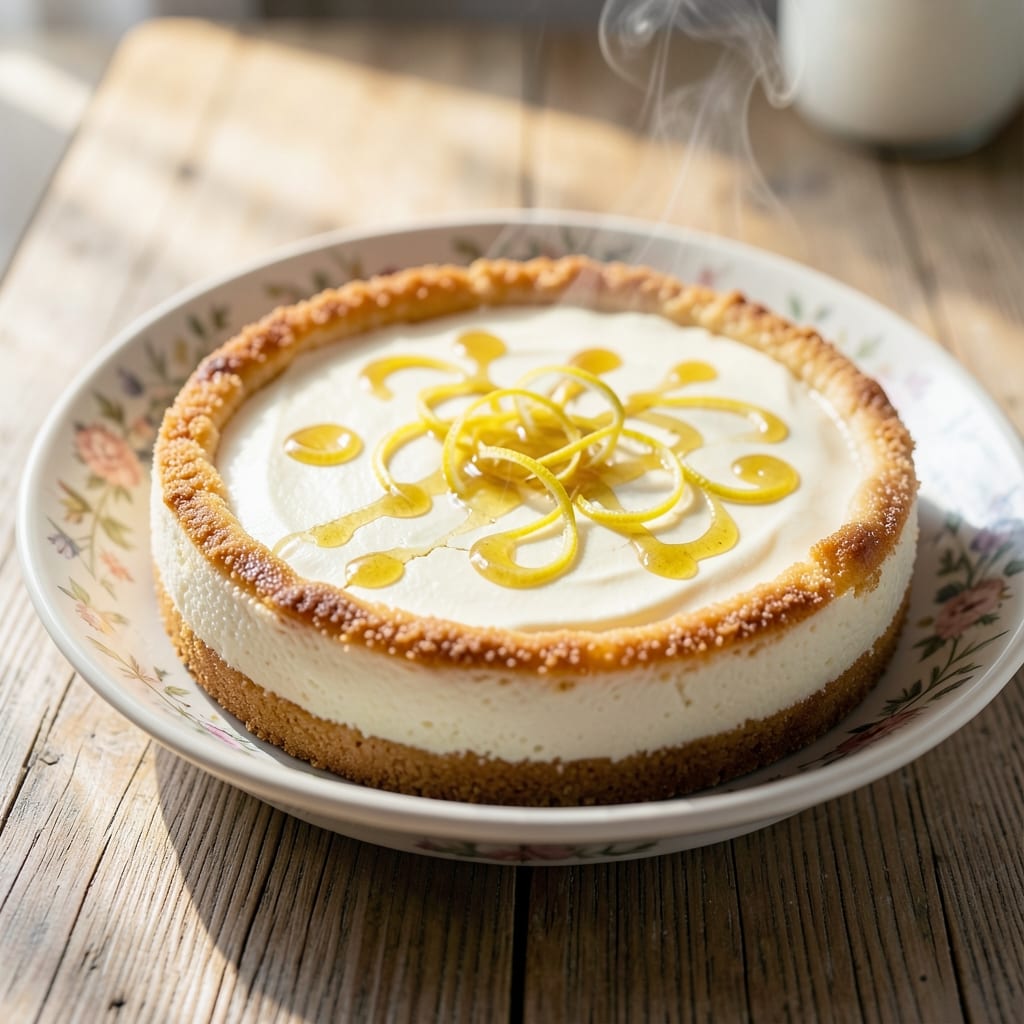
This baked cheesecake recipe UK delivers that perfect no-crack crown with a tangy lemon zest twist—no water bath or jiggling required. 💛 The secret lies in a simple yet effective technique that ensures a silky texture and golden top every time. I've tested countless variations, and this one consistently wins for its balance of richness and brightness.
What makes this recipe stand out is the use of full-fat cream cheese for a velvety texture, combined with a crispy graham cracker crust that holds up beautifully. The lemon zest not only adds a refreshing zing but also helps prevent cracking, a common issue in traditional baked cheesecakes. Baking at a steady temperature ensures even cooking without the risk of a soggy base.
By the time it emerges from the oven, you'll have a cheesecake with a smooth, creamy interior and a perfectly set top—no cracks in sight. The lemon zest infuses just enough brightness to complement the richness of the cream cheese, making each slice a delightful balance of sweet and tangy. This is the kind of dessert that feels special yet is simple enough for a weeknight treat.
Serve it chilled with a dollop of whipped cream or a drizzle of raspberry coulis for an extra touch of elegance. Whether it's for a family gathering or a quiet evening in, this cheesecake is sure to impress without the fuss. Let's get baking!
Ingredients for baked cheesecake recipe uk
Full-fat cream cheese and fresh lemon zest create the perfect UK-style baked cheesecake with a crack-free crown.
| Ingredient | Amount | Notes |
|---|---|---|
| Full-Fat Cream Cheese 🧀 | 32 oz | Room temperature for blending |
| Granulated Sugar 🍚 | 1 ½ cups | White or light brown |
| Large Eggs 🥚 | 4 whole | Room temperature |
| Lemon Zest 🍋 | 2 tbsp | Freshly grated from 1 lemon |
| Lemon Juice 🍋 | 2 tbsp | Freshly squeezed |
| All-Purpose Flour 🌾 | ¼ cup | Sifted for smooth batter |
| Vanilla Extract 🌿 | 1 tbsp | Pure vanilla preferred |
| Graham Cracker Crumbs 🍪 | 2 ½ cups | Finely crushed, not pre-packaged |
| Unsalted Butter 🧈 | ½ cup | Melted, full-fat preferred |
| Salt 🧂 | ½ tsp | Fine sea salt |
| Heavy Whipping Cream 🥛 | ½ cup | For optional whipped topping |
| Raspberry Coulis 🍓 | ½ cup | Optional garnish |
The cream cheese is non-negotiable here—Philadelphia full-fat works best for that velvety texture. Wait until it's room temperature before blending, or you'll end up with lumps. For the crust, crush graham crackers yourself (not pre-packaged crumbs)—they stay crispier. I grab mine from Tesco or Sainsbury's in the biscuit aisle. The lemon zest should be vibrant yellow—avoid green bits—and freshly grated. Squeeze the juice from the same lemon to maintain consistency. If you're short on time, microwave the butter 40 seconds to just melt it before mixing with crumbs.
No full-fat cream cheese? Substitute with a mix of cream cheese and mascarpone (half and half) for a lighter texture. Short on graham crackers? Digestive biscuits work perfectly—just crush them finer. The vanilla extract can be swapped for vanilla bean paste if you're feeling fancy, but pure extract is fine. For a sugar swap, coconut sugar at a 1:1 ratio adds subtle caramel notes. The whipped cream topping is optional but lightly sweetened with powdered sugar elevates it. If you're making the raspberry coulis, simmer frozen raspberries with a touch of sugar—no need for fancy techniques.
Store the assembled cheesecake in the fridge for up to 5 days, covered tightly. The crust stays crispy if you press parchment paper directly on top before sealing. For serving, let it sit at room temperature for 10-15 minutes—this prevents condensation from making the crust soggy. Freeze individual slices for up to 3 months by wrapping tightly in plastic. The lemon zest flavor actually improves slightly after a day in the fridge, so make it ahead if possible. Whipped cream and coulis should be added fresh to keep them light.
Why You'll Love This Recipe
- No-Fuss Mixing: I swear by the five-minute beat with my hand mixer—no overworking the cream cheese, no lumps. Just fold in those eggs one at a time, and the lemon zest brightens everything up like a morning cuppa.
- Zesty Twist: That lemon juice and zest? Not just for show. They cut through the richness, giving you a cheesecake that’s creamy but never heavy—like a proper British summer day, but in dessert form.
- Party-Proof Portion: Slice it for tea with friends or serve whole at a dinner party. The crust holds up, the center stays firm, and honestly? No one will guess it’s baked—just pure, silky satisfaction.
- Leftovers Win: I make this on Sundays because it keeps for days in the fridge. Cold slices with a dollop of clotted cream? Absolute bliss. And the best part? It’s cheaper than ordering in.
Step-by-step instructions for baked cheesecake
Master this foolproof method for a silky-smooth cheesecake with a crack-free crown.
👨🍳 Step 1: Prepare the Crust and Pre-Bake
Preheat your oven to 325°F and grease a 9-inch springform pan generously with the 0.5 cup unsalted butter, coating the sides and bottom thoroughly. In a medium bowl, combine the 2.5 cups graham cracker crumbs, 0.5 tsp salt, and the 0.5 cup melted unsalted butter. Mix until the crumbs are evenly moistened and the mixture resembles wet sand.
Press the crumb mixture firmly into the bottom of the prepared pan, using the back of a measuring cup to create an even, compact base. Bake for 10 minutes until the edges are lightly golden. Remove from the oven and let cool slightly while you prepare the filling—this pre-baking step prevents sogginess and ensures structural support for the cheesecake.
👨🍳 Step 2: Blend the Cheesecake Filling
While the crust cools, beat the 32 oz full-fat cream cheese in a stand mixer fitted with the paddle attachment on medium speed until completely smooth and creamy—this should take about 3-4 minutes. Add the 1.5 cups granulated sugar and mix until fully incorporated. Scrape down the sides of the bowl with a rubber spatula to ensure even blending.
In a separate small bowl, whisk together the 4 whole large eggs, 2 tbsp lemon zest, 2 tbsp lemon juice, 1 tbsp vanilla extract, and the 0.25 cup sifted all-purpose flour. With the mixer running on low speed, gradually pour in the egg mixture while scraping the bowl continuously. This slow incorporation prevents curdling and ensures a silky texture. Mix until just combined—overmixing develops gluten and can lead to a dense cheesecake.
🥘 Step 3: Assemble and Bake the Cheesecake
Pour the cheesecake batter evenly over the cooled crust, spreading it gently with a spatula to eliminate any air pockets. Tap the pan firmly on the countertop 3-4 times to help settle the batter and release any trapped air bubbles—this simple step dramatically reduces the risk of cracks during baking.
Place the pan on a baking sheet lined with parchment paper (to catch any potential drips) and bake at 325°F for 60-65 minutes. The cheesecake is done when the edges are set but the center still has a slight wobble—it should pull away from the sides of the pan but not be completely firm. For a crack-free crown, avoid opening the oven door during the baking process. If you notice the top browning too quickly, loosely tent the pan with aluminum foil.
⏰ Step 4: Cool and Finish
Remove the cheesecake from the oven and let it cool in the pan for 1 hour at room temperature. Then, carefully run a thin knife around the edge of the pan to loosen the cheesecake from the sides. Chill in the refrigerator for at least 4 hours or overnight—this gradual cooling process is crucial for developing the perfect texture and preventing cracks.
Before serving, whip the 0.5 cup heavy whipping cream to soft peaks and spread it over the top of the cheesecake. Drizzle with the 0.5 cup raspberry coulis in decorative swirls. For presentation, you can garnish with fresh raspberries or additional lemon zest. Serve chilled, allowing each slice to rest for 5 minutes before cutting to maintain clean edges.
Pro Tips For Making Baked Cheesecake Recipe Uk
- Preheat Like a Pro: Fire up your oven to 160°C (140°C fan) before you even think about mixing—this recipe demands a warm oven. I learned this the hard way after a tepid start left my cheesecake dense and undercooked. Trust me, the extra 10 minutes waiting pays off in creamy perfection.
- Whisk, Don’t Fold: Beat the full-fat cream cheese and sugar until pale and fluffy—at least 3-4 minutes with an electric mixer. I used to stop when it looked "done," but that’s how you end up with a grainy texture. Keep going until the mixture leaves a trail when the whisk lifts.
- Room-Temp Eggs Only: Cold eggs sink like stones and curdle the batter. Pop them in a bowl of warm water for 10 minutes before cracking them in—this ensures a smooth, lump-free mix. (Yes, even if you’re impatient like me.)
- Water Bath, Not Just Foil: Wrap your springform tin in foil first, then submerge it in a deep tray of boiling water—the water should come halfway up the tin. I skipped this once and got a cracked top. The water bath keeps the heat even and prevents sudden temperature shocks.
Essential equipment for baked cheesecake recipe uk
Springform Pan
Your 9-inch springform pan is the workhorse of this recipe—it must be greased generously with 0.5 cup unsalted butter before adding the crust. I recommend Wilton Professional pans for their sturdy construction and easy release. If your pan has a removable bottom, use it to simplify serving. Always preheat your oven fully before baking to ensure even heat distribution. 🧈
Stand Mixer
A stand mixer with a paddle attachment is essential for blending the cream cheese to a silky consistency. I use my KitchenAid Artisan Series on medium speed for 3-4 minutes to eliminate all lumps. If you don’t have a mixer, a hand mixer works, but be prepared for more elbow grease. The key is to scrape the bowl frequently to prevent uneven mixing.
Rubber Spatula
Your flexible rubber spatula (I love the OXO Good Grips brand) is crucial for two steps: folding in the egg mixture and spreading the batter evenly over the crust. The spatula’s flexibility helps eliminate air pockets, which are the enemy of crack-free cheesecakes. Keep one handy for scraping down the sides of your mixing bowl too—this ensures all ingredients are fully incorporated.
Fine-Mesh Sieve
A fine-mesh sieve is a game-changer for sifting the 0.25 cup all-purpose flour before mixing. This prevents lumps in your batter and creates a lighter texture. I use my Microplane-style sieve (like the one from OXO) because it’s gentle on delicate ingredients. If you’re short on time, a regular sieve works, but you’ll need to press harder to get the same fine texture.
Digital Thermometer
While not strictly necessary, a digital kitchen thermometer (I use the Thermoworks Thermapen) helps you monitor the oven’s accuracy. Baked cheesecakes are sensitive to temperature fluctuations—aim for a steady 325°F. If your oven runs hot, reduce the temperature by 25°F to prevent overbrowning. The thermometer also comes in handy for checking the internal temperature of the cheesecake before removing it from the oven.
Parchment Paper
Line your baking sheet with parchment paper to catch any potential drips from the cheesecake during baking. I recommend Kraft brand parchment paper because it’s sturdy and non-stick. Place the springform pan directly on the parchment to make cleanup effortless. After baking, you can also use parchment to press directly on the cheesecake’s surface while chilling—this prevents condensation from making the crust soggy later. ✨
Nutrition facts
Frequently asked questions
Why does this recipe promise a crack-free cheesecake?
The secret lies in three key techniques: tapping the pan to release air bubbles, baking at a steady 325°F without opening the oven, and using lemon zest which helps stabilize the structure. The gradual cooling process also prevents sudden temperature shifts that cause cracks.
Can I substitute Philadelphia cream cheese with something else?
For best results, stick with full-fat Philadelphia-style cream cheese. If unavailable, use a 50/50 mix of cream cheese and mascarpone—this maintains the creamy texture. Avoid low-fat versions as they can make the cheesecake dense.
How do I know when the cheesecake is fully set?
The edges should be completely firm while the center still has a slight wobble when gently shaken. It should pull away cleanly from the pan sides but not be completely solid. The internal temperature should reach 150°F when checked with a thermometer.
Can I make this cheesecake without a springform pan?
You can use a regular cake pan, but line the bottom with parchment paper and grease it thoroughly. After baking, let it cool completely before removing—don't try to release the sides too soon. The crust may be slightly less crispy without the springform's flexibility.
Why does my cheesecake have a sunken center?
Overbaking is the most common cause. Remove the cheesecake when the center still has slight movement (it will firm up as it cools). Another culprit is opening the oven door too early—this creates temperature fluctuations. For next time, reduce baking time by 5 minutes and check earlier.