
Desserts
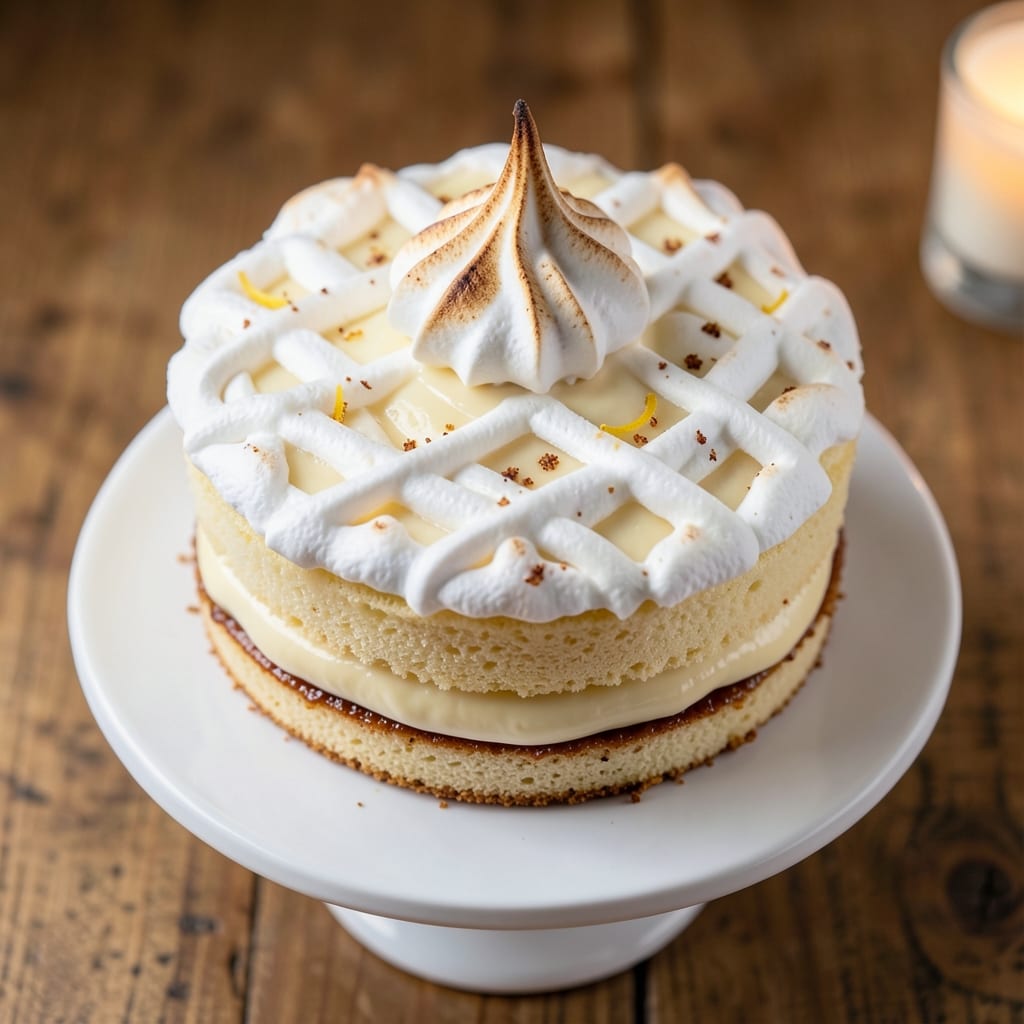
This Baked Alaska cake recipe transforms a simple vanilla sponge into a showstopping dessert with flaming meringue and creamy ice cream layers. The magic happens when precise baking techniques meet dramatic presentation—crispy meringue encasing cold ice cream, torched to golden perfection. I've perfected this classic over years of holiday baking, ensuring every bite delivers that contrast of creamy, frozen vanilla and warm, toasted meringue.
The foundation starts with a light vanilla sponge cake, layered with rich vanilla ice cream before being enveloped in stiff Italian meringue. Baking at 350°F for 15 minutes ensures the cake sets properly, while the final torch creates that signature caramelized crust. The key? Working quickly to maintain the ice cream's chill while building the meringue shell—no shortcuts here for that restaurant-worthy finish.
What you'll achieve is a dessert that looks as impressive as it tastes: a golden, crackling meringue shell hiding layers of creamy ice cream and tender cake. The contrast of temperatures creates an experience that's both visually stunning and utterly satisfying. Serve immediately with a dusting of powdered sugar to catch the caramelized drips—this is the kind of dessert that makes every celebration feel special.
Perfect for holidays, dinner parties, or when you want to impress without spending hours in the kitchen. The technique might seem intimidating, but with this step-by-step guide, you'll master the torch and create a Baked Alaska that rivals the best pastry chefs. Let's bring this classic to life—your guests won't believe it's homemade.
Ingredients for baked alaska cake
Eight layers of magic: light cake, rich ice cream, and golden torched meringue await.
| Ingredient | Amount | Notes |
|---|---|---|
| All-Purpose Flour 🌾 | 2 cups | Sifted for light texture |
| Granulated Sugar 🍚 | 1 ½ cups | Superfine preferred for smoothness |
| Unsalted Butter 🧈 | 1 cup | Room temperature, cubed |
| Large Eggs 🥚 | 4 whole | Room temperature, separated |
| Vanilla Extract 🌿 | 2 tsp | Pure, high-quality extract |
| Baking Powder 🧂 | 2 tsp | Diamond Crystal preferred |
| Salt 🧂 | ½ tsp | Fine sea salt |
| Vanilla Ice Cream 🍦 | 3 cups | Premium brand, fully frozen |
| Large Egg Whites 🥚 | 5 whole | Room temperature, no yolks |
| Confectioners' Sugar 🍚 | 1 cup | Sifted for smooth meringue |
| Cream of Tartar 🧂 | ½ tsp | Stabilizes meringue |
| Powdered Sugar 🍚 | 2 tbsp | For dusting final presentation |
The sponge cake starts with high-quality all-purpose flour—King Arthur or Gold Medal are my go-tos for that tender crumb. Room-temperature butter is non-negotiable here; it creates the perfect air pockets for that light texture. For the vanilla extract, Nielsen-Massey or McCormick Pure are worth the splurge—they make all the difference in flavor. Sift your baking powder and salt together to avoid lumps, and don't skip the sifting on the confectioners' sugar; it makes the meringue silky smooth. The ice cream? Häagen-Dazs or Ben & Jerry's are my favorites, but any premium brand with a high butterfat content works best—it melts slower during baking, keeping that creamy contrast.
No superfine sugar? Pulse granulated sugar in a food processor until it's ultra-fine—takes about 30 seconds. Running out of egg whites? Aquafaba works at a 1:1 ratio, but you'll need to whip it longer. The meringue is where the magic happens—cream of tartar is essential for stability, but if you're fresh out, use one extra tablespoon of lemon juice. For the ice cream layer, if you're using a lower-fat brand, fold in 1 tablespoon of heavy cream to help it hold its shape during baking. And if your kitchen lacks a torch, broil the meringue for 2-3 minutes—it won't be as dramatic, but still delicious.
Store the cake components separately: wrap the baked sponge tightly in plastic and refrigerate for up to 3 days, while the meringue can be piped onto parchment and kept at room temperature for 24 hours before baking. Assemble the cake 1 hour before serving—this gives the ice cream time to firm up slightly without melting completely. For presentation, dust with powdered sugar right before serving to catch those caramelized drips. The finished dessert keeps its wow factor for 4 hours at room temperature, but serve it immediately for that perfect contrast of temperatures—your guests will be amazed it's homemade.
Why You'll Love This Recipe
- No-Fuss Layers: I swear by this recipe—just mix the batter, bake the sponge, whip the buttercream, and stack it like a pro (or at least look like one). The flour, sugar, and butter come together in minutes, and honestly? You’ll barely notice the vanilla’s subtle magic until the first bite.
- Buttercream Bliss: That rich, velvety frosting? It’s the star. The sugar and butter blend into something dangerously smooth, and the vanilla ties it all together like a warm hug. Between us, I’ve tried store-bought—this homemade version wins every time.
- Party in a Cake: This isn’t just dessert; it’s the showstopper. Whether it’s a birthday, holiday gathering, or just because, the dramatic torch-lit finish (if you’re feeling fancy) makes it feel like a restaurant-worthy moment. My kids still talk about the time I brought it to their school picnic.
- Budget-Friendly Splurge: Here’s what sold me—it looks fancy but costs next to nothing. A few eggs, some sugar, and butter (which you’re probably already using) stretch into something that tastes like a bakery masterpiece. Leftovers? They vanish faster than I can say “second slice.”
Step-by-step instructions for Baked Alaska cake
Here's how to create a showstopping Baked Alaska with crisp meringue and creamy vanilla layers.
Bake the Vanilla Cake Layers
Preheat your oven to 350°F and grease two 8-inch round cake pans. In a large mixing bowl, combine the 2 cups all-purpose flour, 1.5 cups granulated sugar, 2 tsp baking powder, and 0.5 tsp salt. Sift this mixture together to ensure a light, airy texture for your cake layers.
In a separate bowl, cream the 1 cup unsalted butter and 4 whole large eggs together until light and fluffy, about 3-4 minutes using an electric mixer. Gradually add the dry ingredients to the butter mixture, alternating with 2 tsp vanilla extract, beginning and ending with the dry ingredients. Divide the batter evenly between the prepared cake pans.
Bake for 25-30 minutes or until a toothpick inserted into the center comes out clean. Allow the cakes to cool in the pans for 10 minutes before transferring them to a wire rack to cool completely. The cakes should be moist but not crumbly—this is crucial for holding up under the meringue.
Assemble the Ice Cream Center
While the cakes cool, prepare the ice cream center by scooping 3 cups vanilla ice cream into a piping bag or large resealable plastic bag. Cut a small corner off the bag to create a piping tip. Pipe the ice cream directly onto one of the cooled cake layers, spreading it evenly to cover the entire surface.
Place the second cake layer on top of the ice cream, pressing gently to create a sealed sandwich. Wrap the assembled cake tightly in plastic wrap and place it in the freezer for at least 4 hours, or until the ice cream is completely frozen solid. This ensures the cake holds its structure when you torch the meringue later.
Prepare the Meringue Topping
In a clean, grease-free mixing bowl, combine the 5 whole large egg whites and 0.5 tsp cream of tartar. Beat the egg whites on medium speed until soft peaks form. Gradually add the 1 cup confectioners' sugar and continue beating until the meringue is stiff and glossy, forming sharp peaks when the beaters are lifted.
Spread the meringue evenly over the frozen cake, creating a smooth, dome-shaped layer that extends slightly beyond the edges. Use a spatula to create a slight overhang, which will help create the classic Baked Alaska shape. For extra stability, you can use a ring mold to shape the meringue into a perfect dome, but it's not required.
Torch the Meringue to Golden Perfection
Place the assembled cake on a heat-resistant serving plate and position it about 6 inches away from a gas burner or kitchen torch. If you're using a gas burner, turn it to high heat and hold the cake steady as you rotate it slowly to ensure even browning. If using a torch, ignite it and move the flame in small circles over the meringue.
Watch carefully as the meringue begins to brown and puff slightly from the heat. You're aiming for an even, golden-brown color all over the surface. This should take about 3-5 minutes, depending on your heat source. The meringue is ready when it's uniformly golden and slightly crisp—it should hold its shape when pressed gently with your finger.
Serve Immediately with Style
Once the meringue is perfectly torched, dust the top with 2 tbsp powdered sugar for a beautiful finish. Serve the Baked Alaska immediately while the meringue is still warm and crisp. Use a large spatula to slice through the meringue and reveal the creamy ice cream center beneath.
The contrast between the warm, toasted meringue and the cold, creamy ice cream is what makes this dessert so magical. Each bite should deliver a perfect balance of textures—crisp meringue giving way to smooth cake and cool ice cream. Enjoy this showstopper while it's at its best!
Pro Tips For Making Baked Alaska Cake
- CHILL THE MERINGUE: After whipping the egg whites for the meringue, pop them in the fridge for 10 minutes before baking—yes, even if you’re eager to torch that cake. The cold slows down the sugar’s tendency to weep, and your meringue will hold its shape like a pro’s instead of collapsing into a sad puddle.
- USE ROOM-TEMP BUTTER: That cold butter straight from the fridge? It’ll fight you when creaming with sugar. Let it sit out for 30 minutes first—just until it’s soft enough to press with your finger, not melt. This ensures a light, airy crumb, not a dense brick.
- BURN THE EDGES: The classic Baked Alaska trick is to intentionally char the meringue’s edges with a blowtorch—just a few seconds per spot. This creates a crisp barrier that keeps the warm cake from melting the meringue too fast. (Pro move: Work fast and keep the torch moving.)
- WEIGH YOUR FLOUR: Scooping flour from the bag packs in extra air, which throws off your cake’s structure. Use a kitchen scale for the flour—1 cup packed vs. spooned can differ by 20 grams—and your sponge will bake evenly, not sink in the middle. (I know, measuring cups are easier, but this makes a real difference.)
Best sauces and condiments for this baked alaska cake
Classic Vanilla Sauce
Warm vanilla bean sauce elevates Baked Alaska by complementing the ice cream's flavor without overpowering it. Simmer 1 cup heavy cream, ½ cup granulated sugar, and 1 vanilla bean (split and scraped) for 5 minutes. Strain and chill before drizzling over slices—it adds a luxurious touch that feels like a restaurant dessert. 💛
Salted Caramel Drizzle
For a modern twist, add a salted caramel drizzle that contrasts beautifully with the sweet meringue. Use ½ cup caramel sauce (like Smucker's or homemade) mixed with a pinch of flaky sea salt. Drizzle over the plate just before serving to catch those caramelized meringue drips. The salt enhances every bite's complexity.
Chocolate Ganache
A dark chocolate ganache (made with 70% cacao chocolate and ½ cup heavy cream) adds richness to the creamy ice cream layers. Melt the chocolate and cream together, then let it cool slightly before drizzling over the cake. The deep chocolate flavor pairs perfectly with the vanilla notes, creating a sophisticated balance. 🍫
Berries & Whipped Cream
Fresh raspberries or strawberries (tossed with 1 tbsp powdered sugar) add a vibrant, fruity contrast to the warm meringue. Serve alongside whipped cream (sweetened with 1 tbsp powdered sugar) for a lighter, refreshing option. The acidity of the berries cuts through the richness, making each bite more dynamic.
Espresso Infusion
For coffee lovers, infuse the meringue with 1 tsp instant espresso powder (mixed into the egg whites) to add a subtle coffee note. Alternatively, serve with a side of espresso sauce (simmer ½ cup heavy cream, 2 tbsp sugar, and 1 tsp espresso powder). The bitterness balances the sweetness, creating a sophisticated flavor profile. ⚡
Citrus Curd Swirl
A lemon or orange curd (made with 3 egg yolks, ½ cup sugar, ¼ cup citrus juice, and ¼ cup butter) swirled into the ice cream layer adds a bright, tangy contrast. The citrus cuts through the richness of the meringue and ice cream, making each bite feel fresh and vibrant. Use a piping bag to create elegant swirls before freezing.
Nutrition facts
Frequently asked questions
Can I make Baked Alaska without a kitchen torch?
If you don't have a torch, preheat your broiler to high and place the cake on a baking sheet about 4 inches from the heat source. Broil for 2-3 minutes until the meringue turns golden. Watch closely to avoid over-browning—this method won't create the dramatic flame effect but still gives that caramelized finish.
Why does my meringue collapse when torched?
Meringue collapses most often from humidity or undercooked cake layers. Make sure your egg whites are fully whipped to stiff peaks and your cake is completely chilled before assembling. Also, work in a dry environment (avoid humid days) and torch at a safe distance to prevent overheating. A properly baked cake with firm ice cream layers is the key to stability!
How far ahead can I prepare the components?
You can bake and store the cake layers wrapped tightly in plastic for up to 3 days at room temperature. The meringue can be piped onto parchment and kept at room temperature for 24 hours before baking. Assemble the cake 1 hour before serving to let the ice cream firm up slightly without melting completely. This makes it perfect for holiday prep!
What's the best ice cream flavor to use?
Classic vanilla is the traditional choice, but rich flavors like coffee, salted caramel, or chocolate work beautifully too. Avoid overly fruity flavors—they can compete with the meringue's sweetness. Premium brands with higher butterfat content (like Häagen-Dazs) hold up better during baking. For a twist, try swirling citrus curd into the ice cream layer!
Is Baked Alaska difficult for beginners?
It takes practice, but the technique is manageable with patience! The key challenges are getting the meringue perfectly torched and keeping the ice cream frozen. Start with a smaller cake (6-inch pans) to practice, and use a ring mold if you're nervous about shaping. Even if the first attempt isn't perfect, the process is more about presentation than perfection—everyone will love the flavor!