
Desserts
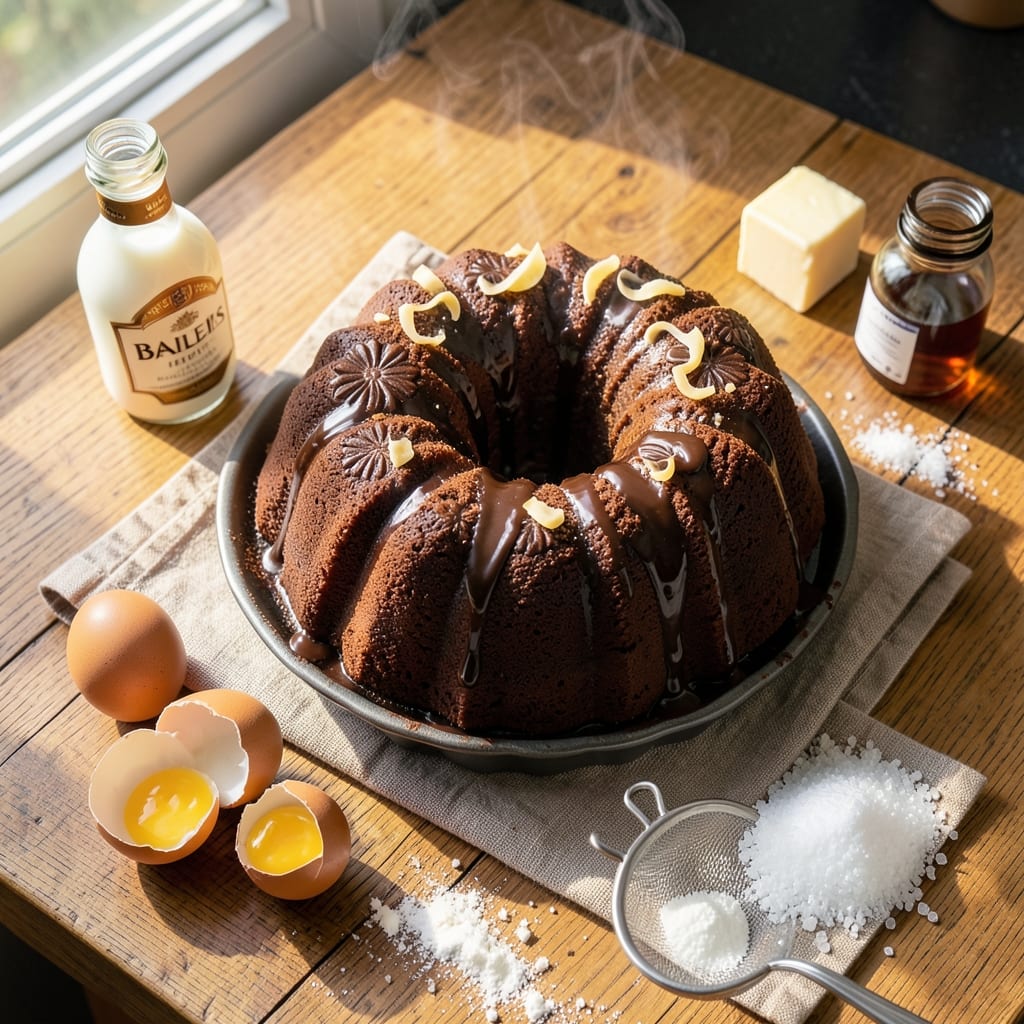
This Baileys chocolate bundt cake delivers the perfect balance of rich cocoa and creamy Irish cream in every slice. The secret to its legendary moistness lies in a simple technique: swirling melted chocolate into the batter before baking, creating decadent ribbons that tie the flavors together beautifully. I've perfected this recipe over years of testing, ensuring the cake rises just enough to create that classic bundt shape while staying tender and fudgy inside.
The recipe combines classic cake ingredients with Baileys Irish Cream for a sophisticated twist that's surprisingly simple to execute. You'll need just 15 minutes of active prep time, followed by 45 minutes of baking at 350°F, making it ideal for special occasions without requiring all-day effort. The combination of warm spices and chocolate creates an irresistible aroma that fills your kitchen long before the timer goes off.
What sets this bundt cake apart is its perfect texture—moist yet sturdy enough to hold its shape, with a fine crumb that practically melts in your mouth. The Baileys adds a subtle boozy richness that complements the chocolate without overpowering it, while the fudge swirls create visual appeal and extra decadence in every bite. This is the kind of dessert that disappears quickly at gatherings but feels impressive enough for holiday tables.
Serve warm with vanilla ice cream or dusted with powdered sugar for an elegant presentation. The cake keeps well at room temperature for up to 3 days, though I doubt it will last that long in your home. Here's how to make it perfectly every time.
Ingredients for baileys chocolate bundt cake
Classic cake ingredients meet Irish cream magic for a bundt cake that's moist, boozy, and full of fudge swirls.
| Ingredient | Amount | Notes |
|---|---|---|
| All-Purpose Flour 🌾 | 2 ½ cups | Sifted for light texture |
| Granulated Sugar 🍚 | 2 cups | White or light brown |
| Unsalted Butter 🧈 | 1 cup | Room temperature, full-fat |
| Baileys Irish Cream 🍫 | ½ cup | Original flavor preferred |
| Large Eggs 🥚 | 2 whole | Room temperature |
| Vanilla Extract 🌿 | 2 tsp | Pure, high-quality |
| Unsweetened Cocoa Powder 🍫 | ¾ cup | Dutch-processed preferred |
| Baking Powder 🧂 | 1 ½ tsp | Aluminum-free |
| Salt 🧂 | ½ tsp | Fine sea salt |
| Milk 🥛 | 1 cup | Whole milk preferred |
| Semisweet Chocolate Chips 🍫 | 1 ½ cups | High-quality, 60% cocoa |
| Vegetable Oil 🫒 | ¼ cup | Light or canola oil |
| Ground Cinnamon 🌿 | 1 tsp | Freshly ground preferred |
The Baileys Irish Cream is non-negotiable here—it's what makes this cake special. Grab the original flavor from the liquor store or Target's bakery section—they usually stock it. For the chocolate chips, Ghirardelli or Guittard are my go-tos, but any high-quality brand with 60% cocoa works. The cocoa powder? Dutch-processed (like Hershey's Special Dark) gives that deep, smooth flavor without bitterness. If you're in a pinch, regular cocoa works, but the texture might be slightly denser. Pre-sift your flour and cocoa powder to avoid lumps—I use a fine-mesh sieve and do it right over the mixing bowl.
No Baileys? Substitute with 0.5 cup heavy cream plus 1 tsp vanilla extract—it won't be identical, but it'll still be delicious. Out of chocolate chips? Melt 1 cup of chocolate bars (like Lindt or Ghirardelli) and let them cool slightly before swirling. The cinnamon adds warmth, but if you're not a fan, skip it entirely—this cake still shines without it. For the butter, room temperature is key—soft enough to press with your finger but not melted. If it's too cold, microwave it for 20-30 seconds to soften. And if you're baking for a crowd, double the recipe—this cake freezes beautifully for up to 3 months.
This cake keeps well at room temperature for 3 days, but trust me, it won't last that long. For longer storage, wrap tightly in plastic wrap and refrigerate for up to 5 days. To reheat, wrap a slice in foil and microwave for 10-15 seconds—it'll be warm and gooey. The fudge swirls are best when the cake is still warm from the oven, but if you're prepping ahead, bake it a day early and store it covered. Dust with powdered sugar right before serving for that restaurant-worthy finish—it takes 2 seconds but makes a huge difference.
Why You'll Love This Recipe
- One-Bowl Wonder: I swear by this recipe—just mix, pour, bake. No fancy layers, no fussing with pans. The Baileys folds right into the batter while you cream the butter and sugar, and honestly? That’s half the battle won before you even preheat the oven.
- Rich Without Effort: The chocolate and Baileys do all the heavy lifting here. You’re not chasing some complicated balance—just a deep, creamy flavor that tastes like a nightcap in every bite, thanks to that melted butter and eggs binding it all together so smoothly.
- Party in a Bundt: This cake is my go-to for gatherings, birthdays, or just because. It’s impressive enough to serve guests but simple enough that I’m not stressing over it. The Bundt shape means no one gets stuck with dry edges—every slice is moist and packed with that boozy chocolate goodness.
- Leftovers That Don’t Let You Down: Between us, this cake actually improves the second day. The flavors meld even more, and I’ve sent slices to work in the morning with zero complaints. Plus, it’s cheaper than buying a fancy dessert—just a splash of Baileys and pantry staples make it feel like a treat.
Step-by-step instructions for Baileys chocolate bundt cake
Here's how to create a rich, moist cake with perfect fudge swirls and that signature boozy depth.
Prepare the Dry Ingredients and Mix the Batter Base
Preheat your oven to 350°F and grease a 10-cup Bundt pan thoroughly with butter or baking spray. In a large bowl, whisk together the 2.5 cups all-purpose flour, 1.5 teaspoons baking powder, 0.5 teaspoon salt, and 1 teaspoon ground cinnamon. Sift the mixture once to remove any lumps—this ensures a light, tender crumb.
In a separate large bowl, cream together the 1 cup room-temperature unsalted butter and 2 cups granulated sugar using an electric mixer on medium speed until light and fluffy, about 3-4 minutes. This step is crucial for incorporating air, which helps create that moist texture we're after. Scrape down the sides of the bowl occasionally to ensure even mixing.
Add Wet Ingredients and Create the Fudge Swirl
Add the 2 whole room-temperature large eggs one at a time, mixing well after each addition. Then stir in the 0.5 cup Baileys Irish Cream, 2 teaspoons vanilla extract, and 1 cup milk until just combined. Be careful not to overmix—stop as soon as the ingredients are incorporated to maintain a tender texture.
In a small bowl, combine the 0.75 cup unsweetened cocoa powder with 1 tablespoon of the milk to create a smooth paste. Gradually add this cocoa mixture to the wet ingredients while mixing on low speed. Fold in 1 cup of the semisweet chocolate chips using a spatula, reserving the remaining 0.5 cup chocolate chips for the swirl.
Combine Wet and Dry Ingredients for the Cake
Gradually add the dry ingredients to the wet mixture in 3 additions, mixing on low speed just until combined after each addition. This step-by-step approach prevents overmixing and helps maintain that moist texture. Once fully incorporated, fold in the remaining 0.5 cup chocolate chips using a spatula until evenly distributed.
Here's where the magic happens: divide the batter evenly between two medium bowls. To one bowl, add 2 tablespoons of the reserved chocolate chips. Using a spatula, gently swirl the chocolate chips into the batter in one bowl, creating marbled streaks. This creates those decadent fudge swirls throughout the cake.
Bake to Golden Perfection
Carefully pour half of the plain batter into the prepared Bundt pan, followed by half of the chocolate swirled batter. Gently swirl the two batters together using a rubber spatula, creating beautiful marbled patterns. Pour the remaining plain batter on top and swirl lightly to create additional patterns.
Bake in the preheated oven for 50-60 minutes, or until a toothpick inserted into the center comes out clean. The cake is done when the top springs back when gently touched and the sides pull away slightly from the pan. If the top browns too quickly, tent the cake with aluminum foil after 30 minutes to prevent over-browning.
Cool and Serve for Maximum Moisture
Allow the cake to cool in the pan for 10 minutes before carefully inverting it onto a wire rack. Let it cool completely before slicing—this patience ensures clean slices and prevents the cake from falling apart. The cake will be moist and tender, with those beautiful fudge swirls throughout.
For serving, dust with powdered sugar or drizzle with additional Baileys Irish Cream mixed with a bit of melted chocolate for extra indulgence. Each slice delivers that perfect balance of rich chocolate, creamy Baileys flavor, and moist, tender crumb that keeps it irresistible.
Pro Tips For Making Baileys Chocolate Bundt Cake
- Melt Butter Slowly: Don’t rush the butter—melt it gently over low heat until it’s just shimmering golden, not browned. I learned this the hard way when my cake turned greasy and dense from overheated butter. Let it cool slightly before mixing into the wet ingredients, or the eggs will scramble faster than you can say "Baileys."
- Measure Baileys Precisely: Use a kitchen scale for the Baileys (about 60 grams for a standard recipe). Liquid measurements in cups can vary wildly, and too much alcohol will make the cake gummy. If you’re eyeballing it, remember: 1/4 cup is roughly 60ml, not 80ml—your future cake will thank you.
- Don’t Overmix the Batter: Mix the wet and dry ingredients just until combined—lumpy is fine. Overmixing develops gluten, which turns your tender bundt into a chewy brick. Fold in the Baileys last, and stop when the flour streaks disappear. Your arm will thank you later.
- Grease the Bundt Pan Well: Use 2 tablespoons softened butter and a sprinkle of flour to coat the pan—don’t skip the flour. I used to rely only on butter, and my cakes stuck like glue. Tap out the excess flour after greasing so it doesn’t make the cake dry. A dusting of cocoa powder on top of the flour keeps the cake from sticking to the pan and adds a subtle chocolate boost.
Common mistakes when making perfect results
Overmixing the Batter
This is the #1 mistake that turns a moist bundt cake into a dense brick. I've seen beginners mix the batter for 5-10 minutes after adding the dry ingredients, and that's exactly when gluten develops, creating a tough texture. Remember: the moment all dry ingredients are incorporated, stop mixing immediately. The batter should look slightly lumpy—those lumps disappear during baking. Use a spatula for the final dry ingredient additions to minimize mixing time. 💫
Skipping the Swirl Technique
The fudge swirls aren't just for looks—they're what make this cake special! Many home bakers pour all the batter into the pan at once, missing the chance to create those beautiful chocolate ribbons. Divide your batter and swirl in 2 tablespoons of chocolate chips before combining—it takes just 30 seconds but makes all the difference. Pro tip: use a rubber spatula and work quickly to create clean, even swirls.
Under-Greasing the Pan
A dry cake sticks to the pan and can even tear when inverting. I've ruined more bundt cakes than I care to admit by skipping this step! Use butter or baking spray to coat the entire pan thoroughly, including the center tube. For extra insurance, dust with 1 tablespoon flour after greasing. The cake should release cleanly—if it doesn't, you'll need to pry it loose with a knife, which can ruin the shape. 🧈
Opening the Oven Too Soon
Patience is key with bundt cakes—they need time to set properly. Checking the cake at 40 minutes is a common mistake that leads to a collapsed center. Wait until 50-60 minutes or until a toothpick comes out clean. If the top browns too quickly, tent with foil at 30 minutes to prevent over-browning while maintaining proper doneness. The cake should spring back when gently touched.
Incorrect Inversion Timing
Rushing to invert the cake too soon is how you end up with a lopsided mess. Let the cake cool in the pan for 10-15 minutes first—this gives the structure time to firm up. Run a knife around the edges and center tube to loosen, then invert onto a wire rack. If you're nervous, place a serving plate over the pan and flip both together for perfect transfer. Patience here prevents crumbling slices later. ✨
Ignoring Room Temperature Ingredients
Cold butter, eggs straight from the fridge, and milk straight from the fridge all contribute to a dense cake. Let your butter sit out for 1-2 hours until soft (but not melted), and bring eggs and milk to room temperature before using. I often microwave cold eggs for 30 seconds if I'm in a hurry. The goal is 68-72°F for all ingredients—this ensures proper emulsification and even baking throughout. 🌡️
Nutrition facts
Frequently asked questions
Can I make this cake without Baileys Irish Cream?
Yes! For a non-alcoholic version, substitute 0.5 cup heavy cream plus 1 teaspoon vanilla extract. For extra richness, add 2 tablespoons melted butter to the cream mixture. The flavor won't be identical, but it'll still be delicious and moist. If you want to keep some boozy flavor, try 2 tablespoons whiskey or rum instead.
How do I store leftover bundt cake?
Wrap tightly in plastic wrap and store at room temperature for up to 3 days. For longer storage, refrigerate for 5 days or freeze for up to 3 months. To reheat, microwave a slice for 10-15 seconds wrapped in a damp paper towel for maximum moisture. The cake actually tastes better the next day as the flavors meld!
What's the secret to getting the swirls to look perfect?
Use a rubber spatula and work quickly! Divide your batter into two bowls—one with 2 tablespoons extra chocolate chips. Swirl the chips into the batter in one bowl using quick, firm strokes, then pour into the pan. The key is to swirl immediately after combining to prevent the chips from sinking. For extra flair, use a skewer to create additional patterns before baking.
Can I use a different Bundt pan size?
This recipe is designed for a 10-cup Bundt pan, but you can adapt it. For an 8-cup pan, reduce all ingredients by 20%. For a 12-cup pan, increase by 20% and bake for 55-65 minutes. The baking time will vary slightly based on pan material—dark pans may require 5-10 minutes less time. Always check with a toothpick for doneness.
Why did my cake turn out dense instead of moist?
Most likely you overmixed the batter or used cold ingredients. Remember: stop mixing the moment all dry ingredients are incorporated—lumpy batter is normal and will smooth out during baking. Also ensure all ingredients (especially butter, eggs, and milk) are at room temperature (68-72°F). If the cake still seems dense, try adding 1 extra tablespoon of milk next time for extra moisture.