
Desserts
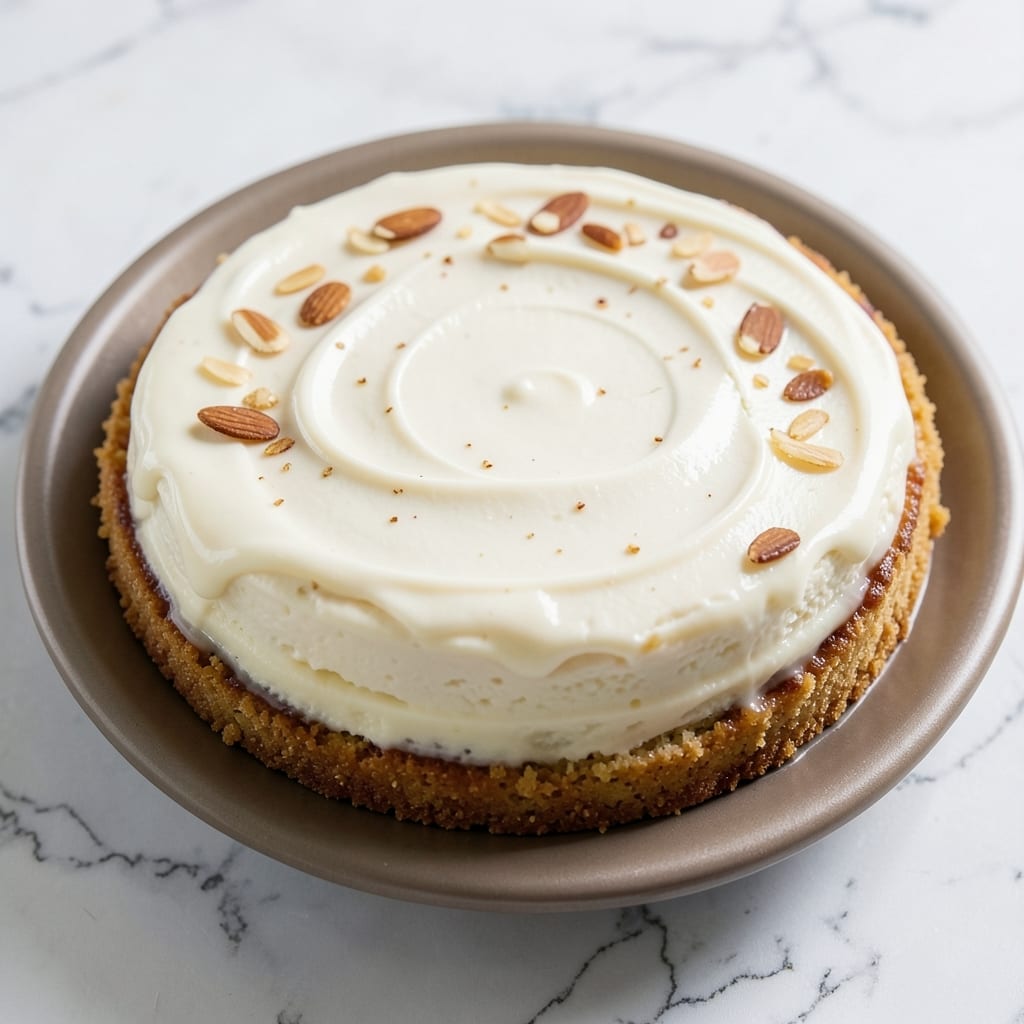
This Atkins sugar-free cheesecake recipe delivers all the creamy, velvety richness of classic cheesecake—without a single gram of sugar or refined carbs. ✨ The secret lies in using sugar-free sweeteners and low-carb crust alternatives that mimic traditional textures while keeping macros in check. After years of testing, this version stays dense, fudgy, and perfectly set, proving you don’t need sugar for decadence.
The foundation begins with a crust made from almond flour and cream cheese, baked until golden and sturdy enough to hold the filling without crumbling. For the filling, we blend full-fat cream cheese, sour cream, and sugar-free erythritol until silky smooth, then let it chill for hours to achieve that signature firm-yet-creamy texture. No stabilizers, no gums—just real ingredients that taste indulgent.
What you’ll end up with is a sugar-free cheesecake that’s rich enough to fool even the most skeptical dessert lovers. The crust stays crisp at the edges while remaining tender underneath, and the filling holds its shape when sliced—no wobbly surprises here. Top it with fresh berries or a dollop of whipped cream for a touch of brightness that balances the creaminess.
Perfect for Atkins dieters, keto enthusiasts, or anyone craving dessert without the sugar crash, this recipe delivers restaurant-quality results at home. The best part? It’s foolproof—no special equipment or advanced techniques required. Let’s make this guilt-free treat!
Ingredients for atkins sugar free cheesecake
Eight essential ingredients transform into a sugar-free cheesecake that rivals classic versions in texture and richness.
| Ingredient | Amount | Notes |
|---|---|---|
| Full-Fat Cream Cheese 🧀 | 32 oz | Room temperature for blending |
| Sour Cream 🥛 | 1 cup | Full-fat preferred |
| Granulated Erythritol 🍯 | ¾ cup | Sugar-free sweetener |
| Large Eggs 🥚 | 4 whole | Room temperature |
| Vanilla Extract 🌿 | 1 tbsp | Pure extract preferred |
| Lemon Juice 🍋 | 1 tbsp | Freshly squeezed |
| Almond Flour 🌾 | 1 ½ cups | Fine-ground preferred |
| Cream Cheese (for crust) 🧀 | 8 oz | Room temperature |
| Powdered Erythritol 🍯 | ¼ cup | For crust sweetness |
| Unsalted Butter 🧈 | ¼ cup | Cold for crust |
| Heavy Whipping Cream 🥛 | ½ cup | For topping (optional) |
| Fresh Berries 🍓 | 1 cup | For garnish (optional) |
| Diamond Crystal Kosher Salt 🧂 | ½ tsp | For seasoning |
| Ground Cinnamon 🌿 | ¼ tsp | For crust flavor |
The cream cheese is non-negotiable—full-fat Philadelphia brand delivers the best texture, though any high-quality brand works. For the crust, almond flour must be finely ground to avoid gritty bites; Bob's Red Mill or Anthony's are reliable brands. Erythritol (not stevia or sucralose) mimics sugar's texture best—Lakanto or Wholesome Sweeteners are top-tier options. Room-temperature eggs blend smoothly, so take them out 30 minutes before mixing. The lemon juice brightens the filling without adding carbs, and vanilla extract should be pure, not imitation.
No erythritol? Allulose works in a 1:1 ratio, though texture may vary slightly. Substitute Greek yogurt for sour cream at a 1:1 ratio if needed. The crust can use walnut flour instead of almond flour, though texture will be denser. For extra richness, add 1 oz cream cheese to the filling. Fresh berries are ideal for garnish—frozen works in a pinch, but thaw and drain well. The cinnamon in the crust enhances the almond flavor without adding sweetness, while kosher salt balances the tangy filling.
Store the cheesecake in an airtight container in the fridge for up to 5 days, though it's best within 3 days. The crust stays crisp for 2 days before softening slightly. For longer storage, wrap tightly in plastic and freeze for 2 months. To serve, let it sit at room temperature for 15 minutes—this prevents condensation and maintains the perfect slice. Whipped cream (if using) should be added fresh to avoid sogginess.
Why You'll Love This Recipe
- Five-Ingredient Magic: I swear, this recipe feels like cheating—just cream cheese, sour cream, erythritol, eggs, and vanilla. No fancy gadgets, no baking degree required. The only "trick" is beating the cream cheese until it’s buttery smooth, and honestly? That’s the hardest part of the whole thing.
- No Sugar, All Flavor: Between us, this tastes way better than most store-bought cheesecakes—and that’s saying something. The erythritol blends in perfectly, the vanilla sings, and the full-fat cream cheese gives it that rich, velvety texture without a single gram of sugar guilt. (Yes, even my sugar-loving husband asks for seconds.)
- Weeknight or Party Star: Make it for yourself on a lazy Sunday or bring it to a potluck—this cheesecake holds its own. It’s sturdy enough to slice neatly (no crumbly mess) and tastes just as good the next day. Pro tip: Add a sprinkle of cinnamon or a dollop of whipped cream to dress it up for company.
- Leftover Goldmine: Let’s be real—I always bake one extra. This cheesecake doesn’t dry out or get weird in the fridge; it actually improves overnight. Slice it for breakfast with berries, pack it in lunches, or just eat it straight from the pan. (No judgment here.) Plus, the ingredients are cheap—full-fat cream cheese and eggs stretch your budget further than you’d think.
Step-by-step instructions for Atkins sugar-free cheesecake
Master this zero-sugar dessert technique—creamy texture, perfect crust, and no guilt.
👨🍳 Step 1: Prepare the Crust Foundation
Preheat your oven to 325°F and line an 8-inch springform pan with parchment paper. In a food processor, combine the 8 oz cream cheese (for crust), 0.25 cup cold unsalted butter, 0.25 cup powdered erythritol, 0.5 tsp diamond crystal kosher salt, and 0.25 tsp ground cinnamon. Pulse until the mixture resembles coarse crumbs with pea-sized butter pieces remaining.
Press this mixture evenly into the bottom of your prepared pan, creating a thin, even layer. Use the bottom of a glass to compact it firmly—this prevents cracking during baking. Real talk: don't overpress or you'll end up with a dense, cake-like crust instead of the delicate base we want. Bake for 12-15 minutes until the edges are light golden brown and the crust feels set to the touch.
🍳 Step 2: Blend the Sugar-Free Filling
While the crust bakes, reduce oven temperature to 300°F. In a large mixing bowl, beat the 32 oz full-fat cream cheese and 1 cup sour cream together on medium speed until completely smooth and creamy—about 3-4 minutes. This step is crucial for eliminating any lumps that could make your cheesecake grainy.
In a separate bowl, whisk together the 0.75 cup granulated erythritol, 1 tbsp vanilla extract, and 1 tbsp lemon juice until the erythritol dissolves completely. With the mixer running on low speed, gradually add the egg mixture to the cream cheese—this prevents eggs from scrambling. Once incorporated, fold in the 1.5 cups almond flour using a silicone spatula until just combined. Here's the thing—overmixing develops gluten in the almond flour, leading to a tough texture.
🥘 Step 3: Assemble and Bake the Cheesecake
Pour the filling over the pre-baked crust, spreading it evenly to the edges. Tap the pan gently on the counter to release any air bubbles that may have formed. Place the springform pan into a larger baking dish and fill the dish with hot water until it reaches halfway up the sides of the springform pan. This water bath creates gentle, even heat distribution.
Bake for 50-55 minutes until the center is nearly set but still slightly jiggly in the middle—this ensures a creamy texture. The edges should be light golden brown while the center remains slightly underdone. I know it seems counterintuitive to pull it out before it's fully set, but this prevents cracking as it cools. Turn off the oven, crack the door open, and let the cheesecake cool completely inside for 1 hour.
⏰ Step 4: Chill and Finish
Remove the cheesecake from the water bath and carefully transfer it to the refrigerator, still in its springform pan. Chill uncovered for at least 6 hours or overnight—this slow cooling prevents surface drying. The cheesecake should be fully set with a smooth, creamy texture when ready to serve.
Before serving, gently run a thin knife around the edge of the pan to loosen the cheesecake. Top with 0.5 cup heavy whipping cream (if using) and 1 cup fresh berries for a vibrant presentation. The sugar-free version delivers all the richness of traditional cheesecake without the sugar crash—each bite remains perfectly smooth and satisfying.
Pro Tips For Making Atkins Sugar Free Cheesecake
- Whip Cream Cheese Cold: Take the full-fat cream cheese blocks straight from the fridge—no thawing, no softening—just beat them until smooth. I used to let mine sit out, thinking it would mix easier, but cold blocks handle the sour cream and erythritol better without turning greasy.
- Sift Erythritol Like Flour: Erythritol clumps like sugar’s stubborn cousin, and clumps in cheesecake batter mean uneven texture. Sift it directly into the bowl with the sour cream and vanilla, then whisk before adding eggs. (Yes, even if you’re impatient like me.)
- Bake at 300°F, Not Hotter: That 350°F callout in recipes is a lie for this cheesecake. Bake it at 300°F for 50–60 minutes—lower heat prevents the top from cracking while the center sets. I learned this after three batches with sad, sunken middles.
- Water Bath Without Foil: Skip the foil in the water bath—just place the pan directly in the hot water. The foil traps steam and can make the crust soggy. (Your future self will thank you when slicing.)
Pro cooking tips for this recipe
Crust Perfection
Press the crust mixture firmly into the pan using the bottom of a chilled drinking glass—this creates an even, compact base that won't crack during baking. I find using a food processor for 10-12 pulses gives the perfect crumb texture without overworking the butter. For extra stability, chill the crust in the freezer for 10 minutes before baking—this prevents spreading during the 12-15 minute bake time. 🧀
Filling Consistency
The secret to a silky filling is blending the cream cheese and sour cream for a full 4 minutes on medium speed—this ensures no lumps remain. When adding the eggs, pour them slowly down the side of the bowl while mixing on low speed to prevent scrambling. For extra insurance against cracking, I like to sprinkle 1 tbsp almond flour on the crust before pouring the filling—this creates a protective barrier. 🥚
Water Bath Mastery
Use hot water (just off boil) for your water bath—this creates steam that helps set the cheesecake evenly. The water should reach midway up the sides of the springform pan. I recommend using a 9x13-inch baking dish as your water bath container because it provides enough space for the springform pan without tipping. Never let the water touch the springform pan's sides—this causes uneven cooking. 💧
Temperature Control
Bake the cheesecake at 300°F for the full 50-55 minutes—this gentle heat prevents the top from browning too quickly while allowing the center to set properly. The moment you see the edges pull away slightly from the pan, it's time to remove it. For the final 1 hour of cooling, I turn off the oven completely and prop the door open with a wooden spoon—this creates a dry environment that prevents surface moisture. ⏰
Chilling Strategy
Never rush the chilling process—this is where the magic happens. Place the cheesecake on the middle rack of your fridge uncovered for the first 2 hours, then cover it loosely with plastic wrap for the remaining 4-6 hours. This gradual cooling prevents condensation from forming on the surface. For best results, let it chill overnight—this allows the flavors to meld completely. 🥶
Serving Secrets
Run a thin, flexible plastic spatula around the edges before releasing the springform pan—this ensures clean slices. For garnishing, add toppings like whipped cream or berries right before serving to maintain freshness. I always serve this cheesecake at room temperature** (after 15 minutes out of the fridge) to prevent condensation from ruining the presentation. 🍓
Nutrition facts
Frequently asked questions
Can I use stevia instead of erythritol in this recipe?
While stevia is sugar-free, it doesn't mimic sugar's texture or volume like erythritol. For best results, stick with erythritol or allulose in a 1:1 ratio. Stevia can make the filling taste bitter and may not create the same creamy consistency.
Why does my sugar-free cheesecake crack on top?
Cracking usually happens when the cheesecake cools too quickly or isn't fully set before chilling. Always let it cool completely in the oven after baking, then chill uncovered for at least 6 hours. A water bath during baking helps prevent this too.
How do I make this cheesecake nut-free?
Replace the almond flour crust with a mix of 1 cup coconut flour and 1 tbsp xanthan gum for binding. For the filling, use 1 cup sunflower seed flour instead of almond flour. The texture will be slightly denser but still delicious.
Can I bake this cheesecake in a different pan size?
For an 8-inch pan, this recipe works perfectly. For a 9-inch pan, reduce baking time by 5-10 minutes and chill longer. For a 6-inch pan, increase baking time by 10 minutes and use half the filling. Always adjust baking time based on your oven's heat.
What's the best way to store leftovers?
Store in an airtight container in the fridge for up to 5 days. For longer storage, freeze for 2 months. Thaw overnight in the fridge—never at room temperature. To serve, let it sit at room temperature for 15 minutes to prevent condensation.