
Desserts
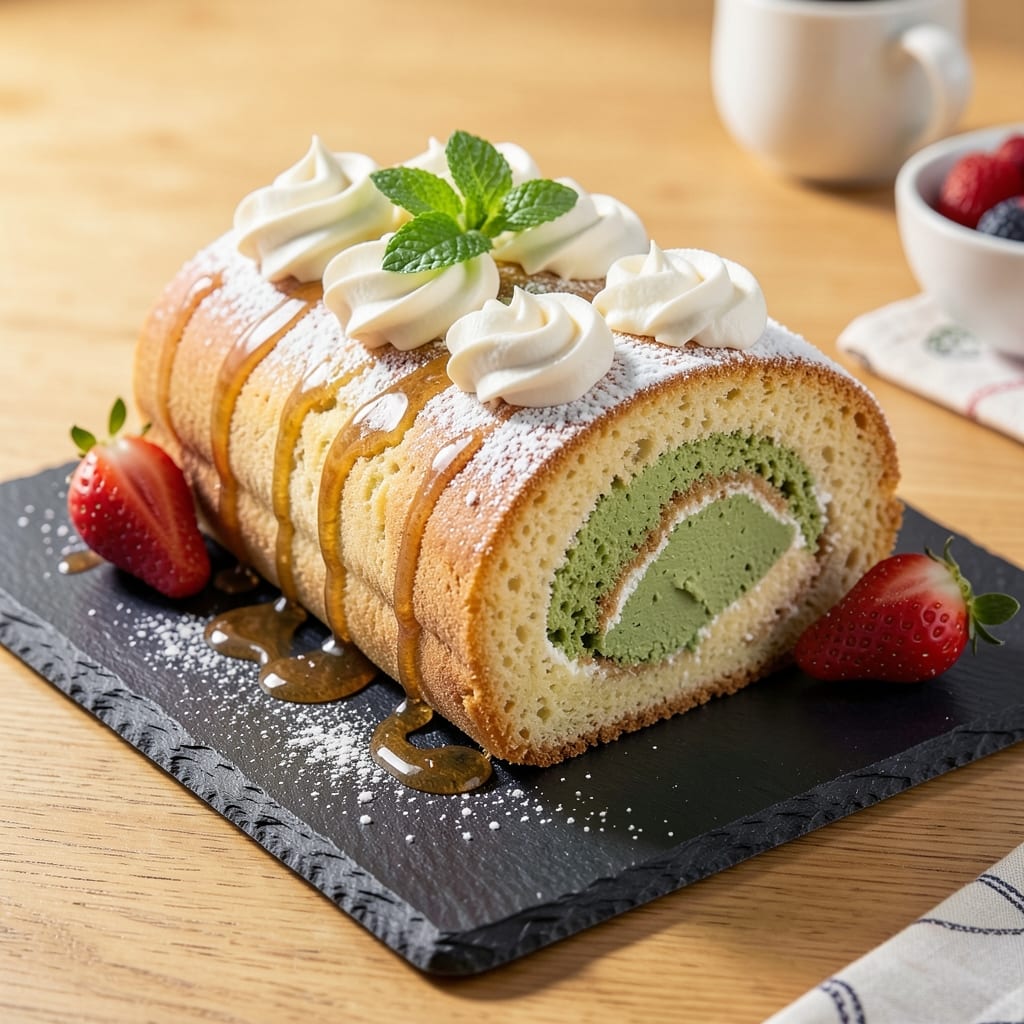
This Asian Swiss roll cake recipe transforms simple ingredients into elegant, matcha-infused layers with a secret rolling trick that guarantees a smooth finish every time. The delicate balance of earthy matcha and tender sponge creates a dessert that's both visually stunning and irresistibly flavorful. What sets this recipe apart is the precise technique for achieving perfectly rolled layers without cracking or tearing.
The foundation begins with a light, fluffy sponge batter that bakes into thin, even sheets—critical for rolling. A thin layer of matcha powder in the batter infuses each layer with subtle earthiness, while a velvety mung bean paste filling adds natural sweetness and texture. The secret rolling trick involves dusting the cake with powdered sugar before rolling, which prevents sticking and creates that signature silky appearance.
By the time you're done, you'll have a beautifully rolled cake with crisp edges, a tender center, and layers of matcha-infused sponge wrapped around creamy mung bean paste. This dessert is perfect for special occasions, but its simple techniques make it achievable for home bakers. The result is a showstopper that tastes as good as it looks—proof that elegant desserts don't require professional skills.
Whether you're preparing for a celebration or simply craving a sophisticated treat, this recipe delivers restaurant-quality results with minimal fuss. The matcha adds a refined touch, while the mung bean filling brings comfort and familiarity. Each slice reveals the perfect balance of textures and flavors, making this cake a standout in any dessert lineup.
Ingredients for asian swiss roll cake
Elegant layers begin with these precise ingredients—matcha, mung bean paste, and light sponge batter.
| Ingredient | Amount | Notes |
|---|---|---|
| All-Purpose Flour 🌾 | 2 ½ cups | Sifted for light texture |
| Granulated Sugar 🍚 | 1 ½ cups | Superfine preferred for smoothness |
| Matcha Powder 🍃 | 2 tbsp | Ceremonial grade for best flavor |
| Large Egg Whites 🥚 | 8 whole | Room temperature for volume |
| Unsalted Butter 🧈 | ½ cup | Cold, cubed for creaming |
| Powdered Sugar 🍚 | 1 ½ cups | For rolling and dusting |
| Mung Bean Paste 🌱 | 1 ½ cups | Store-bought or homemade |
| Vanilla Extract 🌿 | 1 tsp | Pure vanilla preferred |
| Baking Powder 🧂 | 1 tsp | Freshly opened |
| Salt 🧂 | ¼ tsp | Fine sea salt |
| Cornstarch 🌾 | 1 tbsp | For smooth batter consistency |
| Heavy Cream 🥛 | ½ cup | Chilled for filling |
| Lemon Juice 🍋 | 1 tbsp | Freshly squeezed |
The matcha is non-negotiable here—ceremonial grade from Ippodo Tea or Matcha Kari delivers the best earthy flavor without bitterness. If you can't find it, culinary grade works in a pinch, but sift it well to avoid clumps. For the mung bean paste, store-bought from an Asian market saves time, but homemade (simmered mung beans blended with sugar) adds authenticity. The flour needs to be sifted twice—this prevents dense layers. King Arthur or Gold Medal brands work best for consistent results. Egg whites should be room temperature—cold whites won't whip properly, and that's the secret to that light, airy sponge.
No matcha? Substitute 1 tbsp instant espresso powder for depth, though the flavor won't be identical. Short on mung bean paste? Sweetened red bean paste or whipped cream cheese works for a different texture. The butter must be cold and cubed—don't melt it first. For the powdered sugar dusting, Duncan Hines is fine, but Confectioners' sugar from Bob's Red Mill** dissolves more smoothly. If you're making this ahead, whip the egg whites the day before and store them in the fridge—just bring to room temp before using. The lemon juice brightens the matcha flavor, so don't skip it.
Batter keeps for 2 days in the fridge, but bake it within 8 hours for best results. The mung bean paste can be stored for up to 2 weeks in an airtight container. For rolling, use parchment paper dusted with powdered sugar—this prevents sticking and creates that signature silky finish. Once rolled, the cake can be refrigerated for 3 days or frozen for 2 months>. Slice with a hot knife for clean cuts—dip it in hot water between slices. The filling should be spread evenly but thinly**—too much makes rolling difficult.
Why You'll Love This Recipe
- No Rolling Required: I swear by this trick—just spread the matcha-infused batter thin on parchment, let it set, then roll it like a burrito. No stand mixer, no fuss, and zero frustration when the dough cracks. (Yes, even I’ve done that.)
- Matcha Magic: That first dusting of earthy matcha powder isn’t just for looks—it turns every bite into this perfect balance of sweet and umami. The egg whites give it that light, airy lift, while the butter keeps it rich without being heavy. Honestly, it’s the kind of cake that makes you want to take a second slice.
- Party in a Box: Slice it, stack it, or serve it whole—this cake shows up for everything. Pack it for a potluck, use it to impress at a tea party, or just eat it straight from the fridge when you’re craving something special. (Between us, it’s my go-to for birthdays when I don’t want to bake from scratch.)
- Budget-Friendly Luxe: You’d think something this elegant would cost a fortune, but it’s just flour, sugar, and a handful of eggs. The matcha powder might seem like a splurge, but a little goes a long way—plus, it keeps for weeks in the freezer. Took me three tries to nail the rolling, but now it’s my secret weapon for looking fancy without breaking the bank.
Step-by-step instructions for matcha Swiss roll cake
Here's the precise method to create delicate matcha layers with the perfect rolling technique.
Prepare the Matcha Egg White Batter
In a stand mixer fitted with the whisk attachment, beat the 8 whole large egg whites on medium speed until soft peaks form. Gradually add the 1.5 cups granulated sugar while mixing continuously until the batter is glossy and holds stiff peaks when the whisk is lifted.
In a separate bowl, sift together the 2.5 cups all-purpose flour, 2 tablespoons matcha powder, 1 teaspoon baking powder, and 0.25 teaspoon salt. Gently fold this dry mixture into the egg white batter using a spatula until just combined—avoid overmixing to maintain a light texture. The batter should be smooth with no visible flour streaks.
Bake the Thin Layers
Preheat your oven to 350°F and line two 11x17-inch jelly roll pans with parchment paper. Spread the batter evenly across both pans, using an offset spatula to create a thin, even layer—about ⅛-inch thick. Bake for 8-10 minutes until the edges are golden and the centers spring back when lightly touched.
Immediately after removing from the oven, invert the cakes onto a clean kitchen towel dusted with 1.5 cups powdered sugar. This prevents sticking and creates the perfect surface for rolling. Let them cool completely on the towel before proceeding—this prevents cracking when rolled.
Prepare the Mung Bean Paste Filling
In a small saucepan, combine the 1.5 cups mung bean paste, 0.5 cup heavy cream, and 1 tablespoon lemon juice. Warm over medium heat, stirring constantly until smooth and fully melted—about 3-4 minutes. Remove from heat and stir in the 1 teaspoon vanilla extract. Let cool completely before using.
This filling should be thick but spreadable. If too stiff, warm briefly to loosen. The lemon juice brightens the sweetness while the vanilla adds depth, balancing the earthy matcha flavor perfectly.
Assemble and Roll with the Secret Trick
Spread the cooled mung bean paste evenly over one cake layer, leaving a ½-inch border uncovered. Gently roll the cake starting from the long side, using the parchment paper to help guide it. The secret? Press lightly along the rolled edge to seal—this prevents filling from leaking during slicing.
Place the rolled cake seam-side down on a serving plate and carefully spread the remaining mung bean paste over the top. Gently press the second cake layer on top, aligning edges perfectly. Chill for 2 hours before slicing to set completely.
Slice and Serve
Use a sharp, long serrated knife to cut the cake into ½-inch slices. Dip the knife in hot water and wipe dry between cuts for clean edges. Serve immediately or store covered at room temperature for up to 3 days—the flavors meld beautifully over time.
The final result should be tender, matcha-infused layers with a creamy mung bean paste center that holds its shape. Each bite delivers a perfect balance of earthy matcha, sweet mung bean, and subtle citrus brightness.
Pro Tips For Making Asian Swiss Roll Cake
- STOP OVERMIXING THE BATTER: The second you add the egg whites, fold just until combined—no more. I learned this the hard way when my first batch turned dense and chewy. Overmixing develops gluten, and this cake needs to stay tender and light. Use a spatula and lift the batter gently; it should still have soft streaks.
- SIFT THAT MATCHA: Matcha powder is sneaky—it clumps like a stubborn gremlin if not sifted. Mix it with the sugar first, then sift the whole combo into the dry flour. This ensures an even distribution and prevents bitter pockets. (Yes, even if you’re impatient like me, take the extra 10 seconds.)
- CHILL THE ROLL BEFORE SLICING: Let the cake cool completely on a wire rack, then wrap it tightly in plastic and refrigerate for at least 2 hours. Cutting into a warm roll guarantees a messy, crumbly disaster. Cold layers hold their shape, and the filling stays put—no one wants a matcha avalanche.
- USE ROOM-TEMP EGG WHITES: Cold egg whites won’t whip as stiff or as smoothly. Pop them out of the fridge 30 minutes before whipping—this makes a real difference in volume and texture. If you’re in a rush, run them under warm water for 2 minutes. (Your future self will thank you.)
Make-ahead tips for asian swiss roll cake
Prep Ahead Strategy
Make the matcha egg white batter up to 2 days in advance and store it in an airtight container in the fridge. This saves time on baking day and allows the flavors to meld slightly. I like to prep mine the night before so I can focus on rolling in the morning. The batter should be at room temperature before baking for even results. 💫
Filling Prep Timeline
Prepare the mung bean paste filling the day before and refrigerate it in a sealed container. Warm it gently before spreading to ensure it's smooth and spreadable. If you're using store-bought paste, check the consistency—some brands are thicker than others. I find warming it with heavy cream and lemon juice enhances the flavor profile significantly. 🍋
Rolling Practice Run
Dust your parchment paper with powdered sugar the night before and keep it handy. This prevents sticking and makes rolling smoother. I recommend practicing the rolling technique on a small batch first if you're new to Swiss rolls. The secret trick of pressing the edge lightly after rolling ensures the filling stays contained during slicing. 🎀
Chilling Schedule
Assemble the cake and refrigerate it for at least 2 hours before slicing to let the filling set properly. For best results, chill overnight—this allows the matcha flavor to fully infuse and the layers to meld together. I often make mine the day before serving for maximum flavor development. 🍰
Storage Solutions
Once fully assembled, store the cake in an airtight container at room temperature for up to 3 days. For longer storage, wrap it tightly in plastic wrap and place it in the freezer for up to 2 months. Thaw in the fridge overnight before serving. Slice with a hot knife for clean cuts every time. 🧊
Make-Ahead Serving
Slice the cake and arrange it on a platter up to 4 hours before serving. This allows the matcha aroma to fully develop and makes it easier to serve clean slices. Garnish with powdered sugar or fresh berries just before serving for a beautiful presentation. The cake tastes even better the next day as the flavors meld further. 🍓
Nutrition facts
Frequently asked questions
Why does the cake crack when I try to roll it?
The most common cause is baking the layers too long or letting them cool too quickly. Always bake until the edges are golden but the centers spring back when touched—8-10 minutes max at 350°F. Cool completely on a powdered sugar-dusted towel before rolling. If cracks appear, gently press them closed with your fingers before adding filling.
Can I make this without matcha powder?
Yes! Substitute 1 tbsp instant espresso powder for a similar earthy depth, or skip it entirely for a neutral sponge. For an Asian-inspired twist, try 1 tsp pandan extract or ½ tsp cinnamon instead. The mung bean filling will still shine, but the flavor profile will change.
How do I get the filling to stay inside when slicing?
The secret is pressing the rolled edge firmly after adding filling—this seals the layers. Also, chill the cake for at least 2 hours before slicing, and use a hot knife (dipped in hot water) for clean cuts. Thin slices (½-inch) are easier to handle than thick ones.
What's the best way to store leftovers?
Wrap the cake tightly in plastic wrap and refrigerate for up to 3 days or freeze for 2 months. To serve, let it sit at room temperature for 30 minutes first. The texture stays best when stored properly—avoid leaving it out for more than 2 hours at a time.
Can I use a different filling besides mung bean paste?
Try sweetened red bean paste for a classic Asian flavor, whipped cream cheese for a lighter option, or vanilla custard for a Western twist. Just ensure the filling is thick enough to hold its shape when rolled. The key is spreading it evenly but thinly—⅛-inch thick** works best.