
Main Courses
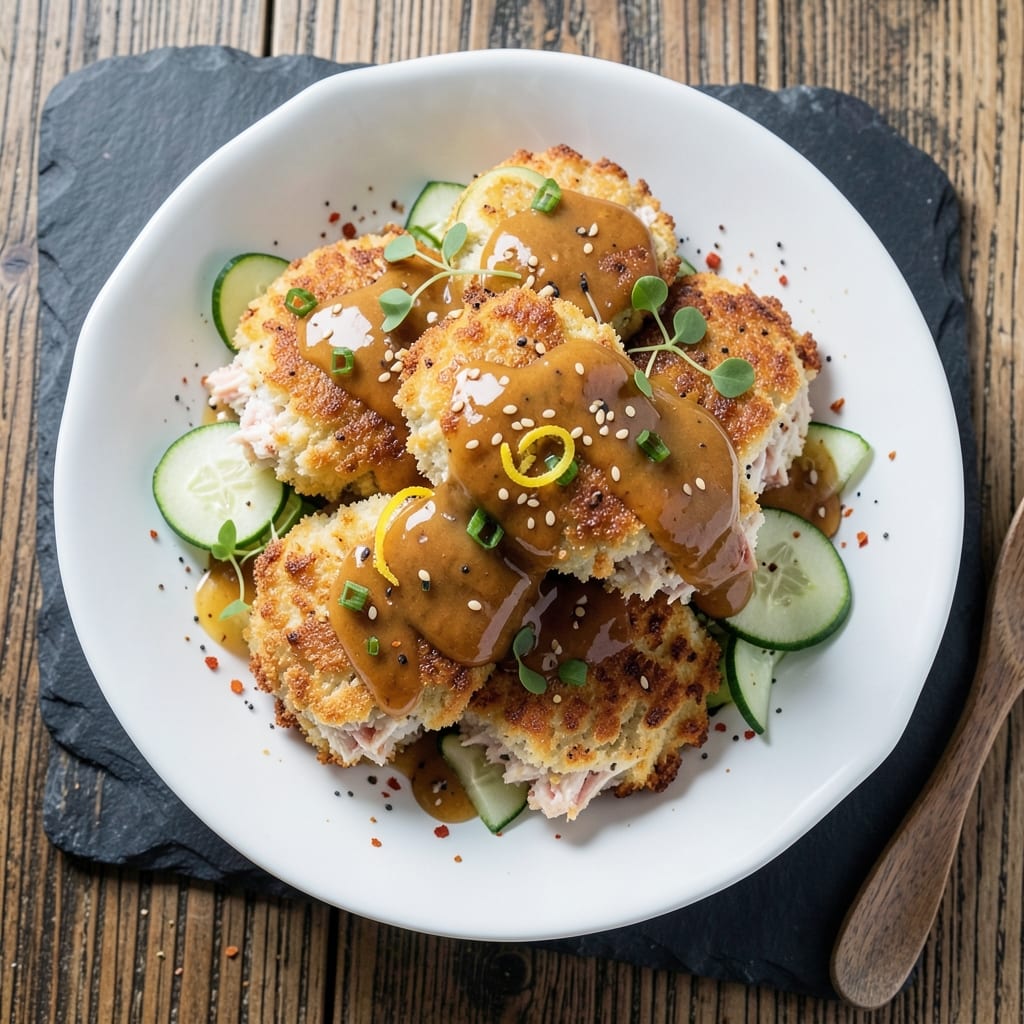
This Asian style crab cake recipe delivers the perfect balance of crispy golden edges and tender, flavorful centers—all with a sweet chili glaze that ties it all together. The secret lies in blending traditional crab cake techniques with bold Asian-inspired seasonings like ginger, garlic, and sesame oil, creating a dish that feels both familiar and excitingly new. I developed this recipe after years of experimenting with different coatings and glazes, and the result is a crab cake that’s impossible to resist.
The magic happens in the pan-searing step, where the crab cakes develop that signature crispy exterior while staying juicy inside. A light batter of egg and cornstarch ensures a perfect texture, while the sweet chili glaze adds a tangy-sweet finish that complements the rich crab flavor. This recipe is designed to be foolproof, with clear instructions that guide you through every step—from mixing the ingredients to achieving that golden-brown crust.
What makes these crab cakes truly special is the way they come together—crispy on the outside, tender and flavorful on the inside, with a glaze that’s both sweet and slightly spicy. They’re perfect for serving at gatherings, family dinners, or even as an elegant appetizer. The glaze can be adjusted to suit your taste, whether you prefer it sweeter or with a bit more heat.
Pair these crab cakes with a side of cucumber salad or steamed rice to complete the meal. The contrast of textures and flavors makes every bite unforgettable, and the recipe is simple enough to make on a weeknight but impressive enough for special occasions. Let’s get started!
Ingredients for asian style crab cake
These ingredients bring bold Asian flavors to classic crab cakes—crispy outside, tender inside, with a sweet glaze that ties it all together.
| Ingredient | Amount | Notes |
|---|---|---|
| Fresh Lump Crab Meat 🦀 | 1 ½ lb | Picked for shells and cartilage |
| Large Eggs 🥚 | 2 whole | Room temperature preferred |
| All-Purpose Flour 🌾 | ½ cup | For light batter coating |
| Cornstarch 🌾 | ¼ cup | For extra crispiness |
| Fresh Ginger 🌿 | 1 tbsp | Finely grated, aromatic |
| Garlic Cloves 🧄 | 4 cloves | Minced for bold flavor |
| Sesame Oil 🫒 | 1 tbsp | Toasted sesame preferred |
| Soy Sauce 🍶 | 2 tbsp | Light or regular preferred |
| Vegetable Oil 🫒 | ½ cup | High smoke point |
| Sweet Chili Glaze 🍯 | ½ cup | Store-bought or homemade |
| Green Onions 🧅 | 3 whole | Thinly sliced, for garnish |
| Sesame Seeds 🌾 | 1 tbsp | Toasted for crunch |
| Salt 🧂 | 1 tsp | Kosher or sea salt |
| Black Pepper 🌶️ | ½ tsp | Freshly ground |
| Lemon Juice 🍋 | 1 tbsp | Freshly squeezed |
The crab meat is the star—fresh lump crab makes all the difference. Costco or Whole Foods carry high-quality options, but don't grab the canned stuff. Look for vibrant color and a clean, briny smell. If you're using frozen, thaw it overnight in the fridge. The ginger and garlic are non-negotiable here—they're what give these crab cakes that signature Asian kick. Toast your sesame seeds in a dry pan for 30 seconds before using, or grab pre-toasted from Trader Joe's if you're in a hurry. The sweet chili glaze can be store-bought (like Maesri or Thai Kitchen), but making your own is easy—just blend chili flakes, honey, and lime juice.
No fresh ginger? Two teaspoons of ground ginger works in a pinch, but it won't have the same punch. Short on sesame oil? Avocado oil or neutral oil plus a pinch of toasted sesame seeds gives a similar vibe. The sweet chili glaze can be adjusted—add more honey for sweetness or extra chili flakes for heat. For the batter, cornstarch is key—it creates that signature crispy crust. If you're out, swap in a little more flour, but expect slightly less crunch. The green onions add freshness, so don't skip them unless you're allergic. And trust me, the lemon juice at the end brightens everything up.
These crab cakes are best served fresh, but they reheat beautifully—just pop them in a 350°F oven for 5-7 minutes. The glaze can be made a day ahead and stored in the fridge. For the crab meat, keep it cold until ready to use—it's delicate stuff. The batter ingredients can be mixed up to 4 hours ahead, covered in the fridge. Once cooked, these keep for 2 days in the fridge, but honestly, they disappear fast. Garnish with extra sesame seeds and green onions right before serving—presentation matters with these beauties.
Why You'll Love This Recipe
- No-Fuss Assembly: I swear, these crab cakes only need five ingredients—no hidden pantry staples. The cornstarch gives that signature crispiness without extra work, and the ginger? Just a quick grate. Honestly, I’ve made them while scrolling through my phone.
- Umami Bomb: That fresh lump crab meat? It’s the star, but the ginger and eggs bind it into something ridiculously flavorful. The outside gets golden and crunchy, while the inside stays tender—like a little bite of the sea in every piece.
- Weeknight or Party: Between us, these are my secret weapon for both Tuesdays and tailgates. Pan-fry a batch for dinner, or double the recipe for a crowd. They reheat beautifully (yes, even on a Tuesday night), so leftovers are just as good as the first round.
- Budget-Friendly Luxury: Fresh lump crab is pricey, but a little goes a long way here. The eggs and flour stretch it into generous patties, and the ginger adds depth without cost. I’ll be real: my family thinks it’s fancy, but it’s actually my wallet’s best friend.
Step-by-step instructions for Asian style crab cakes
Here's how to create golden, crispy crab cakes with a perfect sweet chili glaze finish.
Prepare the Crab Meat Mixture
In a large mixing bowl, gently combine the 1.5 lb fresh lump crab meat with the 2 whole large eggs, 1 tbsp finely grated fresh ginger, 4 cloves minced garlic cloves, 1 tbsp sesame oil, 2 tbsp soy sauce, 1 tsp salt, and 0.5 tsp black pepper. Using your hands, carefully mix just until the ingredients come together—avoid overworking the crab meat or it will turn mushy.
Here's the thing—fresh lump crab meat has natural moisture, so we're not adding any extra liquid. The eggs and soy sauce will help bind everything while keeping the texture light and fluffy. If you notice any remaining shells or cartilage in the crab meat, pick them out now for the smoothest texture.
Create the Light Batter Coating
In a separate shallow bowl, whisk together the 0.5 cup all-purpose flour and 0.25 cup cornstarch. This combination creates a lighter, crispier coating than flour alone. Add the 1 tbsp lemon juice to the flour mixture and stir well—this prevents the batter from becoming too thick when it comes into contact with the crab mixture.
I like to use a fine-mesh sieve to dust the crab cakes with this flour mixture right before frying. This ensures an even coating without making the mixture too dense. Keep this batter dry and ready—we'll use it immediately after shaping the crab cakes.
Shape and Coat the Crab Cakes
Using lightly oiled hands, scoop the crab mixture into 4 equal portions (about 4 ounces each) and gently shape into ½-inch thick patties. Be careful not to press too hard—we want them to stay light and airy inside. Place each shaped crab cake on a plate and lightly dust the top with the flour-cornstarch mixture, pressing gently to adhere.
This is where the magic happens—the cornstarch creates that perfect crispy crust we're after. Let the coated crab cakes rest for 5 minutes while you prepare the frying setup. Don't skip this step; it gives the coating time to set up properly for maximum crispiness when we fry them.
Pan-Fry to Golden Perfection
Heat 0.5 cup vegetable oil in a large skillet over medium-high heat until it reaches 350°F—you'll see small bubbles forming around the edges. Working in batches if needed, carefully place the crab cakes in the hot oil. Cook for 2-3 minutes per side until they turn a beautiful golden brown color and develop crispy edges.
Here's the crucial part: don't overcrowd the pan. If you do, the oil temperature will drop and you'll end up with greasy crab cakes instead of crispy ones. You'll know they're done when they release easily from the pan and the edges look dry and golden. Transfer the cooked crab cakes to a paper towel-lined plate to drain excess oil.
Glaze and Garnish for Finishing Touches
Return the skillet to medium heat and add the 0.5 cup sweet chili glaze. Let it simmer for 1-2 minutes until it becomes slightly thickened. Then carefully spoon this glossy glaze over each crab cake, coating them completely. The residual heat will help the glaze set beautifully.
While the glaze is still warm, garnish each crab cake with thinly sliced green onions and 1 teaspoon toasted sesame seeds. Serve immediately while the glaze is still shiny and the crab cakes are piping hot. These beauties are best enjoyed right away when the crust is at its crispest and the glaze is most vibrant.
Pro Tips For Making Asian Style Crab Cake
- CHILL THE CRAB FIRST: Lump crab meat is delicate—if it’s warm or straight from the shell, it’ll turn mushy when mixed. Pop it in the fridge for 15–20 minutes before handling. I learned this the hard way after my first batch dissolved into a sad, soupy mess.
- GRATE THAT GINGER FINE: Skip the food processor for fresh ginger—it makes the batter gummy. Use a microplane or the smallest holes on a box grater, then strain out the fibers. That way, the flavor stays bright without the texture turning weird.
- PAT THEM DRY BEFORE FORMING: Wet crab meat = soggy cakes. Drain the lumps on paper towels and press gently to remove excess moisture. Trust me, your cakes will hold together better, and the crust won’t steam off mid-fry.
- FRY IN BATCHES, LOW AND SLOW: Asian-style crab cakes need even cooking—don’t overcrowd the pan. Use about ½ inch of oil at 350°F (175°C) and fry 2–3 cakes at a time for 3–4 minutes per side. Rushing leads to greasy, uneven results.
Regional styles of these flavors
Japanese Teriyaki Style
Swap the sweet chili glaze for a homemade teriyaki sauce made with 3 tbsp soy sauce, 2 tbsp mirin, 1 tbsp honey, and 1 tbsp grated ginger. Simmer until slightly thickened, then brush over the pan-seared crab cakes. Garnish with extra sesame seeds and thinly sliced scallions for a true Japanese-inspired twist. The teriyaki adds a glossy, slightly sweet finish that pairs beautifully with the crispy exterior. 🍶
Korean Gochujang Crunch
For a spicy kick, mix 2 tbsp gochujang, 1 tbsp honey, and 1 tsp rice vinegar into the sweet chili glaze. This Korean-inspired variation adds depth and heat. Serve with a side of kimchi to balance the flavors. The gochujang gives the crab cakes a vibrant red hue and a complex, slightly sweet-spicy profile. Trust me, your taste buds will thank you. 🌶️
Thai Lemongrass Twist
Infuse the batter with 1 tbsp minced lemongrass and 1 tsp fish sauce for an authentic Thai flavor. Replace the sweet chili glaze with a mix of 2 tbsp sweet chili sauce and 1 tbsp lime juice. Garnish with cilantro leaves and extra sesame seeds for a fragrant, zesty finish. This version is lighter but packed with bright, herbal notes. 🌿
Chinese Black Pepper
Skip the sweet chili glaze and coat the crab cakes in a mix of 1 tbsp black vinegar, 1 tsp sugar, and ½ tsp Sichuan peppercorns (lightly toasted). This Chinese-inspired variation delivers a tangy, slightly numbing finish. Serve with a side of steamed bok choy and a sprinkle of toasted cumin seeds for extra crunch. The black peppercorns add a unique, aromatic kick. 💫
Vietnamese Caramelized
For a Vietnamese-inspired take, caramelize 1 tbsp fish sauce and 1 tbsp brown sugar in the pan before adding the sweet chili glaze. This creates a deeper, savory-sweet flavor profile. Garnish with mint leaves and crushed peanuts for texture. The caramelized fish sauce adds a rich, umami depth that elevates the dish. 🥜
Nutrition facts
Frequently asked questions
Can I use imitation crab instead of fresh lump crab?
While imitation crab works in a pinch, fresh lump crab is ideal for this recipe. The texture and flavor are completely different—imitation crab lacks the delicate sweetness and natural moisture of real crab. If you must substitute, use high-quality imitation crab and add an extra 1 tbsp lemon juice to mimic the freshness. The result won't be as premium, but it'll still taste delicious.
How do I adjust the spice level in the sweet chili glaze?
Start with the recipe's 0.5 cup sweet chili glaze, then tweak to taste. For more heat, add ½ tsp chili flakes or 1 tsp sriracha. For less spice, reduce the glaze by 2 tbsp and add 1 tsp honey to balance. Always taste before serving—you can adjust while cooking! The glaze should coat the back of a spoon but still be pourable.
Can I bake these crab cakes instead of pan-frying?
Yes, but the texture will differ slightly. Preheat oven to 400°F, place crab cakes on a parchment-lined baking sheet, and bake for 12-15 minutes until golden. Brush with glaze during the last 2 minutes. For extra crispiness, broil for 1-2 minutes at the end. Baked versions are less crispy but still delicious—great for meal prep!
What's the best way to store leftover crab cakes?
Store in an airtight container in the fridge for up to 2 days. Reheat in a 350°F oven for 5-7 minutes or air fry at 375°F for 3-4 minutes to restore crispiness. Avoid microwaving—it makes the coating soggy. For longer storage, freeze for up to 1 month (thaw overnight in the fridge). The glaze may lose some shine after reheating, so serve fresh when possible.
Why did my crab cakes turn out greasy instead of crispy?
Overcrowding the pan is the #1 culprit—it lowers oil temperature and creates steam instead of crispiness. Always cook in batches with medium-high heat and 350°F oil. Another fix: chill the crab cakes for 15 minutes before frying to firm up the coating. If using frozen crab, thaw it completely first. The cornstarch-to-flour ratio (1:2) is key—don't skip it!