
Desserts
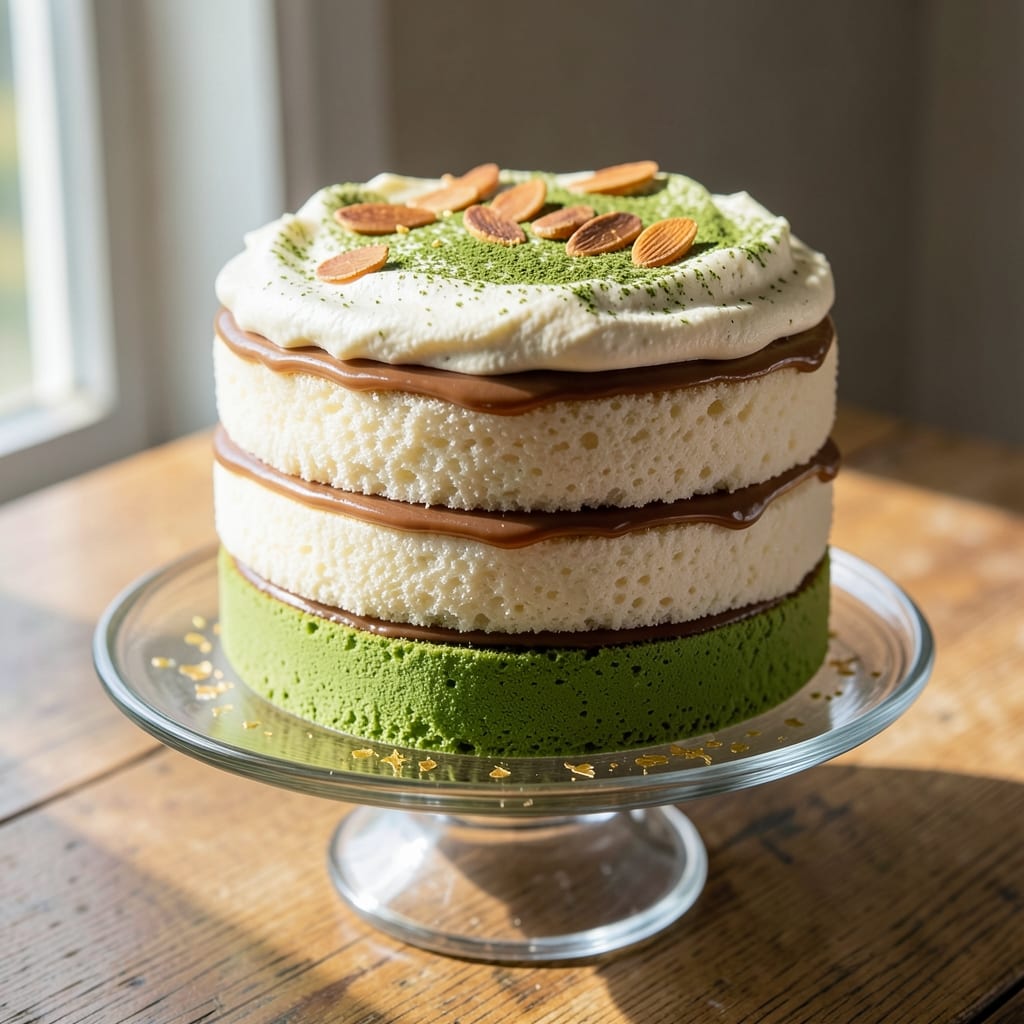
This Asian-style cake recipe brings together the earthy richness of matcha and the delicate sweetness of red bean paste in layers that are as visually stunning as they are delicious. The secret lies in balancing traditional Japanese techniques with modern baking methods to achieve a cake that's light yet dense, with a texture that's both tender and slightly chewy. I developed this recipe after years of experimenting with different flour blends and moisture levels, and it never fails to impress.
The foundation of this cake is a delicate sponge made with rice flour and cake flour, which gives it that signature Asian texture—soft yet sturdy enough to hold layers of sweet red bean paste and vibrant matcha cream. What sets this recipe apart is the slow steaming of the red bean paste, which ensures it's smooth and spreadable without losing its natural sweetness. The matcha layer, infused with coconut milk, adds a subtle bitterness that balances the richness of the red bean.
By the time you slice into this cake, you'll uncover layers of harmony—each bite offers a contrast of flavors and textures that make it unforgettable. The matcha-infused cream adds a velvety smoothness, while the red bean paste provides a gentle sweetness that lingers. This cake is perfect for celebrations, gifts, or simply treating yourself to a slice of Asian-inspired indulgence.
Whether you're baking for a special occasion or just craving something different, this recipe delivers restaurant-quality results with a touch of homemade love. The steps are straightforward, but the techniques—like steaming the red bean paste and folding the matcha cream—are what elevate it to something truly special. Let's get started!
Ingredients for asian style cake
Matcha's earthy charm meets red bean's sweetness in these carefully measured layers.
| Ingredient | Amount | Notes |
|---|---|---|
| Rice Flour 🌾 | 1 ½ cups | Glutinous or short-grain preferred |
| Cake Flour 🍞 | 1 ½ cups | Light and finely milled |
| Granulated Sugar 🍚 | 1 ½ cups | Superfine preferred for smooth texture |
| Large Eggs 🥚 | 6 whole | Room temperature for even mixing |
| Unsalted Butter 🧈 | 1 cup | Softened to room temperature |
| Vanilla Extract 🌿 | 2 tsp | Pure Madagascar preferred |
| Red Bean Paste 🌱 | 1 ½ cups | Smooth, steamed variety |
| Coconut Milk 🥥 | 13 ½ oz | Full-fat canned for creaminess |
| Matcha Powder 🍵 | 3 tbsp | Ceremonial grade for best flavor |
| Powdered Sugar 🍚 | 1 cup | For dusting layers |
| Baking Powder 🍞 | 2 tsp | Metal-free for reliable rise |
| Salt 🧂 | ½ tsp | Fine sea salt preferred |
| Cornstarch 🌾 | 1 tbsp | For smoother matcha cream |
The matcha and red bean paste are the stars here—don't skimp. For matcha, Marukyu Koyamaen is my go-to brand (ceremonial grade), but any high-quality ceremonial matcha works. Red bean paste? Japanese-style azuki paste from Asian markets is ideal—smooth and sweet. If you can't find it, make your own by simmering azuki beans with sugar until soft, then blending. The rice flour gives that signature Asian texture—short-grain or glutinous is best, not regular all-purpose. Bob's Red Mill has great options if your grocery store doesn't carry it.
No coconut milk? Heavy cream works in a pinch, but the flavor won't be quite the same. Matcha powder substitutes? Green tea powder at half the amount, but you'll lose that vibrant color. For the butter, European-style (like Plugrá) has higher fat content, which helps with layering. The eggs should be room temperature—cold eggs won't incorporate properly. If you're gluten-sensitive, swap cake flour for gluten-free 1:1 blend, but the texture will be slightly denser. The vanilla extract matters—imitation stuff tastes artificial in this delicate cake.
Store the dry ingredients (flours, sugar, baking powder) in airtight containers for up to 6 months. Matcha loses potency fast—keep it sealed in a dark, cool place and use within 3 months of opening. The red bean paste stays good for 1 year unopened, but once opened, refrigerate and use within 3 months. This cake keeps for 5 days at room temperature, wrapped tightly in plastic, or 2 weeks refrigerated. Freeze slices for 3 months—thaw at room temperature before serving.
Why You'll Love This Recipe
- No Mixer Needed: I swear by this recipe—just fold the rice flour and cake flour into the butter and sugar until it’s almost crumbly, then add eggs one at a time. The texture comes together like magic, no electric mixer required. (Yes, even if you’re the type who burns toast if you look at a blender wrong.)
- Buttery-Sweet Magic: That butter-to-sugar ratio? Chef’s kiss. The rice flour gives it a tender crumb, while the cake flour keeps it light—like a cross between a sponge cake and a delicate mochi. Honestly, the first slice will have you questioning why you’ve never made this before.
- Lunchbox Hero: Between us, this cake holds up better than store-bought for packed lunches. Slice it the night before, wrap it in parchment, and it stays soft for days. My kid still begs for it three days in a row—no one’s complaining about that.
- Budget-Friendly Luxury: Rice flour might not be your pantry staple, but a bag lasts forever for this recipe. Plus, you’re using basic pantry ingredients—no pricey extracts or specialty add-ins. For what tastes like a bakery treat, it’s shockingly affordable. (I’ve made two batches this week and still have change left.)
Step-by-step instructions for matcha and red bean layer cake
This delicate Japanese-inspired cake balances earthy matcha and sweet red bean layers for a showstopping dessert.
Prepare the Matcha Cream Filling
In a small saucepan, combine the 13.5 oz coconut milk and 3 tbsp matcha powder. Warm over medium heat until the mixture reaches 160°F—you'll see the matcha fully dissolve and create a vibrant green paste. Remove from heat and immediately whisk in the 1 cup powdered sugar and 1 tbsp cornstarch until completely smooth.
Transfer the warm mixture to a heatproof bowl and let it cool to room temperature, stirring occasionally. This step is crucial—if you let it cool too quickly, the matcha won't fully incorporate. Once cooled, the filling should have a smooth, velvety texture with no graininess. Cover and refrigerate until ready to use.
Mix the Red Bean Cake Batter
In a large mixing bowl, sift together the 1.5 cups cake flour, 2 tsp baking powder, and 0.5 tsp salt. In a separate bowl, beat the 6 whole large eggs and 1.5 cups granulated sugar until pale and slightly thickened—about 3-4 minutes with an electric mixer. Gradually fold the dry ingredients into the egg mixture until just combined.
Add the 1 cup softened unsalted butter and 2 tsp vanilla extract, mixing until smooth. Finally, gently fold in the 1.5 cups red bean paste using a spatula, being careful not to overmix. The batter should be thick but pourable, with visible red bean swirls throughout. Let it rest for 10 minutes at room temperature before baking.
Bake the Red Bean Layers
Preheat your oven to 350°F. Grease and line three 8-inch round cake pans with parchment paper. Divide the red bean batter evenly among the pans, spreading each layer to the edges. Bake for 25-30 minutes, or until a toothpick inserted into the center comes out clean and the edges are light golden brown. Rotate the pans halfway through baking for even cooking.
Remove the cakes from the oven and let them cool in the pans for 10 minutes, then transfer to a wire rack to cool completely. Once fully cooled, level the tops if needed using a serrated knife. This step ensures each layer is perfectly flat for clean assembly.
Prepare the Matcha Cake Batter
In a separate mixing bowl, combine the 1.5 cups rice flour, 1 cup granulated sugar, and 2 tsp baking powder. In another bowl, beat the remaining 6 whole large eggs and 1 cup softened unsalted butter until light and fluffy—about 3 minutes. Gradually fold the dry ingredients into the egg mixture until just combined.
Divide the matcha cream filling evenly among the three cooled red bean layers, spreading it thinly with an offset spatula. Then, divide the matcha cake batter evenly over the matcha cream, spreading each layer to the edges. Bake at 325°F for 20-25 minutes, or until the top is golden brown and a toothpick comes out clean.
Assemble and Chill the Cake
Let the assembled cake cool in the pans for 15 minutes, then carefully remove it from the pans and transfer to a wire rack. Once completely cool, use a long serrated knife to trim any uneven edges. Place the first red bean layer on a serving plate, spread a thin layer of the reserved matcha cream, then add the second layer. Repeat with the third layer.
Chill the cake in the refrigerator for at least 4 hours, or overnight, to allow the flavors to meld and the layers to set properly. Before serving, dust the top and sides with additional powdered sugar for a professional finish. The cake should have a moist, tender crumb with distinct matcha and red bean flavors in every bite.
Pro Tips For Making Asian Style Cake
- Mix Flours First: Sift the rice flour and cake flour together before adding wet ingredients—this prevents lumps and ensures a smoother batter. I learned this the hard way after fighting clumps in my first batch; now I always whisk them dry first.
- Use Room-Temp Eggs: Let your eggs sit out for 30 minutes before cracking—cold eggs can make the butter separate or create a denser texture. I was skeptical until I tried it; the cake turned out lighter and more tender every time.
- Steam, Don’t Bake: If your recipe calls for steaming, don’t skip it—baking dries out the rice flour and cake flour combo. Use a tight lid and keep the water simmering, not boiling, for even cooking. (Yes, even if you’re impatient like me.)
- Butter Matters More: Use cold unsalted butter and cut it into small cubes—this creates pockets of moisture and a finer crumb. I used melted butter once and ended up with a cake that was too dense to cut cleanly. Don’t make that mistake.
Wine and beer pairings for this dish
Japanese Sake Pairings
For this delicate matcha-red bean cake, a dry junmai sake like Hakkaisan Junmai Daiginjo is my go-to choice. The crisp acidity and subtle floral notes complement the matcha's earthiness while balancing the sweetness of the red bean. Serve slightly chilled for a refreshing contrast to the cake's warmth. 🍶
Korean Soju for Lighter Sippers
If you prefer something lighter, chamisul soju (a sweetened variety) works beautifully with this cake. Its gentle sweetness enhances the red bean's flavor without overpowering the matcha. I like to serve it at room temperature to let its natural fruitiness shine through.
Chinese Baijiu for Bold Contrast
For a more adventurous pairing, try a light-bodied baijiu like Moutai's 15-year. The herbal notes in the baijiu harmonize with the matcha, while its smooth finish cuts through the cake's richness. Serve it neat and sip slowly to savor the layers of flavor.
Asian-Inspired Cocktails
Craft a matcha mojito by muddling fresh mint, lime juice, and ceremonial-grade matcha with rum and soda water. The mint's brightness and matcha's earthiness mirror the cake's flavors perfectly. Garnish with a lime wheel for a refreshing twist.
Beer Pairings: Light and Crisp
A Japanese junmai lager like Asahi Super Dry is ideal—its clean, crisp profile won’t compete with the cake’s complex flavors. For a fruitier option, try a Hop Farm Brewing Co. Hoppy IPA (light on hops) to add a subtle bitterness that complements the matcha.
Non-Alcoholic Options
For a refreshing non-alcoholic match, serve sparkling yuzu soda (like San Pellegrino Yuzu). The citrusy effervescence cleanses the palate between bites of the rich cake. Alternatively, jasmine tea with honey adds a floral note that echoes the matcha’s aroma.
Nutrition facts
Frequently asked questions
Can I substitute regular flour for rice flour in this recipe?
The rice flour is essential for achieving that signature Asian-style texture—soft yet slightly chewy. While you can try a 50/50 blend with cake flour, the result won't be as authentic. For a gluten-free option, use a 1:1 rice flour blend, but expect a denser crumb. The cake will still taste delicious, but the texture will differ slightly.
How do I know when the matcha cream is fully dissolved?
The matcha cream is ready when it reaches 160°F and becomes a smooth, vibrant green paste with no visible powder. Stir constantly during heating—if it clumps, strain it through a fine-mesh sieve for a silky texture. The mixture should coat the back of a spoon without graininess before cooling.
Why does my cake sink in the middle?
This usually happens from overmixing the batter or opening the oven too soon. Mix just until combined, and avoid overfilling the pans. For the matcha layer, bake at 325°F—higher heat can cause sinking. Let the cake cool completely in the pan for 15 minutes before removing to prevent collapse.
Can I make this cake gluten-free?
Yes! Replace the cake flour with a 1:1 gluten-free baking flour blend (like Bob's Red Mill) and use 100% rice flour for the matcha layer. Add 1/4 tsp xanthan gum to improve structure. The texture will be slightly denser, but the flavors remain intact. Always check your gluten-free flour's baking instructions for leavening adjustments.
How far in advance can I prepare the red bean paste?
You can make the red bean paste up to 3 days ahead and store it in an airtight container in the fridge. For the freshest texture, steam it just before using. If using store-bought paste, check the label—some varieties need no additional cooking. Reheat gently in a double boiler if it thickens too much when cold.