
Desserts
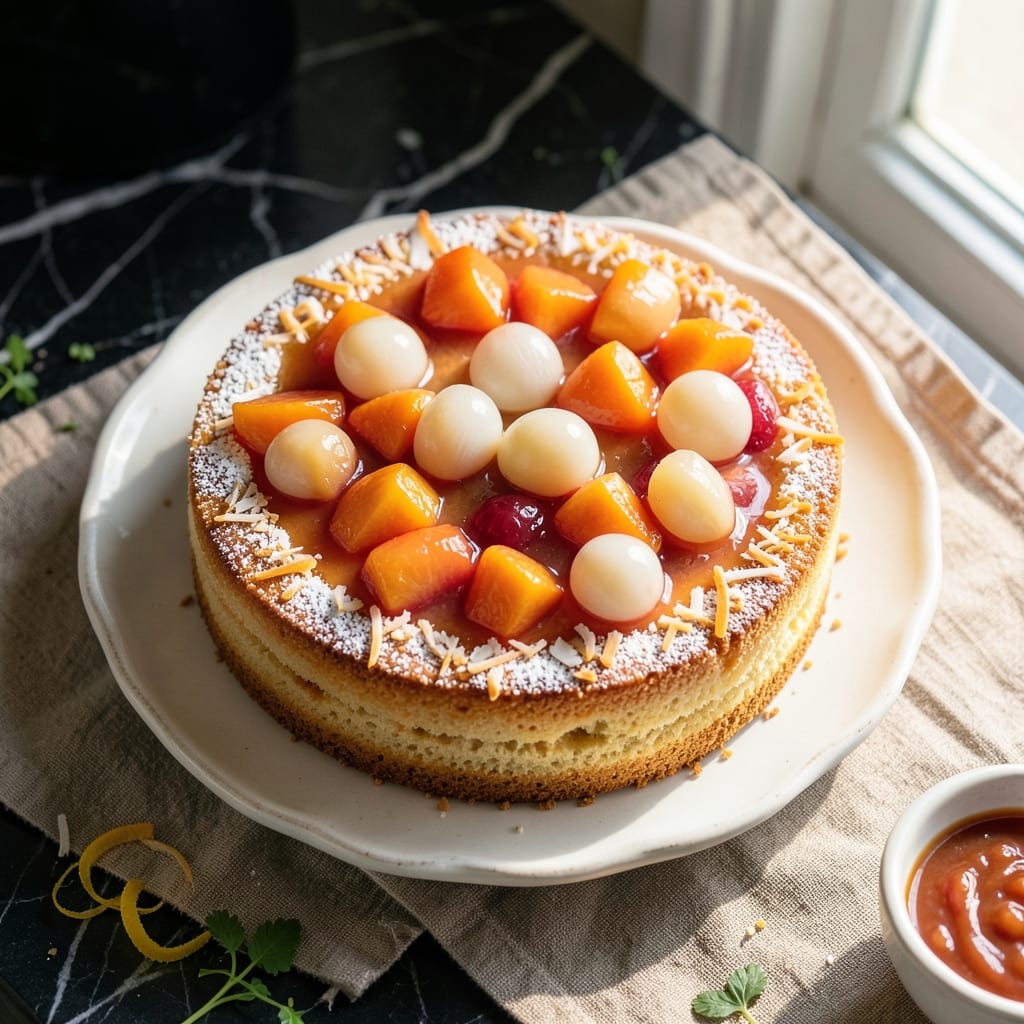
This Asian sponge fruit cake brings together delicate Japanese sponge layers with tropical Southeast Asian flavors—lychee, mango, and a whisper of pandan. The secret lies in a perfectly moist, airy sponge that holds its structure while absorbing the vibrant fruit filling, creating a harmonious balance of textures and sweetness. What makes this cake special is its cultural fusion: the lightness of Japanese sponge cake meets the bold, fruity essence of Southeast Asia, all in one elegant dessert.
Creating this cake requires two key techniques: baking a tender yet sturdy sponge layer and preparing a fruit filling that stays fresh without becoming soggy. The sponge gets its signature fluffiness from whipped egg whites and a touch of cornstarch, while the fruit filling combines fresh mango and lychee with a light coconut cream base. Assembling the layers carefully ensures each bite delivers both the softness of the sponge and the bursting juiciness of the fruit.
The result is a cake that’s as beautiful as it is delicious—golden layers separated by vibrant fruit, topped with toasted coconut flakes or delicate edible flowers for an elegant finish. The flavors are balanced: the natural sweetness of the fruit shines without overpowering the subtle vanilla and pandan notes in the sponge. This cake is perfect for celebrations, special occasions, or simply treating yourself to something truly indulgent.
Pair it with a Thai iced tea or pandan latte to enhance the tropical experience, and enjoy the way each layer reveals a new burst of flavor. The best part? This recipe delivers restaurant-quality results with just a few simple techniques and patience. Let’s get started!
Ingredients for asian sponge fruit cake
Light Japanese sponge meets tropical Southeast Asian fruit for a showstopper cake.
| Ingredient | Amount | Notes |
|---|---|---|
| All-Purpose Flour 🌾 | 2 ½ cups | Sifted for lightness |
| Granulated Sugar 🍚 | 1 ½ cups | Superfine preferred |
| Large Eggs 🥚 | 6 whole | Room temperature |
| Unsalted Butter 🧈 | 1 cup | Cold, cubed |
| Cornstarch 🌾 | 2 tbsp | For tender crumb |
| Baking Powder 🧂 | 1 tsp | Aluminum-free |
| Salt 🧂 | ¼ tsp | Fine sea salt |
| Vanilla Extract 🌸 | 1 tbsp | Pure vanilla |
| Pandan Extract 🌿 | ½ tsp | For authentic aroma |
| Ripe Mangoes 🍈 | 2 cups | Diced, peeled |
| Canned Lychees 🍈 | 1 ½ cups | Syrup-packed, drained |
| Sweetened Condensed Milk 🥛 | ½ cup | For filling sweetness |
| Coconut Milk 🥥 | ½ cup | Full-fat, canned |
| Toasted Coconut Flakes 🥥 | ½ cup | For garnish |
The flour and sugar are your foundation—King Arthur flour works best for that tender crumb. Grab superfine sugar if you can find it (or pulse regular sugar in a food processor), because it dissolves faster for a smoother texture. Eggs should be room temperature—cold eggs make the sponge dense. For the butter, Plugrá or Land O'Lakes unsalted are reliable brands, but any cold, cubed butter works. The pandan extract is key for that authentic aroma—Trader Joe's carries it, or look in the Asian aisle at Walmart or H Mart.
No superfine sugar? Pulse regular sugar in a food processor for 30 seconds—it'll get you close. Running out of pandan? Vanilla plus a pinch of cinnamon mimics it, though it won't be exact. For the fruit filling, fresh mango is ideal, but canned works in a pinch—just drain it well. The coconut milk should be canned, full-fat (the kind for curry), not the carton stuff. Toast your coconut flakes in a dry pan for 2-3 minutes until golden—that nutty aroma makes all the difference.
The sponge layers keep best for 2 days at room temperature if wrapped tightly in plastic. The fruit filling? Make it fresh and use within 3 days—it won't last as long due to the coconut milk. For make-ahead, assemble the cake (without topping) and refrigerate for up to 1 day. Add the coconut flakes right before serving so they stay crisp. This cake is even better the next day—the flavors meld beautifully.
Why You'll Love This Recipe
- No-Mix Magic: I swear by this recipe because the batter comes together with no fuss—just whisk eggs, fold in butter, and let the cornstarch do its work. No creaming, no overmixing, no stress. Honestly, I’ve made it while chatting on the phone.
- Butter-Sugar Bliss: That perfect ratio of sugar to butter? It’s what makes this cake dangerously moist—like a cloud with a crisp edge. The eggs hold it all together while keeping it light, so every slice feels like a treat, not a chore.
- Weeknight to Party: Between us, this cake is my secret weapon for anything—breakfast with coffee, potlucks, or even a last-minute dessert. The sponge base soaks up fruit (or jam) beautifully, so you can dress it up or keep it simple.
- Budget-Friendly Staples: Five ingredients, zero specialty items. The cornstarch gives it that signature Asian texture without breaking the bank, and leftovers? They last forever if you slice them thin. (Yes, even on a Tuesday night.)
Step-by-step instructions for Asian sponge fruit cake
Here's how to create layers of fluffy sponge and tropical fruit filling that'll make this cake irresistible.
Prepare the Tropical Fruit Filling
In a medium bowl, combine the 2 cups ripe mangoes and 1.5 cups canned lychees, gently mixing them with a rubber spatula. Drain any excess syrup from the lychees first—you want the fruit to be juicy but not watery. Add the 0.5 cup sweetened condensed milk and 0.5 cup coconut milk, stirring until fully incorporated. The mixture should be thick but still pourable. Taste it and adjust sweetness if needed—you want it to complement the sponge, not overpower it.
Set this filling aside while you prepare the sponge layers. The tropical flavors will infuse beautifully with the pandan-infused batter. If you're concerned about the fruit being too soft, you can lightly mash it with a fork to create a more cohesive filling texture. Just don't overdo it—you want those fruit bursts to remain intact when you slice into the finished cake.
Make the Light and Airy Sponge Batter
In a large mixing bowl, sift together the 2.5 cups all-purpose flour, 2 tbsp cornstarch, 1 tsp baking powder, and 0.25 tsp salt. This dry combination creates the perfect foundation for our light sponge. In a separate bowl, beat the 6 whole large eggs and 1.5 cups granulated sugar on medium speed until the mixture is pale, thick, and nearly tripled in volume—about 5-6 minutes. This step is crucial for achieving that signature Asian sponge texture.
Gradually add the dry ingredients to the egg mixture in three additions, folding gently with a spatula after each addition. Be careful not to overmix—just until the flour is mostly incorporated. Then, cut in the 1 cup cold cubed unsalted butter using a pastry cutter or your fingers, working quickly so the butter doesn't melt completely. Finally, stir in the 1 tbsp vanilla extract and 0.5 tsp pandan extract until just combined. The batter should be smooth and slightly shiny, with no visible streaks of flour.
Bake the Sponge Layers
Preheat your oven to 350°F and prepare three 8-inch round cake pans by greasing them thoroughly with butter and dusting with flour, or line them with parchment paper circles. Divide the batter evenly among the pans—you should have about 1 cup batter per pan. Bake for 20-25 minutes or until a toothpick inserted into the center comes out clean and the tops spring back when touched.
Let the layers cool in their pans for 10 minutes, then transfer them to a wire rack to cool completely. This cooling step is important—it prevents the layers from becoming soggy when you assemble the cake. While they cool, you can prepare your work surface by lining it with parchment paper. Pro tip: If you're worried about the layers drying out, you can tent them loosely with plastic wrap while they cool, but don't seal them completely.
Assemble the Layered Cake
Once the sponge layers are completely cool, place the first layer on your prepared surface. Spread about ⅓ of the tropical fruit filling evenly over the top, leaving a ½-inch border around the edges. This prevents the filling from oozing out the sides when you slice the cake. Then, carefully place the second layer on top and repeat with another ⅓ of the filling. Finally, top with the third layer and spread the remaining filling over it.
For the final touch, gently press the 0.5 cup toasted coconut flakes onto the top and sides of the cake, creating a beautiful decorative pattern. If you want to add extra flair, you can create a lattice pattern with coconut flakes by arranging them in a crisscross design. Place the cake in the refrigerator for at least 4 hours, or preferably overnight, to allow the layers to fully set and the flavors to meld together.
Serve and Enjoy
When you're ready to serve, remove the cake from the refrigerator and let it sit at room temperature for 10-15 minutes to soften slightly. The contrast between the cool, creamy filling and the warm, fluffy sponge is what makes this cake truly special. Slice through the center to reveal the beautiful layers of sponge and fruit filling. Each bite should deliver a perfect balance of tender sponge, juicy mango, sweet lychees, and that subtle pandan aroma.
This cake keeps well in the refrigerator for up to 5 days, though I doubt it will last that long in your house. For best results, serve it slightly chilled—it's perfect with a cup of hot tea or coffee. The combination of textures and flavors makes this cake a showstopper for any occasion, whether it's a celebration or just a special treat for yourself.
Pro Tips For Making Asian Sponge Fruit Cake
- Whisk Eggs Until Room Temp: Cold eggs from the fridge won’t blend properly with butter, and you’ll end up with a cake that’s dense instead of light. Pop them in a bowl of warm water for 10 minutes—just enough to loosen them up without turning them into a hot mess.
- Cream Butter and Sugar Slowly: I used to crank the mixer high right away, and the butter would melt into a greasy puddle. Instead, start on low and gradually increase speed—you’re aiming for fluffy, not soupy. The butter should look like pale yellow ribbon when you lift the beater.
- Sift Flour Twice: Skimping here means lumps hiding in your batter, which turn into dry pockets in the cake. Sift the flour before mixing, then sift it again right into the egg-butter mixture. Yes, it’s extra work, but your cake will stay tender instead of crumbly.
- Bake at 325°F, Not Hotter: Asian sponge cakes rely on a gentle rise, not a quick one. I learned this after my first batch collapsed into a sad, dense brick. Keep the oven steady at 325°F—no peeking, no opening the door—and let it bake until the top springs back when pressed. Patience here makes all the difference.
Flavor customization for asian sponge fruit cake
Spice Level Control
This cake is naturally sweet, but you can add subtle warmth with ½ tsp ground cinnamon or ¼ tsp chili powder to the fruit filling for a Thai-inspired twist. For a more pronounced kick, fold 1 tbsp chili jam into the coconut milk before mixing with the fruit. Start with less—these flavors intensify as they meld with the sponge. 🌶️
Fruit Variations
Swap the mango and lychee for other tropical combos: guava and passionfruit (add 1 tbsp lime zest to brighten flavors) or jackfruit and pineapple (reduce coconut milk to ¼ cup to balance the juice). For a Japanese-inspired version, use strawberries and kiwi with a touch of matcha powder in the sponge batter.
Creamy Filling Twists
Replace sweetened condensed milk with whipped coconut cream for a lighter texture, or add 1 tsp pandan paste to the filling for deeper aroma. For a modern touch, stir in 2 oz dark chocolate shavings (70% cocoa) to complement the fruit. The key is maintaining the filling's pourable consistency—adjust coconut milk as needed.
Nutty Crunch Additions
Press toasted macadamia nuts or crushed peanuts between layers for texture contrast. For a Southeast Asian nod, use krupuk (shrimp cracker crumbs)—their crispy, salty crunch pairs surprisingly well with the sweet filling. Toast your nuts for 3-4 minutes until fragrant before pressing them into the cake.
Herbal Infusions
Enhance the sponge with 1 tsp lemongrass paste or ½ tsp cardamom powder for aromatic depth. For the filling, muddle 3-4 fresh basil leaves or 2 mint leaves into the fruit mixture—both add freshness that cuts through the richness. These herbs work best with lighter fruit combos like mango or pineapple.
Vegan Adaptations
Swap eggs for 6 tbsp aquafaba (chilled overnight) whipped to stiff peaks, and use ½ cup coconut oil instead of butter. For the filling, replace sweetened condensed milk with ½ cup coconut cream reduced by half. The texture will be slightly denser but still delicious—just ensure all ingredients are vegan-certified for best results.
Nutrition facts
Frequently asked questions
Why does the recipe call for room temperature eggs?
Room temperature eggs whip up much better, creating lighter, fluffier sponge layers. Cold eggs can cause the batter to become dense and tough. Simply take them out of the fridge 30 minutes before baking to achieve perfect results. This is especially important for Japanese-style sponge cakes where texture matters most.
Can I substitute fresh lychees for canned?
Fresh lychees work beautifully, but they require extra prep: peel and remove the pits from 2 cups fresh lychees (about 12-15 fruits). For best results, lightly macerate them with 1 tsp sugar and let sit for 10 minutes to soften before mixing with other filling ingredients. Canned lychees are more convenient and provide consistent sweetness.
How do I prevent the sponge layers from drying out?
After baking, let layers cool completely in their pans for 10 minutes, then transfer to a wire rack. For extra moisture, wrap each layer tightly in plastic wrap and refrigerate for 1 hour before assembling. Avoid cutting into warm layers—they release moisture that can make the filling soggy. The coconut milk in the filling also helps maintain freshness.
What's the best way to store leftover cake?
Wrap the cake tightly in plastic wrap and store in the refrigerator for up to 5 days. For longer storage (up to 1 month), freeze the fully assembled cake without the coconut topping. Thaw overnight in the fridge before serving. The flavors actually improve after 24 hours as the fruit juices infuse the sponge.
Can I make this cake in a single layer instead of three?
Yes, but you'll need to adjust the baking time and filling amount. Use one 9-inch round pan and bake for 25-30 minutes at 350°F. Spread the entire filling over the cooled layer and top with coconut flakes. The texture will be slightly different but still delicious—just expect a denser cake. This works well for smaller gatherings.