
Desserts
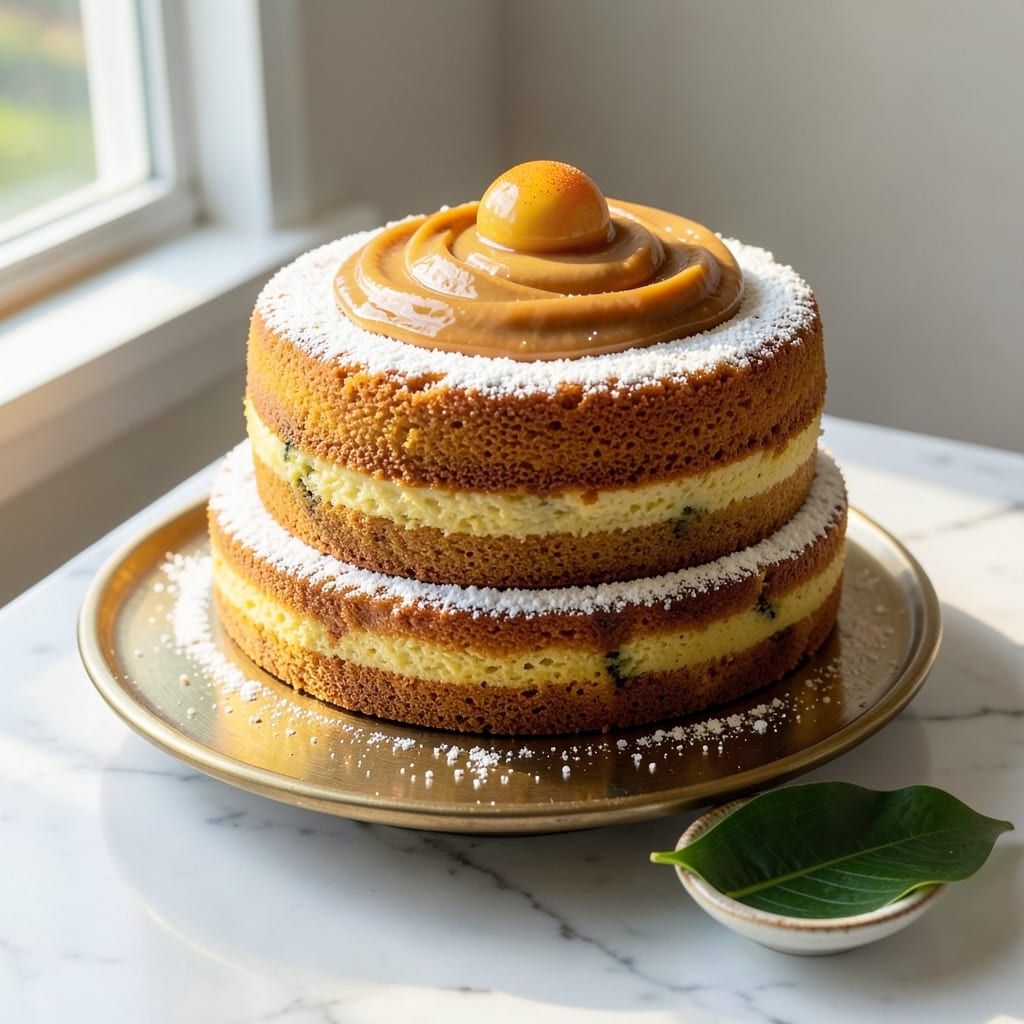
This Asian pound cake recipe delivers the perfect balance of fragrant pandan and coconut, creating a moist, tender crumb that feels like a tropical hug. 🌺 The secret lies in a simple yet precise technique—folding coconut milk into the batter while keeping the structure delicate. I've perfected this version after years of baking, ensuring it stays moist for days without turning gummy.
The magic starts with a simple ingredient list that includes fresh pandan extract for its signature floral aroma and coconut milk for natural moisture. Unlike traditional pound cakes, this version relies on buttermilk and eggs for richness while keeping the texture light. The cake rises beautifully in the oven, developing a golden crust while staying soft inside.
What makes this recipe stand out is its versatility—serve it plain with a dusting of powdered sugar, or slice it into squares for elegant desserts. The pandan and coconut flavors create a subtle yet distinctive taste that's both comforting and sophisticated. Perfect for special occasions or as a treat to enjoy anytime.
Ready in just one hour, this cake requires minimal effort but delivers restaurant-quality results. The key is patience—letting the batter rest before baking ensures an even rise and that signature tender crumb. Every slice is a testament to how simple ingredients can create something truly special.
Ingredients for asian pound cake
Twelve ingredients deliver the signature tropical aroma and tender crumb of this Asian-inspired pound cake.
| Ingredient | Amount | Notes |
|---|---|---|
| All-Purpose Flour 🌾 | 2 ½ cups | Sifted for even texture |
| Granulated Sugar 🍚 | 1 ½ cups | Superfine preferred for smoothness |
| Buttermilk 🥛 | 1 ½ cups | Full-fat for richness |
| Large Eggs 🥚 | 4 whole | Room temperature for blending |
| Unsalted Butter 🧈 | 1 cup | Melted, not watery |
| Pandan Extract 🌿 | ½ tsp | Pure, not imitation |
| Coconut Milk 🥥 | 13 ½ oz | Full-fat canned variety |
| Baking Powder 🧂 | 1 ½ tsp | Aluminum-free preferred |
| Salt 🧂 | ½ tsp | Fine sea salt |
| Vanilla Extract 🌸 | 1 tsp | Pure Madagascar preferred |
| Shredded Coconut 🥥 | ½ cup | Toasted for enhanced flavor |
| Powdered Sugar 🍚 | ¼ cup | For dusting finished cake |
The coconut milk is non-negotiable for that signature tropical moisture. Thai Kitchen brand is my go-to for its full-fat consistency, available at most Asian markets or the international aisle of major grocery stores like Whole Foods. The pandan extract comes in small bottles, so buy the pure extract—imitation versions often contain artificial flavors that ruin the delicate aroma. For the flour, King Arthur brand is ideal due to its high protein content, which helps create that signature tender crumb. If you can't find pure pandan extract, pandan paste works in a pinch, but reduce the amount by half since it's more concentrated.
No buttermilk? Substitute with 1.5 cups milk plus 1.5 tsp vinegar or lemon juice, let it sit for 5 minutes. The baking powder must be fresh—if it's more than 6 months old, replace it entirely. For the shredded coconut, unsweetened is best—sweetened versions can make the cake too cloying. Want to skip the vanilla? Add 0.25 tsp almond extract instead for a different but complementary floral note. The sugar can be swapped for coconut sugar, though it will have a slightly caramelized flavor. Toasting the coconut in a dry pan for 3-4 minutes enhances its flavor dramatically—don't skip this step if you're using it.
This cake keeps beautifully for up to 5 days at room temperature, wrapped tightly in plastic wrap. For longer storage, slice and freeze portions for up to 3 months. The texture actually improves after the first day as the flavors meld. To serve, dust generously with powdered sugar—the finer the sugar, the better the presentation. Leftovers? Store in an airtight container between layers of parchment paper to prevent drying. The cake reheats beautifully in the microwave for 10-15 seconds if you prefer it warm.
Why You'll Love This Recipe
- No Mixer Needed: I swear by this one—just fold the butter into the flour until it looks like wet sand. No standing there beating the crap out of the batter, no greasy mess to scrub out. The buttermilk keeps it tender without the fuss of sour cream or yogurt swaps.
- Buttery Vanilla Hug: That butter-to-sugar ratio? Chef’s kiss. The cake stays moist for days, but the crust has this delicate snap that makes every bite feel like a little reward. Honestly, I’ve tried store-bought Asian pound cakes—this one actually tastes homemade.
- Breakfast to Dessert: Serve it warm with a drizzle of honey for brunch, or dust it with cinnamon sugar for a quick dessert. My kids ask for it after school snacks, and I’ve even sliced it for potlucks—no one bats an eye. One bowl, endless uses.
- Pantry Staple Magic: Five ingredients, all things I already have. No specialty items, no last-minute grocery runs. Between us, that buttermilk trick cuts my grocery bill too—no need for pricey cake mixes. And a single loaf lasts me a week if I’m smart.
Step-by-step instructions for Asian pound cake with pandan and coconut
Mastering this tropical-inspired pound cake delivers velvety moisture and aromatic depth every time.
👨🍳 Step 1: Prepare the Wet Ingredients with Precision
In a large mixing bowl, combine the 1 cup unsalted butter and 1.5 cups granulated sugar (superfine preferred) until light and fluffy—about 3-4 minutes using an electric mixer on medium speed. You're looking for a texture that nearly doubles in volume and leaves faint ribbons when the beaters are lifted.
Add the 4 whole large eggs one at a time, mixing well after each addition until fully incorporated. The mixture should be pale yellow and smooth. Here's the thing—room temperature eggs blend more easily, so if they're straight from the fridge, let them sit at room temperature for 30 minutes beforehand. This prevents lumps and ensures even distribution throughout the batter.
Stir in the 1.5 cups buttermilk, 0.5 tsp pandan extract, 1 tsp vanilla extract, and 13.5 oz coconut milk until completely combined. The pandan extract is where the magic happens—it delivers that signature floral aroma that sets this cake apart. Don't skip this step; the flavors need time to meld together.
👨🍳 Step 2: Combine Dry Ingredients and Fold Gently
In a separate bowl, sift together the 2.5 cups all-purpose flour, 1.5 tsp baking powder, and 0.5 tsp salt. Sifting ensures no lumps remain and creates a light, airy texture. Gently fold these dry ingredients into the wet mixture using a spatula, mixing just until combined—you should still see some flour streaks. Overmixing develops gluten and can make the cake dense.
Fold in the 0.5 cup shredded coconut (toasted for enhanced flavor) last, reserving about 2 tablespoons for garnishing the top. The coconut adds a delightful crunch that contrasts beautifully with the tender crumb. Be careful not to overmix at this stage—just enough to distribute the coconut evenly throughout the batter.
🔥 Step 3: Bake in a Preheated Oven for Even Cooking
Preheat your oven to 350°F and grease a 9-inch round cake pan (or line it with parchment paper for easy removal). Pour the batter into the prepared pan and smooth the top with a spatula. Sprinkle the reserved 2 tablespoons shredded coconut evenly over the surface for added texture and visual appeal.
Bake for 50-55 minutes until a toothpick inserted into the center comes out clean. The cake should be golden brown on top and slightly pulled away from the sides of the pan. I know it seems like a long bake time, but patience is key here—this ensures the cake develops that perfect moist texture without being underdone or gummy.
If you're worried about overbaking, start checking at the 45-minute mark. The reason we bake at this temperature is to allow the cake to set gently while maintaining its moisture. A hotter oven would dry it out; a cooler one would leave it undercooked.
⏰ Step 4: Cool and Dust with Powdered Sugar
Remove the cake from the oven and let it cool in the pan for 10 minutes. Then transfer it to a wire rack to cool completely. This gradual cooling prevents the cake from developing a soggy bottom or cracking. The cake will shrink slightly as it cools, which is normal and actually enhances its texture.
Once completely cooled, dust the top generously with the 0.25 cup powdered sugar using a fine-mesh sieve. This step isn't just for presentation—it adds a delicate sweetness that balances the tropical flavors. Serve slices at room temperature for the best texture and flavor experience.
Pro Tips For Making Asian Pound Cake
- MIX BUTTERMILK LAST: The buttermilk’s acidity reacts with the baking soda (if your recipe uses it) instantly—add it right before folding in the dry ingredients. I used to mix it in early, and the batter would curdle before I even got to the oven. Save yourself the mess and add it last, then stir just until combined.
- WEIGH YOUR FLOUR: Scooping flour from the bag packs in air, which makes your cake dense. Use a kitchen scale for precision—this recipe needs about 250 grams (roughly 2 cups) of all-purpose flour. I learned this the hard way after a cake turned out like a brick. Trust the scale, not the cup.
- ROOM-TEMP BUTTER MATTERS: Cold butter creates pockets of steam in the batter, leading to tunnels or a cake that collapses. Let your butter sit out for 30-60 minutes until it’s soft but not melted—you should be able to press a finger into it and leave a slight indent. Skip the microwave; it’s faster and keeps the texture stable.
- BAKE UNTIL 190°F: Pull the cake out at 190°F (375°F oven) even if it jiggles slightly in the center—it’ll keep cooking as it cools. I used to pull mine at 212°F (the "done" temp), and it’d dry out fast. Let it rest 5 minutes before testing with a skewer; if it comes out clean, you’re golden. If not, give it 5 more minutes.
Flavor customization for this dish
Pandan Variations
Swap the pandan extract for matcha powder (use 1 tsp) to create a vibrant green tea flavor with earthy undertones. The matcha pairs beautifully with the coconut, creating a Japanese-inspired twist. For a stronger pandan flavor, increase to 1 tsp pandan extract—just be mindful it can overpower delicate palates. 🌿
Tropical Fruit Additions
Fold in ½ cup diced mango or passion fruit during the final mixing stage for bursts of freshness. The fruit adds moisture and a bright contrast to the coconut's richness. For a more subtle touch, use 2 tbsp passion fruit pulp instead. Always use fresh fruit—canned versions lack the vibrant flavor needed to complement the cake.
Spiced Variations
Add ½ tsp ground cardamom or ¼ tsp cinnamon to the dry ingredients for warmth. Cardamom enhances the pandan's floral notes, while cinnamon creates a comforting spice profile. Toast the spices lightly in a dry pan for 30 seconds before adding to intensify their aroma. This works especially well with a vanilla bean instead of extract for deeper flavor layers.
Nutty Enhancements
Fold in ¼ cup finely chopped macadamia nuts or pecans for a buttery crunch. Toast the nuts first in a 350°F oven for 8-10 minutes until fragrant. The nuts pair perfectly with the coconut and add a sophisticated texture contrast. For a more decadent version, use toasted coconut flakes instead of shredded coconut in the batter.
Chocolate Infusion
Replace ½ cup of the flour with ½ cup Dutch-processed cocoa powder for a chocolate-pandan fusion. Add 2 tbsp espresso powder to enhance the chocolate's depth. This creates a rich, complex flavor that still maintains the cake's signature moisture. Dust with powdered sugar and chopped dark chocolate for an elegant finish.
Layered Flavors
Create a two-layer cake by dividing the batter in half. Add 1 tsp lime zest to one batch and 1 tsp orange zest to the other for citrusy brightness. Alternate layers with a coconut cream frosting (whip ½ cup coconut cream with 2 tbsp powdered sugar). This adds a tropical, creamy element that ties all the flavors together beautifully.
Nutrition facts
Frequently asked questions
Can I make this cake without pandan extract?
Yes! For a similar floral aroma, try 1 tsp vanilla bean paste or ½ tsp rose water (adjust to taste). If you prefer earthy notes, swap for 1 tsp matcha powder instead. The coconut milk will still provide moisture, but the flavor profile changes significantly—test small batches first to find your preference.
Why did my cake turn out dense instead of tender?
Overmixing the batter develops gluten, making the cake dense. Mix dry ingredients just until combined with visible flour streaks, and fold wet ingredients gently. Also check your baking powder—old or expired leavening can cause flat cakes. For extra moisture, ensure your coconut milk is full-fat and whisk the batter briefly before baking.
How do I store leftovers to keep them fresh?
Wrap the cake tightly in plastic wrap and store at room temperature for up to 5 days. For longer storage, slice and freeze portions for 3 months. Reheat slices in the microwave for 10-15 seconds to restore moisture. The cake actually improves after the first day as flavors meld—just avoid refrigerating it.
Can I use this recipe for a gluten-free version?
Yes, but with adjustments. Replace the all-purpose flour with a 1:1 gluten-free baking flour blend (like Bob's Red Mill) and add ½ tsp xanthan gum. Reduce the coconut milk to 12 oz and increase buttermilk to 1.75 cups to compensate. Bake at 325°F for 60-65 minutes—gluten-free cakes need more time to set.
What's the best way to serve this cake?
Serve slices at room temperature with a dusting of powdered sugar and fresh tropical fruit like mango or passion fruit. For a festive touch, drizzle with toasted coconut syrup (simmer ½ cup coconut milk with 2 tbsp sugar> until thickened). It pairs beautifully with coconut milk ice cream or a cup of jasmine tea>.