
Desserts
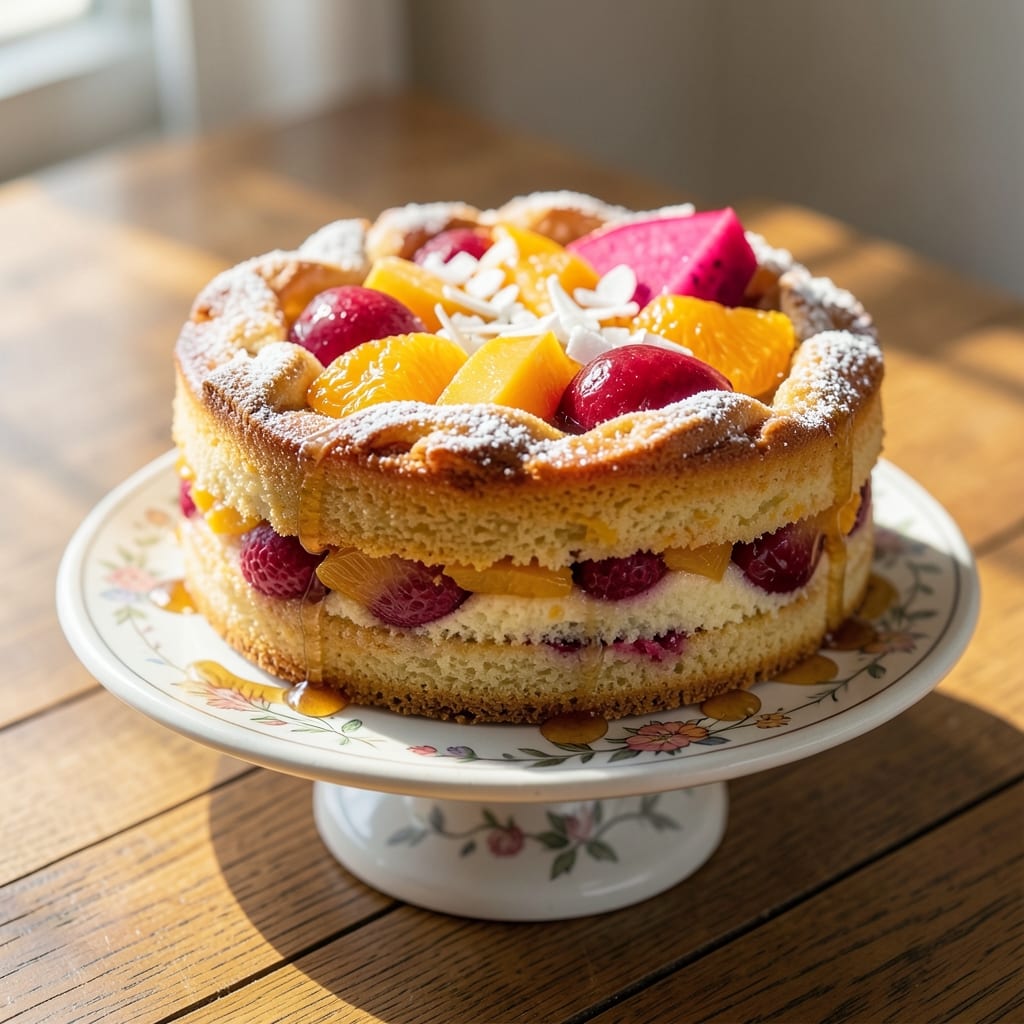
This Asian fresh fruit cake delivers tropical layers of juicy mango, lychee, and jackfruit wrapped in a citrus-infused sponge that stays moist for days. 🌟 The secret lies in steaming the fruit to preserve its natural juices and layering it between delicate sponge sheets—creating a texture that's both light and richly flavorful. I developed this recipe after years of perfecting the balance between tender cake and vibrant fruit, ensuring every bite feels fresh yet decadent.
The foundation is a simple yet effective citrus sponge, where zesty orange zest and juice infuse the batter for a bright, aromatic base. What sets this cake apart is the fruit preparation: tropical fruits are steamed just until tender, then tossed in a light sugar syrup to enhance their natural sweetness without turning mushy. This technique transforms ordinary fruit into a luscious, jam-like filling that clings beautifully to the cake layers.
What you'll end up with is a stunning dessert that looks as impressive as it tastes—golden layers of cake separated by vibrant fruit that peeks through in perfect slices. The citrus notes in the sponge complement the tropical fruits, creating a harmonious balance of sweet and tangy flavors. Each bite delivers a mix of tender cake and juicy fruit, making this cake ideal for celebrations or as a special treat.
Perfect for gifting, potlucks, or simply indulging in a slice of tropical heaven. The recipe scales easily, so you can adjust the size based on your needs. Let's get started on creating this showstopping dessert!
Ingredients for asian fresh fruit cake
Tropical fruits and citrus-infused sponge create this showstopping cake with layers of juicy sweetness.
| Ingredient | Amount | Notes |
|---|---|---|
| All-Purpose Flour 🌾 | 2 ½ cups | Sifted for light texture |
| Granulated Sugar 🍚 | 1 ½ cups | White or light brown |
| Unsalted Butter 🧈 | 1 cup | Room temperature, full-fat |
| Orange Zest 🍊 | 2 tbsp | Freshly grated, vibrant |
| Orange Juice 🍊 | ½ cup | Freshly squeezed, no pulp |
| Large Eggs 🥚 | 4 whole | Room temperature, organic |
| Baking Powder 🧂 | 2 tsp | Aluminum-free preferred |
| Salt 🧂 | ½ tsp | Fine sea salt |
| Ripe Mangoes 🥭 | 3 whole | Peeled, cubed, medium-ripe |
| Canned Lychees 🍈 | 15 oz | Syrup-packed, drained well |
| Young Green Jackfruit 🥝 | 1 lb | Canned in water, drained |
| Granulated Sugar 🍚 | ½ cup | For fruit syrup |
| Orange Juice 🍊 | ¼ cup | For fruit syrup |
| Cornstarch 🌾 | 1 tbsp | For fruit thickening |
| Vanilla Extract 🌸 | 1 tsp | Pure alcohol-free |
The orange zest and juice are non-negotiable for that signature citrus zing—freshly grated from organic oranges makes all the difference. For the fruit, Trader Joe's carries excellent canned lychees and jackfruit, but any quality brand works. Look for ripe but firm mangoes with no bruising—Costco often has great deals on fresh tropical fruit. The jackfruit should be young and green, not fully ripe. If you can't find it fresh, canned in water is the next best option. For the sponge, King Arthur flour is my go-to for consistent results, but any high-quality all-purpose works.
No fresh orange zest? Dried orange peel powder at half the amount gets you close, though it lacks the bright aroma. Substituting lychees? Fresh passion fruit pulp adds a tangy twist, or guava puree for a milder sweetness. Jackfruit unavailable? Diced pineapple works in a pinch—just reduce the syrup by 2 tbsp to avoid sogginess. For the fruit syrup, cornstarch is key to prevent a watery texture. If you prefer a smoother finish, blend the jackfruit cubes briefly before layering. The vanilla extract can be swapped for vanilla bean paste if you want extra depth of flavor.
Fresh fruit layers keep best for 2 days in the fridge—cover tightly with plastic wrap. The cake itself stays moist for 4-5 days wrapped in a cake keeper. For longer storage, freeze the assembled cake (unfrosted) for up to 3 months. To serve, let it sit at room temperature for 20 minutes before slicing—this ensures clean cuts and prevents the fruit from bleeding. I always make a double batch: one for immediate serving and one to freeze for gifts or special occasions.
Why You'll Love This Recipe
- No-Mix Wonder: I swear by this one—just fold the dry ingredients into the wet, pop it in the oven, and forget about it. The orange zest and juice do all the work, so no fancy techniques or last-minute shopping for specialty items.
- Citrus Magic: That bright, zesty punch from the orange zest and juice cuts through the richness of the butter and sugar like a breath of fresh air. It’s the kind of flavor that makes you want to bake it again the next day—no question.
- Everyday Luxury: Between us, this cake is fancy enough for a brunch spread but simple enough to make when you’re craving something sweet after dinner. Slice it thin, and it’s even great with tea or coffee—no occasion required.
- Budget Baking: Honestly, the ingredients are all pantry staples, so you’re not breaking the bank. A batch lasts me nearly a week, and the leftovers? They taste just as good cold as they do fresh out of the oven. Win-win.
Step-by-step instructions for Asian fresh fruit cake
Here's how to create a vibrant tropical cake with perfect citrus moisture and layered fruit texture.
👨🍳 Step 1: Prepare the Fruit Syrup and Layering Ingredients
In a medium saucepan, combine 0.5 cup granulated sugar, 0.25 cup orange juice, and 1 tbsp cornstarch for the fruit syrup. Whisk vigorously until smooth, then add 15 oz drained canned lychees and 1 lb drained young green jackfruit. Simmer over medium heat for 5-7 minutes until the syrup thickens to a light coating consistency—it should glisten but not be syrupy. Remove from heat and let cool completely to room temperature.
While the syrup cooks, peel and cube 3 whole ripe mangoes into ½-inch pieces. Toss them with 1 tbsp cornstarch to prevent sinking in the batter. The fruit should be evenly sized for perfect layering later. I like to work in batches to keep the mango fresh while I prepare the cake batter.
🍳 Step 2: Cream Butter and Sugars for Light Texture
In a stand mixer fitted with the paddle attachment, beat the 1 cup unsalted butter and 1.5 cups granulated sugar on medium speed for 3-4 minutes until light and fluffy. You'll see the mixture nearly triple in volume and become pale in color—this incorporates air that creates the cake's signature tender crumb. Scrape down the sides of the bowl with a rubber spatula to ensure even mixing.
Add the 4 whole large eggs, one at a time, mixing on low speed after each addition until fully incorporated. Then stir in the 2 tbsp orange zest and 1 tsp vanilla extract. The zest adds bright citrus aroma while the vanilla rounds out the tropical flavors. Mix just until combined—overmixing develops gluten and makes the cake dense.
👨🍳 Step 3: Combine Dry Ingredients and Fold in Fruits
In a separate bowl, whisk together the 2.5 cups all-purpose flour, 2 tsp baking powder, and 0.5 tsp salt. Sift the mixture directly into the butter mixture, then gently fold with a spatula until just combined—you should still see some flour streaks. This prevents overdevelopment of gluten while ensuring even distribution.
Using a spatula, gently fold in half of the prepared mango cubes and half of the cooled fruit syrup mixture. Be careful not to overmix—the goal is to distribute the fruit evenly without deflating the batter. The batter will be thick but should hold its shape when spooned. Here's where the magic happens: the citrus from the syrup and zest will infuse the batter while keeping it moist.
🥘 Step 4: Layer and Bake for Even Rising
Preheat your oven to 350°F. Grease and line two 9-inch round cake pans with parchment paper. Divide the batter evenly between the pans, then layer with remaining mango cubes and fruit syrup mixture. Press down gently on the fruit to ensure even distribution—this creates the signature layered texture. Bake for 25-30 minutes or until a toothpick inserted in the center comes out clean and the edges are golden.
The cake should rise about 1 inch above the pan edges. If the top browns too quickly, tent loosely with foil after 15 minutes of baking. Rotate the pans halfway through for even baking. The citrus in the batter and syrup will keep the cake moist while baking, but the oven's dry heat helps set the structure.
⏰ Step 5: Cool and Assemble for Maximum Moisture
Remove the cakes from the oven and let them cool in the pans for 10 minutes. Then transfer to a wire rack to cool completely. While they cool, prepare the final citrus glaze by mixing 0.5 cup orange juice with 2 tbsp orange zest until smooth. This glaze adds extra moisture and bright citrus flavor to each slice.
Once completely cooled, level the tops of the cakes if needed. Place one cake layer on a serving plate and brush generously with half of the orange glaze. Top with the second layer and brush with remaining glaze. The glaze will soak into the cake, keeping it moist for days. Slice and serve within 24 hours for the best texture—this cake is at its peak when fresh!
Pro Tips For Making Asian Fresh Fruit Cake
- Bake at 325°F—Not Higher: I learned this the hard way—cranking the oven to 350°F for this cake turns the outside rubbery before the center sets. Asian fruit cakes rely on even moisture distribution, and high heat locks in steam too fast. Let the butter and sugar work their magic at a steady 325°F, and you’ll avoid a dense, gummy mess.
- Zest Only the Outer Peel: That bitter white pith from the orange? Toss it. Scrape just the bright yellow zest—no pith—using a microplane for fine, even strips. I used to rush this, and the cake tasted harsh. A sharp knife works, but it’s slower and less precise. (And skip the seeds—they’ll make your cake taste like you’re chewing on a screen.)
- Weigh Your Butter: No, don’t eyeball it. Butter’s density changes with temperature, and this cake’s structure depends on it. Use a kitchen scale for 225g (1 cup) of softened butter—press it into the flour mixture until it’s just combined, not greasy. I’ve seen cakes fall apart when butter was under- or overworked, and this guarantees the right crumb.
- Soak the Fruit Overnight: If your recipe includes dried fruits (common in Asian versions), skip the last-minute soak. Toss them with orange juice the night before and let them plump up in the fridge. Cold juice penetrates better, and the fruits stay juicy instead of dry and chewy. (Pro move: Strain the juice after soaking—less liquid in your batter means a lighter texture.)
Make-ahead tips for this asian fresh fruit cake
Prep Ahead Strategy
The fruit syrup can be made 2 days in advance and stored in an airtight container in the fridge. This gives the flavors time to meld beautifully, intensifying the tropical notes. I always prep this first—it’s the most time-consuming step and benefits from resting. The mango cubes can also be tossed with cornstarch and refrigerated for 12 hours to soften slightly, making them easier to layer later. 🍊
Batter Prep Timeline
Mix the cake batter up to 12 hours ahead and store it in the fridge in a covered bowl. The citrus zest and butter will develop deeper flavors when chilled overnight, and the eggs stay perfectly safe at this stage. When ready to bake, let the batter sit at room temperature for 30 minutes before dividing into pans—this ensures even baking and prevents dense layers. The batter’s thickness means it holds up well to overnight storage.
Fruit Layering Shortcut
For a no-fuss assembly, bake the cake layers the day before serving. Once completely cooled, wrap each layer individually in plastic wrap and refrigerate. When ready to serve, simply brush with the citrus glaze and slice. The fruit layers stay vibrant and juicy when stored this way, and the cake’s moisture is preserved beautifully. This is my go-to method for holiday gifting—just slice and pack in airtight containers. ✨
Freezing Fully Assembled
This cake freezes like a dream for up to 3 months when fully assembled (unfrosted). Wrap the entire cake tightly in plastic wrap, then place it in a freezer bag with all air removed. Thaw overnight in the fridge before serving. The texture remains tender, and the fruit stays juicy—just as if it were fresh-baked. I’ve even shipped this cake to friends across the country without a hitch. 💫
Serving Prep Day-Of
Bring the cake to room temperature for 20 minutes before slicing to ensure clean cuts and prevent the fruit from bleeding. Dust the top with powdered sugar or garnish with mint leaves for a restaurant-worthy finish. Serve with a dollop of coconut whipped cream or a scoop of mango sorbet to enhance the tropical vibe. The citrus glaze keeps it moist, but the extra cream adds a luxurious touch for special occasions.
Nutrition facts
Frequently asked questions
Can I substitute canned fruit for fresh in this recipe?
For the mango, use 2 cups frozen mango chunks (thawed and drained) instead of fresh. For lychees and jackfruit, stick with canned varieties—they're pre-cooked and maintain perfect texture. The key is draining well and adjusting the cornstarch coating to prevent sinking in the batter.
Why does the cake need to cool completely before assembling?
Cooling completely prevents the citrus glaze from melting the cake layers, which would make them soggy. The fruit filling also needs time to set properly between layers. Patience here ensures clean slices and that signature layered look. Let each layer cool for at least 2 hours before glaze application.
What's the best way to store leftovers?
Wrap the entire cake tightly in plastic wrap, then place in an airtight container. It stays fresh for 4-5 days at room temperature or 1 week in the fridge. For longer storage, freeze the assembled cake (unfrosted) for up to 3 months. Thaw overnight in the fridge before serving.
Can I make this cake in a different pan size?
Yes! For a single 9-inch round pan, reduce all ingredients by half. For a 9x13-inch pan, increase batter by 25% and bake for 35-40 minutes at 350°F. Adjust baking time based on your oven—insert a toothpick to test doneness. The citrus glaze amount should scale proportionally with the cake size.
What if my cake turns out dense?
Overmixing the batter or underbaking are common causes. Ensure your butter and eggs are room temperature, and don't overfill the pans. Bake until a toothpick comes out clean (25-30 minutes at 350°F). For extra moisture, brush warm layers with simple syrup (equal parts sugar and water) before assembling. The citrus glaze also helps maintain tenderness.