
Desserts
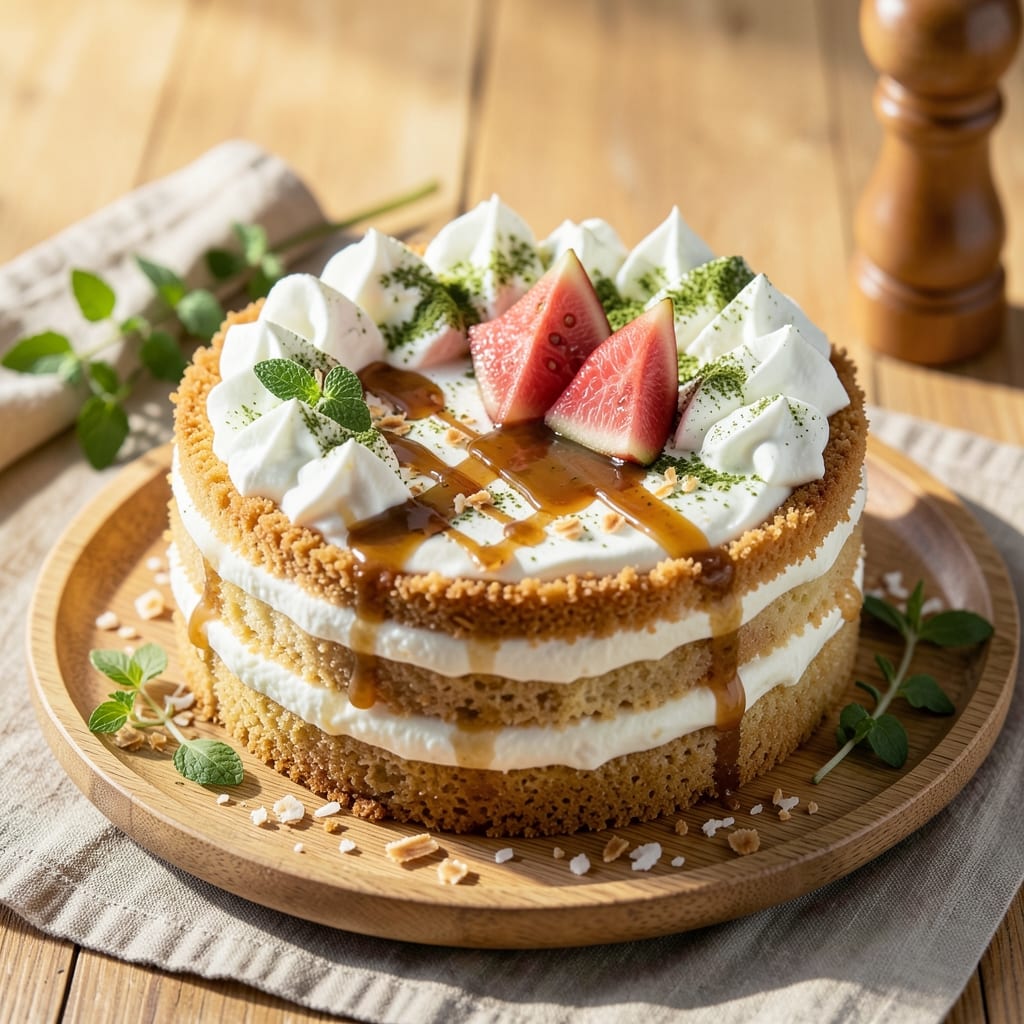
This Asian coconut cake delivers moist, tropical layers with a toasted coconut crunch that feels like a vacation in every bite. 🌴 Inspired by Southeast Asian baking traditions, it combines tender cake with fragrant coconut essence and a crispy, caramelized topping—no heavy frosting needed. The secret is blending coconut milk into the batter for richness while toasting the coconut separately for texture contrast.
The recipe balances simplicity with professional results: one-bowl mixing, 350°F oven time, and 30 minutes of active prep. Whether you prefer a steamed coconut cake (like Filipino bibingka) or a baked version (closer to Thai khanom chok), this method adapts easily. The cake stays moist for days, making it perfect for celebrations or meal prep.
What sets this apart is the dual texture—soft, buttery layers with crispy coconut bits that add both crunch and aroma. The natural sweetness of coconut reduces the need for sugar, while a touch of vanilla and lime zest elevates the tropical flavors. No fancy techniques required, just patience for the coconut to toast to golden perfection.
Serve warm with a dusting of powdered sugar or a drizzle of coconut cream for extra indulgence. The cake’s versatility makes it ideal for birthdays, potlucks, or spontaneous dessert cravings. Let’s bake this tropical masterpiece!
Ingredients for asian coconut cake
Twelve ingredients for a tropical cake with dual texture—moist layers and crispy coconut crunch.
| Ingredient | Amount | Notes |
|---|---|---|
| All-Purpose Flour 🌾 | 2 ½ cups | Sifted for light texture |
| Granulated Sugar 🍚 | 1 ½ cups | White or light brown |
| Unsalted Butter 🧈 | 1 cup | Room temperature, cubed |
| Coconut Milk (Full-Fat, Canned) 🥥 | 13 ½ oz | Stirred well before use |
| Large Eggs 🥚 | 3 whole | Room temperature |
| Vanilla Extract 🌿 | 2 tsp | Pure, high-quality |
| Lime Zest 🍋 | 1 tbsp | Freshly grated |
| Baking Powder 🧂 | 2 tsp | Aluminum-free preferred |
| Salt 🧂 | ½ tsp | Fine sea salt |
| Shredded Toasted Coconut 🥥 | 1 ½ cups | Unsweetened, lightly toasted |
| Powdered Sugar 🍚 | ½ cup | For dusting |
| Coconut Cream (Optional) 🥥 | ¼ cup | For drizzling |
The coconut milk is non-negotiable for that authentic tropical flavor—full-fat canned like Thai Kitchen or Goya delivers the richest results. If you can't find full-fat, light coconut milk plus 1 tbsp coconut oil works in a pinch. For the shredded coconut, toast it in a dry pan over medium heat for 3-4 minutes until golden—this prevents sogginess. Trader Joe's and Asian markets carry pre-toasted varieties if you're short on time, but freshly toasted adds that caramelized depth. The lime zest should be vibrant yellow; if it's pale, zest more limes. Store-bought zest often contains preservatives, so fresh is ideal.
No full-fat coconut milk? Substitute with 1 cup coconut cream (the thick part from a can) plus 2 tbsp water. The vanilla extract can be swapped for vanilla bean paste if you prefer speckled flavor. For a less sweet version, reduce sugar to 1 cup and add 1 tbsp maple syrup. The baking powder must be fresh—if it's over a year old, test it by mixing with water; it should bubble vigorously. For a gluten-free adaptation, use a 1:1 gluten-free flour blend like Bob's Red Mill, but add 1 tsp xanthan gum to mimic texture. The powdered sugar can be omitted if you prefer a less sweet finish—just add a pinch of coconut sugar for depth.
Toasted coconut loses its crunch quickly, so store it in an airtight container at room temperature for up to 5 days. The cake itself keeps 3 days wrapped at room temperature or 5 days refrigerated. For longer storage, freeze slices between parchment paper for up to 3 months. Reheat frozen slices at 300°F for 10 minutes to restore moisture. The coconut cream drizzle should be warmed slightly before serving—it melts beautifully over warm cake. If making ahead, bake the cake 1 day early, then store covered at room temperature until serving.
Why You'll Love This Recipe
- Pantry Staples Only: I swear, this cake uses things you already have—no specialty trips or weird substitutions. That can of coconut milk? The butter sitting in your fridge? Boom, we’re making magic with zero extra shopping.
- Creamy Without Work: The coconut milk does all the heavy lifting—whipped into the batter, it gives that luscious, moist texture with almost no effort. No stand mixer required, just a whisk and patience (the good kind).
- Birthday or Breakfast: Serve it warm with a dusting of powdered sugar for a lazy Sunday treat, or slice it cold for a potluck that’ll disappear faster than you can say "second helping." Honestly, it’s that good.
- Budget-Friendly Luxury: A single can of coconut milk stretches this cake into multiple servings without breaking the bank. Plus, the butter and sugar make it feel indulgent—even when you’re pinching pennies.
Step-by-step instructions for Asian coconut cake
Here's how to create a lusciously moist cake with tropical coconut flavor and irresistible crunch.
👨🍳 Step 1: Prepare the Batter with Perfect Texture
In a stand mixer fitted with the paddle attachment, cream the 1 cup unsalted butter and 1.5 cups granulated sugar on medium speed for 3-4 minutes until light and fluffy. The mixture should nearly triple in volume and become pale, with ribbons forming when the paddle is lifted. This aeration creates the cake's signature moist crumb.
Add the 3 whole large eggs, one at a time, mixing well after each addition. Scrape down the sides of the bowl to ensure even incorporation. Stir in the 2 teaspoons vanilla extract and 1 tablespoon lime zest, mixing just until combined. The lime zest adds a bright citrus note that balances the coconut's richness.
In a separate bowl, whisk together the 2.5 cups all-purpose flour, 2 teaspoons baking powder, and 0.5 teaspoon salt. Sift the dry ingredients directly into the wet mixture and mix on low speed for 30 seconds until just combined. Avoid overmixing—this develops gluten and creates a dense cake.
🍳 Step 2: Incorporate Coconut Milk for Ultimate Moisture
Pour in the 13.5 ounces coconut milk (stirred well) and mix on low speed for 1 minute until fully incorporated. The coconut milk's fat content ensures a tender, moist crumb rather than a dry one. If the batter appears too thick, add 1-2 tablespoons of the reserved coconut milk to reach a smooth, pourable consistency.
Fold in 1 cup of the 1.5 cups shredded toasted coconut using a silicone spatula, reserving the remaining 0.5 cups for the topping. This step distributes the coconut evenly throughout the cake while preserving its texture. The toasted coconut adds a delightful crunch that contrasts beautifully with the soft crumb.
🥘 Step 3: Bake in Layers for Even Cooking
Preheat your oven to 350°F and grease two 8-inch round cake pans (or one 9x13-inch pan) with butter, then dust with flour. Divide the batter evenly between the pans and sprinkle the reserved 0.5 cups shredded toasted coconut evenly over each layer.
Bake for 25-30 minutes (or 30-35 minutes for the sheet pan) until a toothpick inserted into the center comes out clean and the edges are golden. Rotate the pans halfway through baking for even browning. The cake should spring back gently when pressed—this indicates proper doneness.
🍽️ Step 4: Finish with Coconut Cream and Powdered Sugar
Remove the cakes from the oven and let them cool in the pans for 10 minutes. Transfer to a wire rack and cool completely. Once cooled, dust the tops generously with 0.5 cup powdered sugar using a fine-mesh sieve for an elegant finish.
For the optional drizzle, warm the 0.25 cup coconut cream in a small saucepan over low heat until melted, then whisk until smooth. Drizzle over the cooled cake in a zigzag pattern. The coconut cream adds a luxurious sheen and enhances the tropical flavor. Serve slices warm or at room temperature for the best texture.
Pro Tips For Making Asian Coconut Cake
- Whisk Eggs Until Ribbon Stage: I learned this the hard way—under-whisked eggs make the cake dense and gummy. Beat the eggs and sugar until the mixture forms a thick ribbon when the whisk is lifted (about 3-5 minutes). This ensures a light, fluffy texture, not a sad, heavy brick.
- Use Room-Temp Coconut Milk: Cold coconut milk curdles when mixed with butter, leading to a grainy batter. Let the can sit at room temperature for 30 minutes before opening—just enough to make it smooth and blendable. Trust me, your cake’s moisture and creaminess depend on it.
- Don’t Overmix the Batter: After folding in the dry ingredients, stop as soon as they’re just combined. Overmixing develops gluten, turning your tender coconut cake into a chewy loaf. A few lumps are fine—think "rustic," not "perfect."
- Bake at 325°F, Not Higher: I was skeptical until I tried it: 350°F makes the outside brown too fast while the center stays underdone. 325°F gives even baking and that signature moist, golden crust without burning. Insert a toothpick at 45 minutes—it should come out with a few moist crumbs, not wet batter.
Pro cooking tips for asian coconut cake
Coconut Milk Magic
The secret to this cake’s signature moisture lies in using full-fat coconut milk—not the watery kind. I recommend Thai Kitchen or Goya brands for that rich, creamy texture. If you only have light coconut milk, mix 1 cup coconut cream (the thick part from a can) with 2 tbsp water to mimic the fat content. The coconut milk replaces some of the butter, keeping the cake tender while adding that authentic tropical aroma. Always stir the canned milk well before using, as the cream separates. 🥥
Toasted Coconut Tricks
Freshly toasted coconut makes all the difference—store-bought versions often taste bland. Toast 1.5 cups unsweetened shredded coconut in a dry skillet over medium heat for 3-4 minutes, stirring constantly, until golden brown. Watch closely to avoid burning! For extra crunch, spread the toasted coconut on a baking sheet and let it cool completely before mixing into the batter. I like to reserve ½ cup for the topping to create that irresistible crunch layer. Pro tip: Use Trader Joe’s pre-toasted coconut in a pinch, but freshly toasted adds depth.
Batter Consistency
The batter should be thick but pourable—like heavy pancake batter. If it’s too stiff after mixing, add 1-2 tablespoons of coconut milk to loosen it. Overmixing develops gluten, leading to a dense cake, so mix dry ingredients into wet just until combined. I use a silicon spatula to gently fold in the coconut to preserve its texture. For a one-bowl wonder, combine everything in the same bowl—no extra dishes! The batter should coat the back of a spoon but still hold its shape when dropped. 💡
Oven Temperature Control
Preheat your oven to 350°F—this is non-negotiable for even baking. Use an oven thermometer to confirm accuracy, as home ovens often run hot or cold. For round pans, bake for 25-30 minutes; for a 9x13-inch sheet pan, extend to 30-35 minutes. Rotate pans halfway through for even browning. The cake is done when a toothpick comes out clean and the edges pull away slightly. Avoid opening the oven door early—temperature fluctuations cause sinking. 🌡️
Coconut Cream Drizzle
Warm the ¼ cup coconut cream gently in a small saucepan over low heat until melted, then whisk until smooth. Drizzle in a zigzag pattern over the cooled cake for a restaurant-worthy finish. For extra flair, dust with powdered sugar using a fine-mesh sieve. The coconut cream adds a silky contrast to the cake’s texture, while the sugar enhances the tropical vibe. Serve warm for the best experience—cold cake loses its moisture quickly. 🍽️
Nutrition facts
Frequently asked questions
Can I make this cake without coconut milk?
Yes, but the flavor and texture will differ. Replace the 13.5 oz coconut milk with 1 cup coconut cream (thick part from a can) plus 2 tbsp water for richness, or use 1 cup whole milk plus 1 tbsp coconut extract for a milder coconut taste. The cake will still be moist but less aromatic.
Why does my cake turn out dry?
Dry cake usually means overbaking or insufficient fat. Check your oven temperature with a thermometer—it should be 350°F. Also ensure you're using full-fat coconut milk and don't overmix the batter. For extra moisture, brush warm cake layers with 2 tbsp coconut cream before assembling.
How do I store leftovers?
Wrap cooled cake tightly in plastic wrap and store at room temperature for up to 3 days. For longer storage, refrigerate for 5 days or freeze slices between parchment for 3 months. Reheat frozen slices at 300°F for 10 minutes to restore moisture. The coconut topping stays crunchy when stored properly.
Can I make this gluten-free?
Replace the 2.5 cups all-purpose flour with a 1:1 gluten-free flour blend (like Bob's Red Mill) and add 1 tsp xanthan gum to improve texture. Use the same measurements for other ingredients. The cake may be slightly denser but will maintain its moist quality. Toast the coconut separately as usual.
What's the best way to serve this cake?
Serve warm for the best texture—slice when still slightly warm from baking. Dust with powdered sugar and drizzle with melted coconut cream for a tropical finish. Pair with passion fruit sauce or mango slices to complement the coconut flavors. The cake also makes excellent finger sandwiches for tea parties!