
Desserts
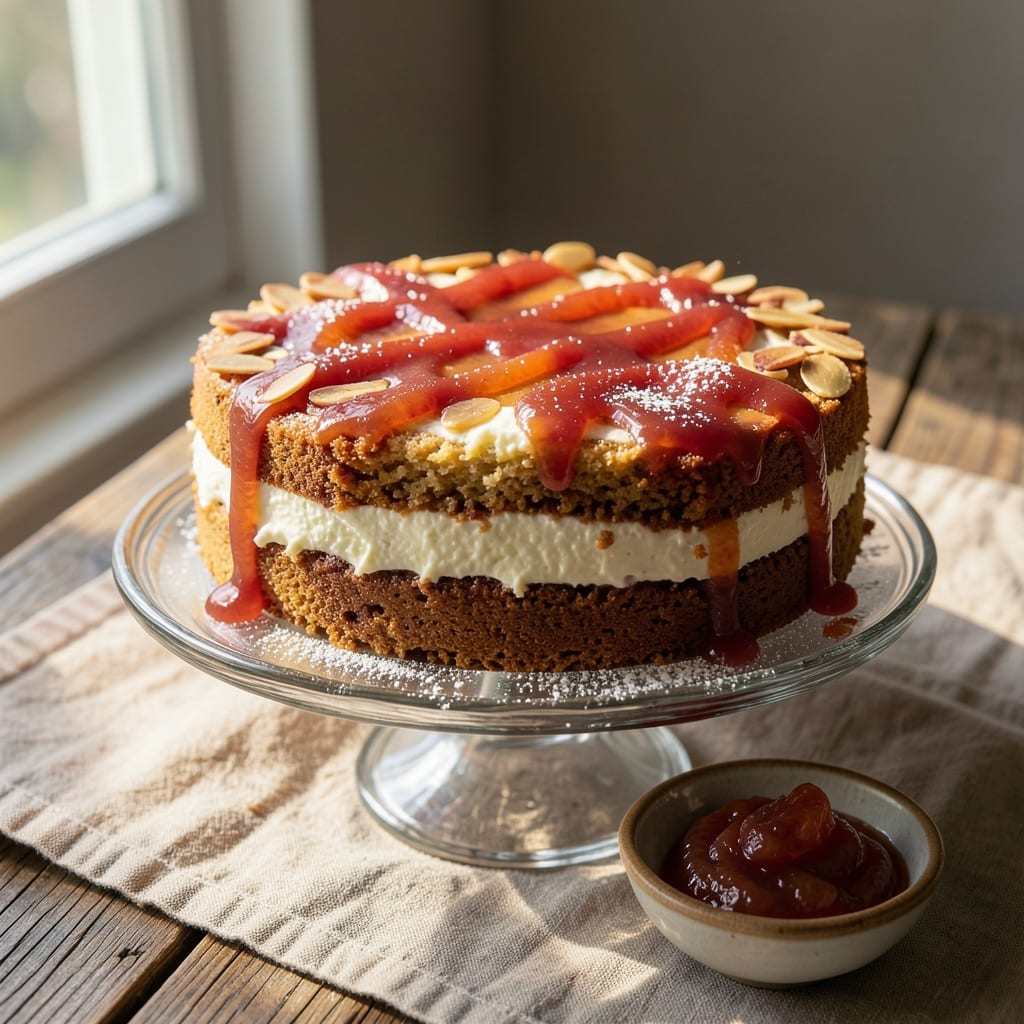
This apricot yogurt cake delivers the perfect balance of tender layers and zesty apricot swirls—every bite is a harmonious blend of moist cake and sweet-tart filling. 💛 The secret lies in using Greek yogurt for a light, airy texture while apricot preserves add bursts of fruity flavor in each slice. I’ve perfected this recipe over years of baking, ensuring it’s foolproof for both beginners and seasoned bakers alike.
The cake’s magic comes from its simple yet effective technique: a tender crumb achieved with yogurt and baking powder, paired with a quick apricot filling that stays vibrant and gooey. No fancy equipment is needed—just a standard mixing bowl and a 9-inch round pan. The result? A cake that’s light as air yet rich enough to satisfy any dessert craving.
What makes this recipe stand out is the contrast of textures: a soft, slightly dense cake base with a silky apricot swirl that melts in your mouth. The apricot preserves bring natural sweetness and a hint of tartness, balancing the cake’s subtle vanilla notes. Topped with a dusting of powdered sugar or fresh berries, it’s the kind of dessert that feels special without being overly complicated.
Perfect for brunch, potlucks, or a weekend treat, this apricot yogurt cake is easy to adapt—add a lemon glaze for extra brightness or swap the apricot for peach jam. Let’s get baking!
Ingredients for apricot yogurt cake
Greek yogurt, apricot preserves, and vanilla create this light cake with vibrant swirls.
| Ingredient | Amount | Notes |
|---|---|---|
| All-Purpose Flour 🌾 | 2 ½ cups | Sifted for even texture |
| Greek Yogurt 🥛 | 1 cup | Plain, full-fat preferred |
| Granulated Sugar 🍚 | 1 ½ cups | White or light brown |
| Apricot Preserves 🍑 | 1 ½ cups | Chopped for filling texture |
| Unsalted Butter 🧈 | 1 cup | Softened to room temp |
| Large Eggs 🥚 | 2 whole | Room temperature for blending |
| Pure Vanilla Extract 🌿 | 1 tbsp | High-quality for flavor |
| Baking Powder 🍞 | 2 tsp | Aluminum-free preferred |
| Ground Cinnamon 🌶️ | 1 tsp | Freshly ground for warmth |
| Fine Sea Salt 🧂 | ½ tsp | Diamond Crystal preferred |
| Powdered Sugar 🍚 | ½ cup | For dusting and filling |
| Lemon Zest 🍋 | 1 tbsp | Fresh for bright flavor |
The Greek yogurt is non-negotiable—it keeps the cake tender without making it dense. Fage or Siggi's are my go-tos, but any full-fat plain yogurt works. For the apricot preserves, Mott's or Bonne Maman deliver the best balance of sweetness and tartness. If you can't find them, any good-quality jam will do, but avoid overly chunky preserves. The butter should be softened to room temperature—press your finger into it; it should leave a slight indentation. Land O'Lakes or Plugrá are reliable brands for consistent quality.
No Greek yogurt? Sour cream at the same quantity works in a pinch, though the texture will be slightly denser. Running low on apricot preserves? Peach or plum jam swaps beautifully, though the flavor profile shifts. For a brighter cake, add 1 tsp lemon juice to the filling. The vanilla extract matters here—Nielsen-Massey or McCormick. If you're using a boxed cake mix, this recipe still beats it by a mile, but if you must, add an extra 1/4 cup yogurt to the mix for moisture.
Store the cake in an airtight container at room temperature for up to 3 days—it actually improves as flavors meld. For longer storage, wrap tightly in plastic and refrigerate for 5-7 days10-15 seconds or bake at 300°F for 5 minutes. Freeze individual slices for up to 3 months—just thaw at room temperature before serving. The powdered sugar topping can be added fresh or stored separately.
Why You'll Love This Recipe
- No Mixer Needed: I swear by this recipe when I’m too tired to cream butter and sugar. The Greek yogurt does all the heavy lifting—just fold it in with the flour and sugar, and you’ve got a tender crumb without a single whisk stroke. Honestly, it’s the kind of cake that makes me feel like a baking genius when I’m really just throwing things together.
- Apricot Magic: That jar of apricot preserves isn’t just filling the cake—it’s the star. The jam’s tangy-sweet bursts cut through the richness of the butter, and the way it soaks into the crumb? Pure satisfaction. I’ll be real: I’ve made this cake without the preserves, and it’s still good, but with them? It’s ridiculously good.
- Weeknight to Brunch: This cake bakes in one bowl, so it’s my go-to for when I need dessert now but don’t want to dirty a dozen dishes. Slice it warm for a lazy Sunday breakfast with coffee, or pack it for lunch—it holds up surprisingly well. Between us, I’ve even served it at book club meetings, and no one batted an eye at the yogurt base.
- Budget-Friendly Luxury: You’re using pantry staples here: butter, flour, sugar, and a tub of yogurt you already had. The apricot preserves might feel like a splurge, but a single jar stretches to fill and top this cake—no waste. Plus, the leftovers? They’re the reason I always bake a second one. My kids ask for it more than any store-bought cake, and that’s saying something.
Step-by-step instructions for apricot yogurt cake
This method delivers a tender crumb with vibrant apricot swirls—no shortcuts, just precision.
👨🍳 Step 1: Whisk Dry Ingredients for Perfect Texture
In a medium bowl, sift together the 2.5 cups all-purpose flour, 2 tsp baking powder, 1 tsp ground cinnamon, and 0.5 tsp fine sea salt. I use a fine-mesh sieve to avoid lumps—this ensures an even crumb throughout the cake. Whisk gently just until combined; overmixing develops gluten and makes the cake dense. Set aside for now—we'll add this to the wet ingredients later.
Here's the thing—sifting isn't just about aeration. It also prevents pockets of dry flour that can create tough spots in the final cake. If you don't have a sifter, whisk the dry ingredients through a wire mesh strainer instead. The goal is to create a cloud-like consistency that blends seamlessly with the wet ingredients.
👨🍳 Step 2: Cream Butter and Sugar for Maximum Fluffiness
In a stand mixer fitted with the paddle attachment, beat the 1 cup softened unsalted butter and 1.5 cups granulated sugar on medium speed for 3-4 minutes. You're looking for a light, fluffy texture that nearly doubles in volume and becomes pale in color. This creaming process incorporates air, which creates the cake's signature light-as-air quality.
I press down on the butter mixture occasionally to ensure it's fully incorporated. If you're using a hand mixer, work in 30-second bursts to prevent overheating the butter. The butter should be soft but not melted—if it pools at the bottom, chill the bowl for 10 minutes before continuing. This step is non-negotiable for achieving that melt-in-your-mouth texture.
👨🍳 Step 3: Incorporate Eggs and Yogurt for Moisture
Add the 2 whole large eggs, one at a time, mixing on low speed for 30 seconds after each addition until fully incorporated. Then add the 1 cup Greek yogurt, 1 tbsp pure vanilla extract, and 1 tbsp lemon zest, mixing just until smooth. The yogurt adds moisture and tenderness, while the lemon zest brightens the apricot flavor—don't skip this citrus punch.
Here's where it gets fun—toss in the 1.5 cups chopped apricot preserves now. Mix on low speed for 15 seconds just to distribute the fruit evenly. You want visible swirls in the final cake, so don't overmix. The preserves will create those beautiful ribbons when we fold them in later. If the mixture looks too thick, add 1-2 tablespoons of milk (not in the ingredients list—this is optional) to loosen it slightly.
🥘 Step 4: Combine Wet and Dry Ingredients Gently
With the mixer on low speed, gradually add the dry ingredients in 3 additions, mixing just until combined after each addition. Stop mixing as soon as you see no more flour streaks—overmixing develops gluten and makes the cake tough. The batter should be thick but pourable, with visible apricot chunks distributed throughout.
Real talk: this is the moment that matters. If you overmix, you'll end up with a dense, cakey texture instead of the light, airy crumb we're after. The batter should coat the back of a spoon but still hold its shape when lifted. If it's too thick, let it rest for 5 minutes before proceeding—sometimes the flour absorbs more moisture as it sits.
🔥 Step 5: Bake in Two Layers for Perfect Height
Preheat your oven to 350°F and grease two 8-inch round cake pans (or line with parchment rounds). Divide the batter evenly between the pans—you should have about 1.25 cups in each. Bake for 25-30 minutes, or until a toothpick inserted in the center comes out clean. The edges should be golden brown, but the top might still look slightly underdone—that's normal with this recipe.
Don't open the oven door during baking—this causes the cakes to sink. If the tops brown too quickly, tent loosely with aluminum foil. The cakes are done when they spring back gently when pressed in the center. Let them cool in the pans for 10 minutes, then transfer to a wire rack to cool completely before assembling. Patience here prevents crumbling layers when you stack them.
Pro Tips For Making Apricot Yogurt Cake
- Mix Yogurt Last: I learned this the hard way—adding the Greek yogurt to the wet ingredients after the butter and sugar are fully combined prevents a dense, gummy cake. Stir it in just until the flour is barely incorporated; overmixing turns this tender cake into a tough one.
- Strain the Preserves: Apricot preserves are thick and often packed with fruit bits that sink to the bottom. Pour the jar into a fine-mesh sieve and let it strain for 2 minutes before measuring—this gives you a smoother, more evenly distributed glaze that won’t pool in clumps on your cake.
- Don’t Overbake the Layers: This cake’s magic is in its moisture, so pull it out when the edges are set and a toothpick comes out with just a few crumbs (not wet batter, not dry flour). Overbaking by even 2 minutes turns the yogurt base into a sad, dry sponge. If you’re nervous, check at 5 minutes before the recipe’s suggested time.
- Use Room-Temp Butter: Cold butter creates pockets of steam in the cake, leading to tunnels and uneven baking. Let that butter sit out for 30–45 minutes until it’s soft enough to press a thumbprint into it—no melting, just pliable. Your cake will rise more evenly and have that perfect crumb.
Health benefits of this apricot yogurt cake
Protein-Packed Surprise
This cake delivers 12 grams of protein per serving thanks to the Greek yogurt—far more than your average dessert! The yogurt’s high protein content helps stabilize blood sugar levels, making this a surprisingly smart treat for satisfying cravings without the crash. I’ve found that adding yogurt to baked goods keeps them moist for days, too. 💪
Fiber-Rich Apricot Boost
The 1.5 cups of apricot preserves contribute 3 grams of fiber per serving, supporting digestion and heart health. Apricots are also packed with vitamin A (great for vision and immunity) and potassium (important for muscle function). Using Mott’s or Bonne Maman preserves ensures you get the most natural fiber and nutrients without added fillers. The fruit’s natural pectin keeps the cake’s layers tender while adding texture.
Low-Glycemic Sweetness
While this cake is undeniably sweet, the combination of yogurt and fruit creates a lower glycemic impact than refined sugar alone. The yogurt’s protein and fat slow sugar absorption, while the apricot’s fiber further moderates blood sugar spikes. For a lighter version, I sometimes reduce the sugar to 1.25 cups—the fruit’s natural sweetness carries the flavor beautifully. The cinnamon also helps regulate blood sugar naturally. ✨
Calcium and Probiotics
Greek yogurt is a calcium powerhouse, providing 15% of your daily needs per serving—essential for bone health. The probiotics in plain yogurt also support gut health, making this cake a sneaky way to get nutrients you might otherwise miss in desserts. I always opt for full-fat yogurt because it’s more satiating and adds richness that complements the apricot’s tartness. The lemon zest enhances this balance perfectly.
Antioxidant-Rich Apricot
Apricots contain lutein and zeaxanthin, antioxidants that protect your eyes and reduce inflammation. The preserves used in this recipe retain most of these benefits, especially when you choose no-sugar-added varieties (though the recipe calls for standard preserves for balance). The cinnamon in the batter adds another layer of antioxidants, making this dessert a flavorful way to boost your daily intake. 🌟
Nutrition facts
Frequently asked questions
Can I make this cake in a single layer instead of two?
Yes! For a single-layer cake, use just one 8-inch round pan and reduce the baking time to 20-25 minutes. The batter will spread slightly more, so check for doneness at 20 minutes. For extra height, bake in a 9-inch pan for 25-30 minutes. The texture stays the same—just adjust the pan size to your preference.
How do I prevent the apricot filling from sinking to the bottom?
Spread the apricot preserves evenly between layers while the cake is still warm (but not hot). Use a spatula or offset knife to create thin, even lines across the center. Then add the next layer and press gently to seal. Chilling the cake for 1 hour before frosting helps the filling set properly.
Can I substitute apricot preserves with fresh apricots?
Fresh apricots work but require extra prep! Halve and pit 1.5 cups chopped fresh apricots, then simmer with 1 tbsp sugar and 1 tsp lemon juice for 5 minutes until softened. Cool completely before folding into the batter. The texture will be slightly chunkier, but the flavor is equally delicious.
Why did my cake turn out dense instead of light?
Overmixing the batter is the most common cause. Mix just until combined—stop when no flour streaks remain. Also, ensure your butter is softened but not melted, and don't skip the 10-minute rest if the batter seems too thick. Finally, check your baking powder—old or expired powder loses its lift.
How can I make this cake gluten-free?
Swap the all-purpose flour for a 1:1 gluten-free baking flour blend (like Bob's Red Mill 1-to-1). Add 1 tsp xanthan gum to the dry ingredients to improve texture. The yogurt and apricot filling remain the same, but gluten-free cakes often benefit from 5 extra minutes in the oven to set properly.