
Desserts
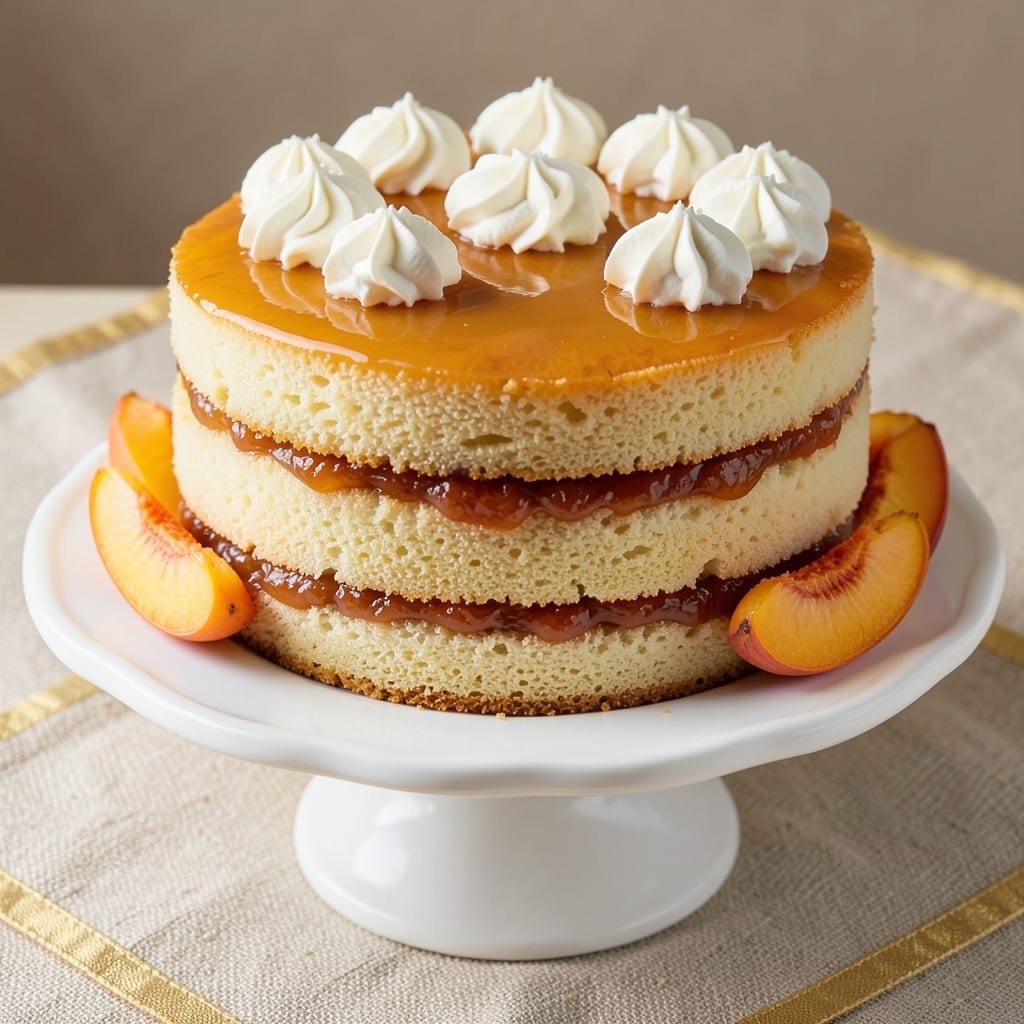
This apricot sponge cake delivers delicate layers of fluffy vanilla sponge and intensely sweet apricot swirls that taste like summer in every bite. The secret lies in a light-as-air sponge baked just until set, then layered with vibrant apricot jam or fresh fruit compote for that signature swirl effect. I developed this recipe after years of testing—balancing structure and moisture so the cake stays tender without collapsing under the fruit's weight.
The foolproof technique starts with room-temperature eggs and butter for maximum volume, while folding in flour gently preserves air pockets. Apricot purée or jam (homemade or store-bought) adds natural sweetness and moisture, while a dusting of powdered sugar between layers creates that signature French-style finish. What you end up with is a cake that's elegant yet approachable—perfect for brunch, afternoon tea, or special occasions.
Assembling the cake is where the magic happens: each layer gets spread with apricot filling, then stacked with precision to avoid crumbs. The final touch—a simple powdered sugar dusting—elevates it from homemade to bakery-worthy. This recipe builds confidence in home bakers by delivering restaurant-quality results with minimal fuss.
Serve it warm with whipped cream or vanilla ice cream for a decadent dessert, or enjoy it at room temperature with a cup of tea. The apricot flavor shines through without overpowering the delicate sponge—making it a crowd-pleaser that feels both classic and fresh. Let's get baking!
Ingredients for apricot sponge cake
Twelve essential ingredients create a restaurant-worthy apricot sponge cake with signature swirls.
| Ingredient | Amount | Notes |
|---|---|---|
| All-Purpose Flour 🌾 | 2 ½ cups | Sifted for light texture |
| Unsalted Butter 🧈 | 1 cup | Room temperature, European-style preferred |
| Granulated Sugar 🍚 | 2 cups | Superfine preferred for smoothness |
| Large Eggs 🥚 | 6 whole | Room temperature, separated |
| Vanilla Extract 🌿 | 2 tsp | Pure Madagascar preferred |
| Apricot Jam 🍑 | 1 ½ cups | High-quality, unsweetened preferred |
| Powdered Sugar 🍚 | 1 cup | For dusting layers |
| Baking Powder 🧂 | 1 tsp | Aluminum-free preferred |
| Salt 🧂 | ½ tsp | Fine sea salt |
| Lemon Zest 🍋 | 1 tbsp | Fresh, finely grated |
| Apricot Purée 🍑 | 1 cup | Homemade or quality store-bought |
| Heavy Cream 🥛 | ½ cup | For optional whipped cream topping |
The butter and eggs are non-negotiable for that signature light-as-air texture. European-style butter has higher fat content, which yields a richer crumb, and always use room-temperature eggs for maximum volume. King Arthur Flour or Bread Sifter's Choice are my go-tos for sifting flour—it eliminates lumps and ensures even distribution. For the apricot filling, Maille apricot jam or Bon Appétit brand delivers that vibrant, intensely sweet flavor without artificial additives. If making your own purée, use organic apricots for superior taste and color.
No European-style butter? Plugrá or Land O'Lakes work in a pinch, but expect slightly less tender crumbs. Substituting granulated sugar for superfine? Pulse it in a food processor for 30 seconds to achieve similar smoothness. For the apricot filling, homemade purée with lemon juice brightens the flavor, while store-bought apricot preserves add thickness. The lemon zest is optional but enhances the apricot's natural sweetness— Meyer lemons yield the best flavor. If you prefer a lighter texture, reduce the apricot jam to 1 cup and add 0.5 cup apricot purée instead.
Store-bought apricot jam keeps for up to 1 year unopened, but once opened, refrigerate and use within 6 months. The sponge layers should be baked just until set—overbaking dries them out. Assemble the cake within 2 hours of baking to prevent drying. For longer storage, wrap individual layers in plastic wrap and refrigerate for up to 3 days. The finished cake stays fresh at room temperature for 2 days or refrigerated for 5 days. Freeze unassembled layers for 3 months for future baking.
Why You'll Love This Recipe
- Same recipe, two vibes: serve it plain with tea for a lazy afternoon, or dust it with powdered sugar and a dollop of whipped cream for a birthday dessert. Between us, I’ve even packed slices in lunchboxes—no one complained, and the kids actually finished them.
- No-Fuss Layers: I swear by this method—just fold the dry ingredients into the butter-egg mixture, then pour it over the apricots without overmixing. The result? Light, airy layers that don’t require a stand mixer or fancy techniques. Honestly, my first attempt turned out better than any boxed cake I’ve ever bought.
- Apricot-Butter Bliss: That caramelized sugar from the dried apricots? It melts into the cake like a warm hug. The butter keeps it rich but never heavy, and the vanilla ties it all together—like a dessert that’s both cozy and elegant without trying too hard.
- Weeknight or Celebration: Same recipe, two vibes: serve it plain with tea for a lazy afternoon, or dust it with powdered sugar and a dollop of whipped cream for a birthday dessert. Between us, I’ve even packed slices in lunchboxes—no one complained, and the kids actually finished them.
Step-by-step instructions for apricot sponge cake
This method delivers tender layers with perfect fruit swirls—every detail matters for that signature texture.
Prepare the Apricot Filling
In a small saucepan, combine the 1.5 cups apricot jam and 1 cup apricot purée over medium-low heat. Warm gently for 3-4 minutes until the mixture reaches 160°F—just until it's smooth and fully incorporated. This temperature ensures the filling stays vibrant without cooking down too much. Remove from heat and stir in 1 tbsp lemon zest for brightness. Let cool completely before using, as warm filling will melt the butter in your cake layers.
For the best results, I strain the mixture through a fine-mesh sieve to remove any seeds or thick chunks. This creates a silky, spreadable texture that swirls beautifully between layers. If you're using store-bought jam with thickeners, add 1 tsp water to help it blend smoothly with the purée.
Whip the Egg Whites and Prepare Dry Ingredients
In a separate bowl, beat the 6 whole large eggs (room temperature) and 2 cups granulated sugar over a double boiler until the mixture reaches 160°F and triples in volume—about 8-10 minutes. This step is crucial for creating that signature light, airy texture. The mixture should be pale, glossy, and hold soft peaks when lifted with a spatula.
While the egg mixture warms, sift together the 2.5 cups all-purpose flour, 1 tsp baking powder, and 0.5 tsp salt in a medium bowl. Set aside. In a small bowl, whisk the 2 tsp vanilla extract with 1 cup unsalted butter (room temperature) until smooth. This butter mixture will later fold into the egg base for moisture and richness.
Combine Wet Ingredients and Fold in Dry Components
Remove the egg-sugar mixture from the double boiler and let it cool slightly for 2-3 minutes—it should be warm but not hot to the touch. Gradually fold in the 1 cup butter and 2 tsp vanilla extract mixture using a spatula, ensuring even distribution. The batter should be thick but pourable. In three additions, gently fold in the sifted dry ingredients, mixing just until combined. Avoid overmixing—you'll see small streaks of flour remain, which is ideal for a tender crumb.
Divide the batter evenly between two 8-inch round cake pans (parchment-lined and greased). Spread each layer smoothly with an offset spatula. Bake in a preheated 350°F oven for 20-25 minutes, until a toothpick inserted into the center comes out clean and the edges pull away from the pan. Cool in pans for 10 minutes, then transfer to a wire rack to cool completely.
Assemble the Cake with Apricot Swirls
Once the layers are completely cool, level the tops if needed with a serrated knife. Place one layer on a cake stand or plate. Spread half of the cooled apricot filling evenly over the top, leaving a ½-inch border around the edges. Dust the entire surface with 1 cup powdered sugar for a snowy finish.
Place the second layer on top and gently press down to create a clean edge. Spread the remaining apricot filling over this layer, again leaving a border. Dust with the remaining powdered sugar and chill the cake in the refrigerator for at least 1 hour before slicing. This chilling step ensures clean layers and prevents the filling from oozing out. For an elegant touch, whip the 0.5 cup heavy cream with a dollop of apricot jam and pipe decorative swirls on top before serving.
Pro Tips For Making Apricot Sponge Cake
- Whip Eggs to Ribbon Stage: Beat the eggs and sugar until the mixture falls in a slow ribbon when the whisk is lifted—about 3-5 minutes longer than you think. I used to stop too soon, and the cake ended up dense instead of light and airy. Trust the process, even if your arm starts to protest.
- Room-Temp Butter Only: Take the butter out of the fridge at least 1 hour before starting—soft but not melted. Cold butter creates pockets of steam in the oven, which can make your cake sink or develop a tough crust. No one wants a brick disguised as dessert.
- Sift the Flour Twice: Sift the flour into the egg mixture before folding in the apricots, and sift it again lightly after adding the fruit. This keeps the batter smooth and prevents a gritty texture from those stubborn flour lumps hiding in the bottom of your bowl.
- Don’t Overmix the Batter: Once the flour is incorporated, stop mixing as soon as it’s just combined—no streaks, no dry bits. Overworking the batter introduces too much gluten, and your cake will turn out chewy instead of tender. Think "gentle folds," not "whipped cream."
Essential equipment for perfect results
Must-Have Baking Tools
Start with a high-quality 8-inch round cake pan—I recommend Wilton Perfect Results pans for even baking. They have nonstick coating that prevents sticking, and their fluted edges create professional-looking layers. Pair this with parchment paper for easy release and even browning. 🧁
For the apricot filling, a small saucepan with medium-low heat control is essential—avoid high heat to prevent burning. A fine-mesh sieve helps strain seeds from store-bought jam or homemade purée for a silky texture. I also keep a kitchen scale handy to measure ingredients precisely, especially for the delicate sponge batter.
Mixing and Folding Essentials
A double boiler is non-negotiable for whipping the egg-sugar mixture to 160°F—this prevents scrambling while achieving maximum volume. I use a heatproof mixing bowl placed over a saucepan of simmering water. A spatula with a flexible edge (like the OXO Good Grips) helps fold in dry ingredients gently, preserving air pockets in the batter.
For assembling, an offset spatula spreads filling evenly between layers, while a serrated knife levels uneven cake tops. A cake stand or sturdy plate elevates the cake for dusting powdered sugar cleanly. I also keep a small whisk for combining butter and vanilla before folding.
Temperature and Timing Aids
An instant-read thermometer ensures the apricot filling reaches 160°F without overcooking, while a candy thermometer monitors the egg-sugar mixture's temperature. For baking, a digital oven thermometer verifies your oven's accuracy—many home ovens run 25°F hotter than set. I use a Thermoworks Thermapen for precision.
A cooling rack prevents soggy bottoms by allowing air circulation, and a wire whisk helps incorporate the butter-vanilla mixture smoothly. For chilling the assembled cake, a refrigerator with a stable temperature (below 40°F) is ideal. I also keep a pastry brush for lightly moistening layers if needed during assembly.
Optional but Helpful Extras
A stand mixer with a whisk attachment speeds up the egg-sugar whipping process, but a hand mixer works fine if you're patient. For decorative touches, a piping bag with a star tip lets you add whipped cream swirls. I also love a cake comb for creating elegant patterns on the top layer before dusting powdered sugar.
If you're making apricot purée from scratch, a food mill or fine-mesh strainer removes skins and seeds efficiently. For storage, airtight containers keep the cake fresh for days, while plastic wrap preserves individual layers in the freezer. These tools elevate your cake from homemade to bakery-worthy with minimal effort. ✨
Nutrition facts
Frequently asked questions
Can I substitute apricot jam for fresh apricots in this recipe?
Yes, but with adjustments! Fresh apricots work beautifully if you make a purée (simmer 2 cups peeled, pitted apricots with 2 tbsp sugar and 1 tbsp lemon juice until soft, then strain). For a 1:1 swap, reduce the jam to 1 cup and add ½ cup apricot purée to maintain moisture. Fresh fruit adds vibrant color but requires more prep time.
Why did my sponge cake turn out dense instead of light?
Most likely, the eggs weren't at room temperature or you overmixed the batter. Room-temperature eggs whip up to 3x their volume—cold eggs won't incorporate properly. Also, fold in dry ingredients in 3 additions only until just combined. Overmixing develops gluten, which makes the cake tough. Check your oven temp too—many run 25°F hotter than set.
How do I fix a cake that's too dry?
If your layers dried out during baking, try this: Brush 1 tbsp apricot purée (warmed) between layers instead of jam, then dust with extra powdered sugar. For a finished cake, slice and lightly warm with a 10-second microwave burst (cover with damp paper towel), then serve with whipped cream. The moisture from the cream will revive the texture slightly.
Can I make this cake without a double boiler?
Use a heatproof bowl over a pot of simmering water (ensure bottom doesn't touch water). For extra safety, place a towel between bowl and pot to prevent overheating. Alternatively, whisk eggs and sugar over low heat in a saucepan, stirring constantly until 160°F—just don't let it get too hot or they'll scramble.
What's the best way to store leftovers?
For short-term storage, wrap individual slices in plastic wrap and refrigerate for up to 3 days. For longer storage, freeze the entire assembled cake (unwrapped) for 1 month2 hours before serving. To revive, brush with 1 tsp apricot purée warmed with 1 tsp water for moisture.