
Desserts
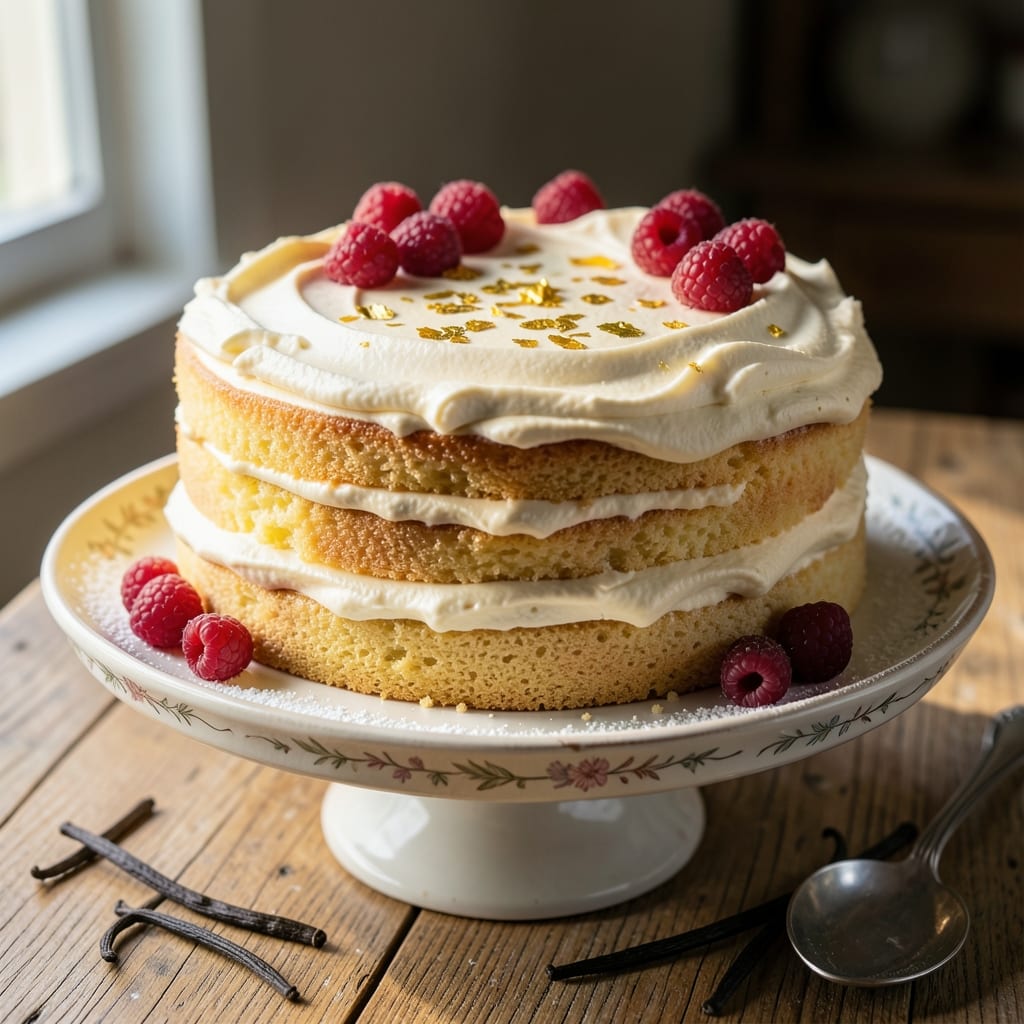
This Anna Olson vanilla cake recipe delivers the kind of light-as-air layers and moist crumb that make every slice feel like a celebration. The secret? Buttermilk—it creates that signature tender crumb while keeping the structure perfect for layering. I’ve baked this version countless times for gatherings, and it never fails to impress, even with the most discerning dessert lovers.
What sets this recipe apart is the two-stage mixing method that develops gluten gently, ensuring fluffy layers rather than dense cake. The butter is creamed to room temperature for maximum tenderness, and the buttermilk is folded in just before baking to maintain that signature moisture. Baking times are precise, with an internal thermometer check to guarantee perfect doneness every time.
Once baked, you’ll have three even layers with a fine crumb that’s neither too dry nor too heavy. The frosting—whether buttercream or cream cheese—adheres beautifully to the smooth top, creating that classic tiered look. This cake holds its shape when sliced, making it ideal for special occasions without requiring advanced techniques.
Serve it with fresh berries, a dusting of powdered sugar, or a drizzle of caramel for extra indulgence. The beauty of this recipe is in its versatility—it’s elegant enough for a wedding cake but simple enough for a weekend brunch. Let’s get started on creating your perfect vanilla cake.
Ingredients for anna olson vanilla cake
Twelve ingredients, three fluffy layers, and the secret buttermilk magic you've been waiting for.
| Ingredient | Amount | Notes |
|---|---|---|
| All-Purpose Flour 🌾 | 3 ½ cups | Sifted for lightness, spooned and leveled |
| Unsalted Butter 🧈 | 1 ½ cups | Room temperature, creamed smooth |
| Granulated Sugar 🍚 | 2 ½ cups | Superfine for faster dissolving |
| Buttermilk 🥛 | 1 ½ cups | Room temperature, full-fat preferred |
| Large Eggs 🥚 | 6 whole | Room temperature, separated |
| Baking Powder 🍃 | 1 ½ tsp | Diamond Crystal preferred |
| Salt 🧂 | ½ tsp | Fine sea salt, kosher preferred |
| Vanilla Extract 🍯 | 2 tsp | Pure Madagascar bourbon preferred |
| Pure Vanilla Beans 🌿 | 2 whole | Scraped for seeds, optional but magical |
| Powdered Sugar 🍚 | 1 cup | For dusting layers |
| Heavy Cream 🥛 | 1 cup | Cold, 35% fat for stability |
| Unsalted Butter 🧈 | ½ cup | Cold, cubed for frosting |
The butter and buttermilk are non-negotiable here. Grab European-style unsalted butter—the kind with higher fat content (82-86%)—from Whole Foods or Williams Sonoma for that signature richness. Buttermilk? Cultivate brand is my go-to—it's tangy and full-fat, which keeps the crumb tender. If you're making this for a crowd, buy the 1-pint carton and split it between two batches. The vanilla beans? Madagascar is the gold standard, but Tahitian works too if you prefer floral notes. Scrape those seeds—don't skip this step, trust me. For the flour, King Arthur is my secret weapon; it's protein-balanced for that perfect crumb.
No buttermilk? Mix 1 cup milk (whole preferred) + 1 tbsp vinegar or lemon juice, let it sit for 5 minutes. Short on vanilla beans? Double the extract—just know it won't have the same depth. The frosting calls for cold butter—this isn't negotiable. If you're in a pinch, chill the butter cubes for 20 minutes before whipping. For the powdered sugar, Domino is my standard, but Dulce de Leche brand gives a silky texture. Want to make this gluten-free? Swap the flour for King Arthur gluten-free 1:1 blend, but add 1 tsp xanthan gum to mimic the structure. The eggs must be room temperature—cold eggs cause dense layers, and we're going for fluffy here.
This cake peaks at room temperature—2 hours minimum after baking. Store layers in an airtight container with parchment between them for up to 3 days. The frosting keeps 4 days in the fridge, but it's best made fresh. For longer storage, freeze the unfrosted layers (wrapped tightly) for up to 3 months. The secret to perfect assembly? Chill the cake layers for 10 minutes before frosting—this prevents melting. And if you're making this ahead? Frost the day before—it sets better overnight. The buttermilk batter can be prepped 1 day ahead and refrigerated, but bring it to room temp before baking.
Why You'll Love This Recipe
- No-Mix Hassle: I swear by this cake because it’s literally three bowls and a whisk. The butter gets creamed with sugar until it’s light and fluffy—no food processor required—while the buttermilk and eggs come together in a snap. Honestly, I’ve made it while chatting on the phone. That’s how unfussy it is.
- Vanilla Perfection: The secret’s in the vanilla bean paste (or extract) folded into the batter—deep, rich flavor that doesn’t taste like artificial junk. And the buttermilk? It keeps the crumb tender without being dense. Between us, this is the kind of cake that makes store-bought look sad.
- Leftovers That Win: Slice it fresh, or let it sit overnight—it’s just as good the next day, if not better. I’ve sent slices to work for birthdays, packed it in lunches, and even turned it into trifle. The butter and sugar combo holds up, so you’re not stuck with dry cake scraps.
- Pantry Staple Magic: You’re already using things you have: flour, butter, sugar, eggs. No weird ingredients or last-minute grocery runs. I’ll be real: this is my go-to when I need something special but can’t justify a fancy recipe. Plus, the buttermilk adds richness without costing extra.
Step-by-step instructions for Anna Olson's vanilla cake
Here's the secret to Anna Olson's legendary fluffiness—where buttermilk magic meets precise technique.
Cream Butter and Sugar to Light and Fluffy
In a stand mixer fitted with the paddle attachment, beat the 1.5 cups unsalted butter and 2.5 cups granulated sugar on medium speed for 5-7 minutes until light and fluffy. You'll know it's ready when the mixture nearly doubles in volume and becomes pale in color. This step incorporates air, which creates that signature tender crumb.
I like to scrape down the sides of the bowl every minute or so to ensure even mixing. Here's the thing—if you rush this step, you'll end up with a dense cake instead of the airy texture we're after. The butter should be completely smooth and ribbon-like when you lift the paddle.
Add Eggs and Vanilla One at a Time
Add the 6 whole large eggs, 1 at a time, mixing on low speed for 30 seconds after each addition until fully incorporated. Then add the 2 teaspoons vanilla extract and scrape the 2 whole pure vanilla beans to release their seeds, adding them to the mixture. This ensures maximum vanilla flavor infusion throughout the cake.
The mixture will look slightly curdled after adding the eggs, but don't worry—this is normal. Once you incorporate the dry ingredients, everything will come together beautifully. I always use room temperature eggs for this recipe, as they blend more smoothly with the butter mixture.
Alternate Dry and Wet Ingredients for Perfect Texture
In a separate bowl, whisk together the 3.5 cups all-purpose flour, 1.5 teaspoons baking powder, and 0.5 teaspoon salt. With the mixer on low speed, add one-third of the dry ingredients to the butter mixture and mix just until combined. Then add half of the 1.5 cups buttermilk, mixing until incorporated.
Repeat this process, alternating between the remaining dry ingredients and the remaining buttermilk, ending with the dry ingredients. This alternating method creates a cake with an even texture and prevents dense pockets. Be careful not to overmix—the batter should be just combined with a few flour streaks remaining.
Bake in Two Layers for Even Rising
Divide the batter evenly between two 9-inch round cake pans lined with parchment paper. Smooth the tops with a spatula. Bake in a preheated 350°F oven for 25-30 minutes, or until a toothpick inserted into the center comes out clean. Rotate the pans halfway through baking for even rising.
Here's the secret—don't overbake! The cake will continue cooking slightly as it cools. When you remove them from the oven, let them cool in the pans for 10 minutes before transferring to a wire rack to cool completely. This prevents the cakes from cracking as they cool.
Frost with Vanilla Buttercream
In a separate bowl, beat the 0.5 cup unsalted butter until smooth. Gradually add the 1 cup powdered sugar and 1 cup heavy cream, mixing on medium speed until light and fluffy. Add the 2 teaspoons vanilla extract and mix until combined. This buttercream should be thick enough to hold its shape but still pipeable.
Once the cakes are completely cool, level the tops if needed. Spread a thin layer of buttercream on each layer, then stack them with a layer of buttercream between. Cover the entire cake with remaining buttercream and smooth the top. For extra flair, pipe a simple border or add fresh berries for decoration.
Pro Tips For Making Anna Olson Vanilla Cake
- Whisk Butter and Sugar Longer: I used to mix the butter and sugar for the Anna Olson cake just until combined—big mistake. Beat them on medium-high for 3-4 minutes until the mixture is pale and fluffy. That extra time incorporates more air, which is what makes this cake light and tender instead of dense. (Yes, even if you’re impatient like me.)
- Measure Buttermilk Precisely: The buttermilk in this recipe isn’t just a liquid—it’s the moisture and acid that keeps the cake from drying out. Use a liquid measuring cup and fill it to the 1-cup line, then double-check the temperature: it should be cold, not room temp. Warm buttermilk curdles, and that’s a texture disaster.
- Don’t Overmix the Batter: Once you fold in the dry ingredients, stop as soon as they’re just combined. Overmixing develops gluten, and this cake relies on a tender crumb. A few lumps are fine—smoothness isn’t the goal here. (I learned this after throwing out a batch that tasted like dense pound cake.)
- Bake Until Internal Temp Hits 210°F: The recipe might say “until a toothpick comes out clean,” but I’ve found this cake’s center stays slightly sticky until it hits 210°F internally. Pull it out then, tent with foil, and let it cool completely before slicing—or you’ll end up with a gummy mess. (Your future self will thank you.)
Wine and beer pairings for these flavors
White Wine Pairings
For this delicate vanilla cake, I reach for a crisp Sauvignon Blanc from New Zealand or a Chardonnay from California’s Sonoma Coast. The bright acidity of Sauvignon Blanc cuts through the richness of the buttercream while highlighting the vanilla’s floral notes. A Marlborough Sauvignon Blanc like Cloudy Bay is my go-to—its citrus and herbal notes complement the cake’s subtle sweetness beautifully. 🍷
If you prefer something richer, a butter-washed Chardonnay from Kendall-Jackson or La Crema provides enough body to stand up to the cake’s density without overpowering it. The key is to avoid overly oaky whites—they’ll clash with the cake’s delicate vanilla flavor. Serve the wine slightly chilled (45-50°F) to enhance its refreshing qualities.
Rosé Wine Options
For a lighter, more versatile option, a dry Provence rosé like Whispering Angel or Miraval pairs surprisingly well. The pale, fruity notes of rosé mirror the cake’s vanilla sweetness without competing. I’ve served this pairing at summer brunches, and it’s always a crowd-pleaser. Just ensure the rosé has minimal residual sugar—too much sweetness will make the cake taste cloying. 🌸
Beer Pairings
If wine isn’t your thing, a Belgian witbier like Hoegaarden or Stella Artois offers a refreshing contrast. The coriander and citrus notes in these beers cleanse your palate between bites, while their light carbonation balances the cake’s richness. For a bolder option, try a light lager such as Peroni or Heineken—their crisp, clean finish won’t overpower the vanilla. 🍺
Seasonal Adaptations
In warmer months, I opt for sparkling wine like Prosecco or Cava—the bubbles and acidity make the cake feel even lighter. For fall and winter, a dry Riesling from Germany adds a touch of spice to complement the cake’s warmth. The secret is to match the wine’s acidity to the cake’s sweetness: higher acidity (like in Sauvignon Blanc) works best with the cake’s subtle sweetness.
Non-Alcoholic Options
Don’t overlook sparkling apple cider or ginger beer as fantastic non-alcoholic pairings. A chilled Martinelli’s Sparkling Apple Cider enhances the cake’s vanilla notes with its crisp apple flavor, while a Fever-Tree Ginger Beer adds a zesty kick that’s perfect for cutting through the frosting’s richness. Serve both at 40-45°F for the best experience. 🍏
Nutrition facts
Frequently asked questions
Why does this vanilla cake recipe use buttermilk?
Buttermilk creates that signature tender crumb and keeps the cake moist for days. The acidity in buttermilk reacts with the baking powder, creating tiny air pockets that make the cake light-as-air while preventing dryness. It's the secret behind Anna Olson's signature texture!
Can I make this cake in a single 9-inch pan instead of two layers?
Yes, but expect a denser texture. Reduce baking time to 20-25 minutes and check for doneness early. For a true fluffy texture, stick with two layers—the alternating method creates that perfect airy crumb. The frosting will still work, but the cake won't be as light.
How do I fix cracked cake layers?
Cracking usually happens when cakes cool too quickly. Prevent it by letting cakes cool in pans for 10 minutes before removing. If cracks appear, brush them with simple syrup (equal parts sugar and water, heated) before frosting. The syrup will help blend the cracks into the frosting seamlessly.
Can I substitute vanilla extract for vanilla beans?
You can, but you'll lose depth of flavor. Use double the amount of extract (4 tsp instead of 2) and add a pinch of cinnamon or a drop of almond extract for complexity. For best results, scrape seeds from 1 vanilla bean and add to the batter—it makes all the difference in flavor!
How long can I make this cake ahead?
Unfrosted layers keep for 3 days at room temperature in an airtight container with parchment between them. Frosted cakes last 2 days at room temp or 1 week refrigerated. Freeze unfrosted layers for up to 3 months—thaw overnight in the fridge before frosting. The frosting can be made 1 day ahead and stored in the fridge.