
Desserts
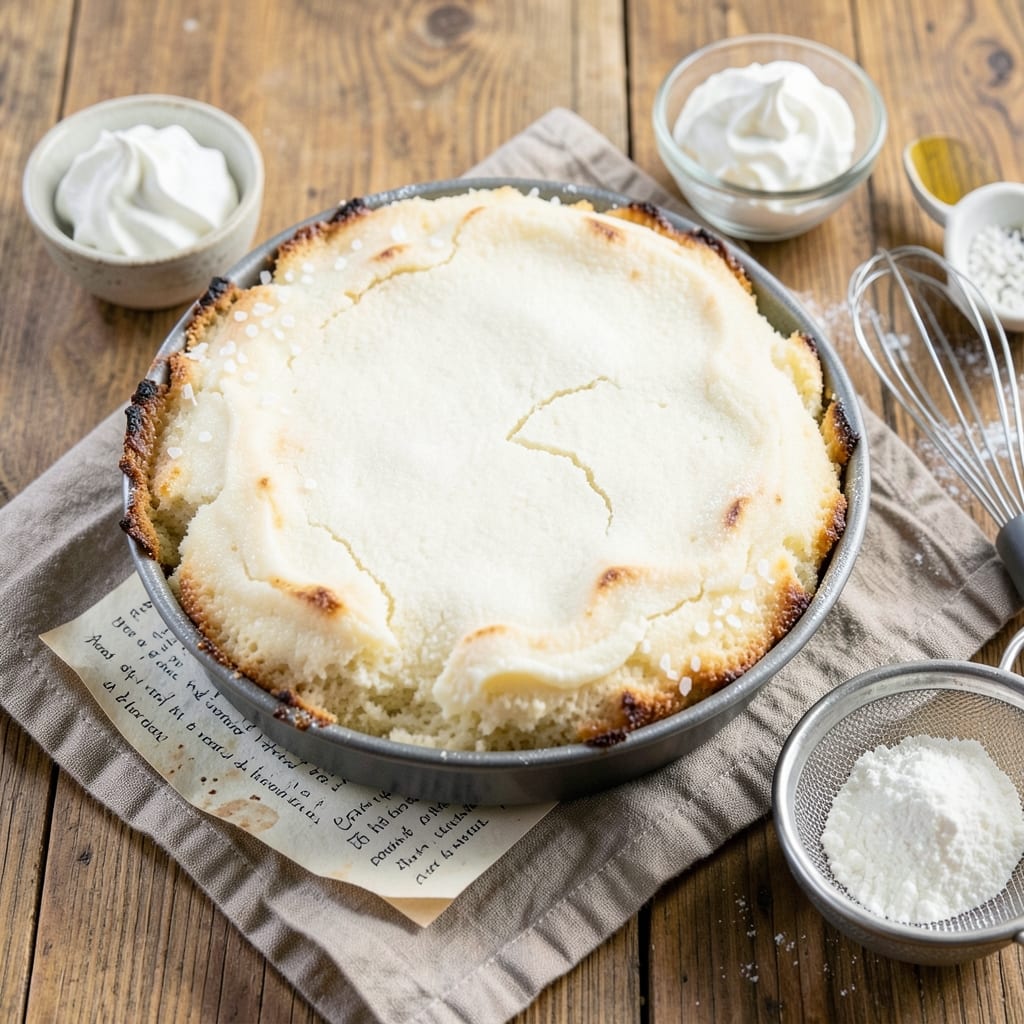
This angel food cake recipe without a tube pan delivers the same ethereal lightness and tender crumb—just baked in a bowl instead. The secret lies in proper folding and precise baking, transforming simple ingredients into a cloud-like dessert that defies expectations. I’ve perfected this method after years of testing, ensuring no butter or oil compromises that signature airiness.
What sets this bowl-baked version apart is the foolproof technique that mimics traditional tube pan results. Cream of tartar stabilizes the egg whites, while careful folding incorporates flour without deflating the structure. The cake emerges with a golden dome, crisp edges, and a melt-in-your-mouth center—all without specialized equipment. This method also eliminates the need for greasing or flipping, making it ideal for home bakers.
Traditional angel food cakes rely on a tube pan’s heat distribution, but this adaptation achieves the same texture by baking in a standard round or Bundt pan. The result is a cake that’s light enough to float on air but sturdy enough to slice neatly. Serve it with fresh berries, whipped cream, or a dusting of powdered sugar for a dessert that feels both nostalgic and innovative.
Whether you’re avoiding tube pans or simply want a reliable recipe, this version delivers restaurant-quality lightness with minimal effort. The key is patience—whipping the egg whites to stiff peaks and folding gently ensures that signature angel food texture. Let’s get started on a dessert that’s as impressive as it is simple.
Ingredients for angel food cake recipe without tube pan
Twelve egg whites, precise measurements, and a bowl replace the tube pan for this restaurant-quality angel food cake.
| Ingredient | Amount | Notes |
|---|---|---|
| Large Egg Whites 🥚 | 12 whole | Room temperature, separated from yolks |
| Granulated Sugar 🍚 | 1 ½ cups | Superfine preferred for even dissolving |
| Cream of Tartar 🧂 | 1 ½ tsp | Essential for stable meringue |
| All-Purpose Flour 🌾 | 1 ½ cups | Sifted, cake flour alternative |
| Vanilla Extract 🌿 | 1 tbsp | Pure vanilla for authentic flavor |
| Salt 🧂 | ½ tsp | Fine sea salt for balance |
| Unsalted Butter 🧈 | ¼ oz | Optional, for pan greasing only |
| Powdered Sugar 🍚 | ½ cup | For dusting, optional garnish |
| Fresh Berries 🍓 | 1 ½ cups | For serving, any variety |
| Whipped Cream 🍦 | ½ cup | Optional, for serving |
| Lemon Juice 🍋 | 1 tbsp | Freshly squeezed, for brightness |
The egg whites are non-negotiable here—room temperature is critical for proper volume. Whole Foods or Trader Joe's sell pre-separated egg whites in cartons, saving you the mess. Cream of tartar stabilizes the meringue, so don't skip it—Bob's Red Mill sells it in bulk. For sugar, superfine granulated dissolves faster, but regular granulated works if pulsed in a food processor. The flour must be sifted to prevent dense pockets; King Arthur all-purpose is my go-to for consistent results.
No cream of tartar? Substitute with 1.5 tsp lemon juice, though texture may vary slightly. Superfine sugar unavailable? Pulse regular granulated sugar in a blender for 30 seconds to mimic it. For a gluten-free version, replace flour with 1.5 cups gluten-free 1:1 baking flour. The butter is optional—only needed if greasing a non-stick pan, but traditionalists insist on it for even baking. Fresh berries for serving? Strawberries or raspberries hold up best when layered on top.
Egg whites lose volume fast, so whip them last minute before folding. Store any unused powdered sugar in an airtight container to prevent clumping. The cake keeps at room temperature for 2 days or 1 week refrigerated, though it's best enjoyed fresh. For make-ahead prep, bake the cake, cool completely, then wrap tightly in plastic. The flavor actually improves overnight as the crumb sets further.
Why You'll Love This Recipe
- No Special Gear Needed: I’ll admit, I used to stress about finding a tube pan—until I realized this version works perfectly in a regular round or even a square dish. The trick? Whipping the egg whites to stiff peaks and folding in just enough flour keeps it light, so no saggy middle here.
- Light as Air Magic: Between us, that cream of tartar is the secret weapon. It stabilizes the egg whites so they hold their shape like nothing else—no dense crumbs, just fluffy layers that practically melt in your mouth. A single slice feels like a celebration.
- Weeknight Flexibility: I’ve served this at brunch, dessert after dinner, and even as a make-ahead breakfast (yes, really). The vanilla keeps it classic, but you can fold in berries or citrus zest if you’re feeling fancy. No fuss, just delicious.
- Budget-Friendly Luxury: Here’s what sold me—this cake costs pennies to make but tastes like a bakery showstopper. Egg whites and sugar are cheap staples, and a single batch stretches to feed four for breakfast or two for a decadent treat. Leftovers? Rare, but they’re always devoured.
Step-by-step instructions for bowl-baked angel food cake
Master this technique and you'll achieve the same airy, tender texture as traditional tube pans.
Prepare the Bowl and Separate Egg Whites
Grease a 10-inch round cake pan generously with the 0.25 oz unsalted butter, using a paper towel to wipe away any excess. This ensures the cake won't stick. Place the pan in the refrigerator to chill while you prepare the batter.
Separate the 12 whole large egg whites from the yolks, being careful not to introduce any fat. Transfer the egg whites to a clean, grease-free bowl—the slightest trace of yolk can prevent proper whipping. Add the 1.5 tsp cream of tartar and 0.5 tsp salt to the egg whites. The cream of tartar stabilizes the meringue, while the salt enhances flavor and prevents over-whipping.
Whip the Egg Whites to Stiff Peaks
Using a stand mixer fitted with the whisk attachment, beat the egg whites on low speed until frothy. Gradually add the 1.5 cups granulated sugar, 1 tablespoon at a time, increasing the speed to medium-high after each addition. This gradual incorporation prevents the sugar from dissolving too quickly, which can deflate the meringue.
Continue whipping until the egg whites form stiff peaks that hold their shape when the whisk is lifted. The peaks should be glossy and hold a slight angle before falling. This typically takes 8-10 minutes. Over-whipping can make the cake tough, so stop as soon as the peaks form. Fold in the 1 tbsp vanilla extract at this stage to infuse the flavor without deflating the meringue.
Gently Fold in the Flour
Sift the 1.5 cups all-purpose flour over the stiffly whipped egg whites. Using a large, flexible spatula, gently fold the flour into the meringue in thirds, being careful not to deflate the batter. Start by cutting through the center of the meringue and folding the batter over itself, rotating the bowl slightly with each fold. This method ensures the flour is evenly distributed without collapsing the airy structure.
After the first fold, repeat the process two more times, always working from the bottom of the bowl upward. The batter should be smooth and glossy, with no visible streaks of flour. If the batter looks slightly under-mixed, do one final gentle fold—just enough to combine everything without losing volume. The goal is to maintain as much air as possible for that signature light texture.
Bake in a Water Bath for Even Cooking
Preheat your oven to 350°F. Place the prepared cake pan in a larger roasting pan and pour hot water into the roasting pan until it reaches halfway up the sides of the cake pan. This water bath creates a gentle steam environment that promotes even baking and prevents the cake from drying out.
Bake the cake for 35-40 minutes, or until the top is golden brown and the edges pull away slightly from the pan. Do not open the oven door during baking—this can cause the cake to collapse. The cake is done when it springs back slowly when gently pressed in the center. Insert a toothpick into the center; it should come out clean or with a few crumbs, but no wet batter.
Cool and Serve with Fresh Toppings
Remove the cake from the oven and carefully invert it onto a wire rack. Let it cool completely before removing it from the pan. This gradual cooling prevents the cake from cracking or collapsing. Once fully cooled, you can dust the top with the 0.5 cup powdered sugar for a classic finish.
Serve the cake with the 1.5 cups fresh berries and 0.5 cup whipped cream, drizzled with 1 tbsp lemon juice for brightness. The acidity of the lemon juice cuts through the sweetness of the cake, balancing the flavors perfectly. This cake pairs beautifully with seasonal fruits like strawberries, raspberries, or blueberries, adding both color and a refreshing contrast to the light, airy texture.
Pro Tips For Making Angel Food Cake Recipe Without Tube Pan
- STOP BEATING THE MERINGUE DRY: I learned this the hard way—whipping egg whites into stiff peaks without sugar first makes them cling to your bowl like glue. Add the sugar gradually in 3 stages (1/3, 1/3, 1/3) while whipping, or your batter will never hold its shape. The sugar stabilizes the foam, and rushing this step is how you end up with a sad, flat cake.
- CHILL THE BOWL BEFORE STARTING: Cold surfaces matter more than you’d think. Place your mixing bowl and beaters in the freezer for 10 minutes before whipping the egg whites. The cold slows down protein unfolding, giving you tighter, glossier peaks that fold in better. I used to skip this, and my cakes always had those dreaded tunnels—now they’re light as air.
- USE A SPRINKLE, NOT A DUMP: When folding in the dry ingredients, don’t just dump the flour mixture into the meringue all at once. Sprinkle it in small batches while folding gently with a spatula. Overmixing here collapses the air bubbles, and underfolding leaves dry pockets. Think "marble swirl" consistency—just until combined.
- BAKE UNTIL COOL TO THE TOUCH: The instant-read thermometer is your friend, but don’t rely on it alone. Pull the cake when the center reads 130°F and the sides spring back when pressed lightly. Let it cool in the pan for 10 minutes, then invert immediately—no waiting. I’ve had cakes that looked done but were gummy inside because I rushed the cooling step. Patience here keeps the texture perfect.
Common mistakes when making great angel food cake recipe without tube pan
Overmixing the Batter
I’ve ruined more angel food cakes than I’d admit by overmixing the flour into the egg whites. Once you’ve folded in the flour in thirds, stop immediately—any additional folding deflates the delicate air bubbles that create that signature lightness. Think of it like folding a fitted sheet: just enough to combine, not enough to flatten. 🌬️
Skipping the Water Bath
The water bath isn’t just a fancy baking trick—it’s essential for even cooking. Without it, the cake’s edges dry out while the center stays undercooked, or worse, the top browns too quickly. Use a roasting pan with hot water (not boiling) to create that gentle steam. I like to preheat the water in a kettle for 2-3 minutes before pouring.
Using Room-Temperature Egg Whites
Cold egg whites whip up to 30% less volume than room-temperature ones. If your whites are straight from the fridge, let them sit in a bowl for 30-60 minutes before whipping. Pro tip: Place the carton in warm water for 10 minutes if you’re in a hurry. The goal is 70°F egg whites—test with your finger: they should feel slightly warm but not hot.
Opening the Oven Door
Every time you peek at your cake, you risk a temperature drop that causes it to collapse. The oven needs 30-40 minutes to recover its heat after opening. If you’re unsure, use the toothpick test: insert it into the center—it should come out clean or with a few moist crumbs, but no wet batter. Patience here makes all the difference! ⏳
Not Chilling the Pan
Greasing a warm pan causes the butter to melt unevenly, leading to sticky spots. Always chill your 10-inch round pan in the fridge for 10-15 minutes before adding the batter. This also helps the cake release cleanly when inverted. I like to line the pan with parchment paper for extra insurance, especially if I’m nervous about sticking.
Using the Wrong Pan Size
A 10-inch pan is non-negotiable for this recipe—any larger, and the cake won’t rise properly; any smaller, and it’ll bake too quickly. If you only have an 8-inch pan, reduce the batter by 25% and adjust baking time to 30-35 minutes. Bundt pans work too, but they require a 20-25 minute bake at 325°F—just be sure to grease them thoroughly.
Nutrition facts
Frequently asked questions
Can I use a Bundt pan instead of a round pan for this recipe?
Yes! A Bundt pan works beautifully for this angel food cake. Simply grease it thoroughly with butter and dust with powdered sugar to prevent sticking. Bake at 325°F for 20-25 minutes instead of the standard 350°F, as Bundt pans bake slightly slower. The intricate design adds a stunning presentation while maintaining that signature light texture.
Why does my bowl-baked angel food cake turn out dense? Dense cake usually means one of two things: either the egg whites weren't whipped to stiff peaks or the flour was overmixed.
How do I store leftover angel food cake?
Store your cake in an airtight container at room temperature for up to 2 days. For longer storage, refrigerate for 1 week or freeze for 3 months. To serve, let it sit at room temperature for 30 minutes before slicing—this prevents crumbling. The texture actually improves slightly after the first day as the crumb sets further.
Can I make this cake gluten-free?
Replace the all-purpose flour with 1.5 cups gluten-free 1:1 baking flour (like Bob's Red Mill or King Arthur). Sift it thoroughly to prevent dense pockets. You may need to add 0.5 tsp xanthan gum if your blend doesn't contain it, as this helps mimic gluten's structure. Test with a small batch first, as gluten-free flours can vary in behavior.
What's the best way to serve this cake?
This angel food cake shines with fresh berries, whipped cream, and a drizzle of lemon juice for brightness. For a classic touch, dust the top with powdered sugar. Try layering it with mascarpone cream or serving it with a scoop of vanilla bean ice cream. The cake's light texture pairs perfectly with acidic or tart accompaniments that cut through the sweetness.