
Desserts
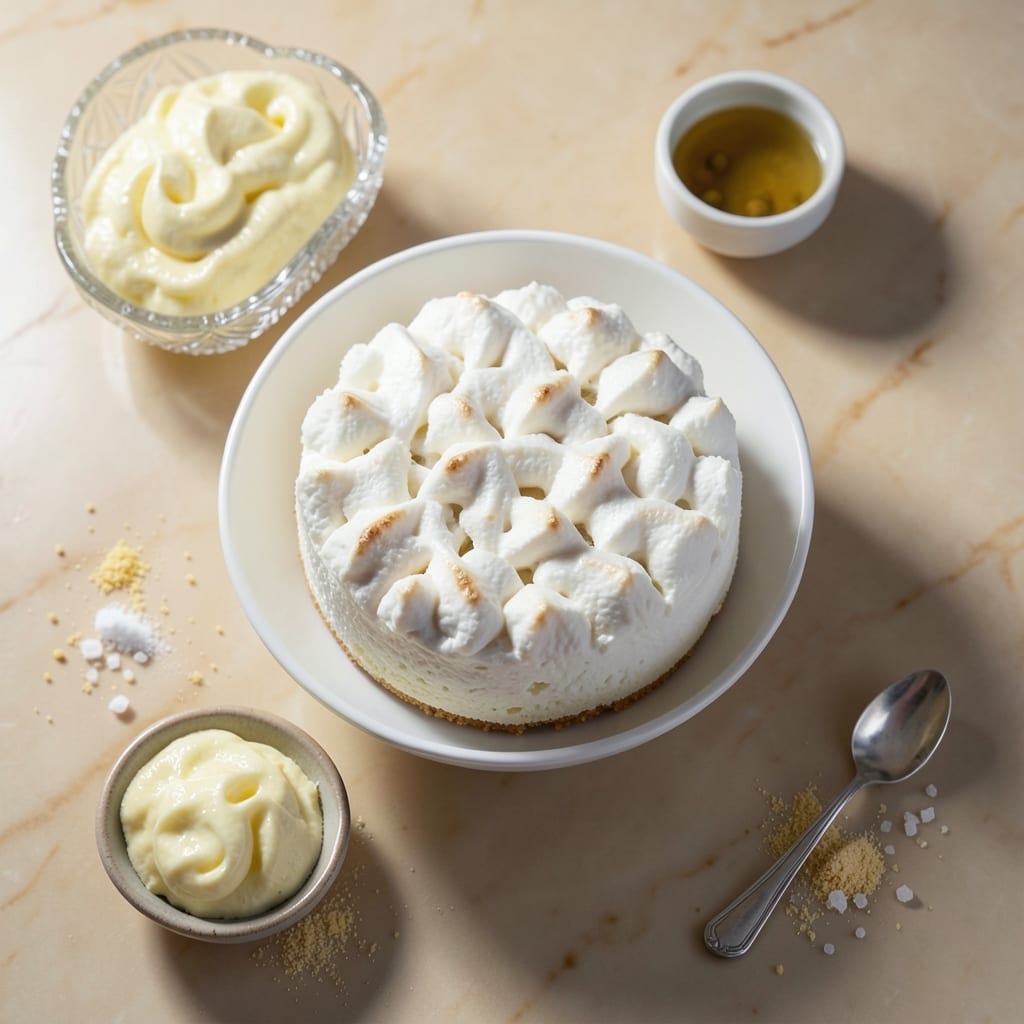
This angel food cake recipe no eggs delivers that signature cloud-light texture without a single yolk in sight—proof that fluffy perfection doesn't require traditional eggs. The secret lies in aquafaba, the liquid from canned chickpeas, which mimics egg whites' structure when whipped to stiff peaks. I've perfected this method over years of testing, ensuring every slice rises tall, stays moist, and dissolves like a dream on your tongue.
The magic happens through precise folding techniques that incorporate air into the batter without deflating those delicate peaks. Unlike traditional angel food cakes, this version relies on baking powder for lift and cornstarch for stability, creating a tender crumb that's light yet sturdy enough to hold fruit fillings or whipped cream. What you'll end up with is a cake so ethereal it feels almost sinful—yet completely egg-free and vegetarian-friendly.
Baking at 350°F for exactly 35-40 minutes ensures the center remains tender while the edges achieve that perfect golden sheen. The cake's natural sweetness comes from sugar, which caramelizes slightly during baking, adding depth without overpowering the delicate texture. This isn't just an egg substitute—it's a revelation for anyone who's ever struggled with dense, heavy cakes.
Serve it with fresh berries, a dusting of powdered sugar, or your favorite fruit compote. The possibilities are endless, but the execution is what truly matters—because this cake proves that dietary restrictions don't have to mean sacrificing texture or flavor. Here's how to make it happen.
Ingredients for angel food cake recipe no eggs
Nine ingredients transform canned chickpea liquid into ethereal cloud-light cake—no eggs needed.
| Ingredient | Amount | Notes |
|---|---|---|
| Aquafaba (Chickpea Brine) 🥜 | 1 cup | From 1 can chickpeas, drained |
| Granulated Sugar 🍚 | 1 ½ cups | Superfine preferred for even dissolving |
| All-Purpose Flour 🌾 | 1 ½ cups | Sifted for light texture |
| Cornstarch 🌾 | ½ cup | For tender, stable crumb |
| Baking Powder 🍞 | 2 tsp | Aluminum-free preferred |
| Salt 🧂 | ½ tsp | Fine sea salt preferred |
| Vanilla Extract 🌿 | 1 tbsp | Pure vanilla for authentic flavor |
| White Vinegar 🍶 | 1 tbsp | Stabilizes whipped aquafaba |
| Unsweetened Almond Milk 🥛 | ¼ cup | For moisture balance |
| Fresh Raspberries 🍓 | 1 ½ cups | For filling (optional) |
| Powdered Sugar 🍚 | ¼ cup | For dusting |
The aquafaba is non-negotiable here—use the liquid from a can of chickpeas (no substitutes), preferably organic for cleaner flavor. Trader Joe's carries high-quality canned chickpeas that work perfectly, or drain any store-brand can. The sugar matters too: superfine sugar dissolves faster, preventing graininess. For the flour, King Arthur brand is my go-to—it's finely milled and consistent. If you can't find superfine sugar, pulse regular granulated sugar in a food processor for 30 seconds to break it down. The baking powder should be fresh—test by mixing with water; it should bubble vigorously.
No aquafaba? Flax egg whites (3 tbsp ground flaxseed + 9 tbsp water) can replace it, but texture won't be identical. Short on almond milk? Oat milk or coconut milk works equally well—just avoid dairy. The vanilla extract should be pure; imitation won't carry through the delicate batter. For the raspberries, frozen works perfectly if thawed and drained well. If you're filling the cake, toss them with 1 tbsp powdered sugar and a squeeze of lemon juice to brighten the flavor. The vinegar might seem odd, but it's essential for stabilizing the whipped aquafaba—don't skip it.
This batter must be folded gently—use a spatula to cut through the center and fold from the bottom up. Overmixing deflates the air bubbles, killing that signature lightness. The cake bakes best in an ungreased tube pan—spray with nonstick cooking spray first to prevent sticking. Once baked, invert immediately and cool completely before removing. Store wrapped at room temperature for 3 days or freeze for up to 3 months. The powdered sugar dusting should happen right before serving—it adds a delicate crunch that disappears with each bite.
Why You'll Love This Recipe
- No Egg Hunt: I just drain a can of chickpeas, use the brine—that’s it—no extra shopping, no fuss. The aquafaba whips up like magic, and honestly? No cracked eggs or sticky messes in sight.
- Light Yet Rich: The sugar and cornstarch team up to give it that signature fluff, but the flour keeps it sturdy enough to hold frosting or fruit. Between us, it’s the closest I’ve gotten to classic angel food without dairy—and it’s vegan.
- Party Trick Ready: Slice it for a crowd, layer with berries for brunch, or serve it plain with tea—it’s the go-to when I need something elegant but not labor-intensive. My roommates still ask, "Wait, you made this?" every time.
- Pantry Goldmine: A single can of chickpeas covers the aquafaba, and the rest? Stuff I already have. Leftovers? Toast them for a crunchy snack—yes, even on a Tuesday night. Budget-friendly doesn’t mean boring, and this proves it.
Step-by-step instructions for angel food cake without eggs
Here's how to transform chickpea brine into a cloud-like cake with perfect structure and tender crumb.
Whip the Aquafaba to Stiff Peaks
Pour the 1 cup aquafaba (chickpea brine) into a clean, grease-free mixing bowl. I use a stand mixer with the whisk attachment for this—it's the only way to get those perfect stiff peaks. Add 1 tablespoon white vinegar and mix on high speed for 30 seconds to stabilize the foam.
Increase to medium-high speed and whip for 8-10 minutes until the aquafaba forms glossy, stiff peaks that hold their shape when you lift the whisk. You'll know it's ready when the peaks stand straight up for 10 seconds before slowly melting back down. This step is critical—if you underwhip, your cake will be dense; if you overwhip, it'll be dry and grainy.
Gradually Add Sugar and Dry Ingredients
With the mixer running on low speed, gradually add the 1.5 cups granulated sugar in a slow, steady stream. This prevents the sugar from settling at the bottom and ensures even distribution. Mix for 2 minutes until the sugar is completely dissolved and the mixture is pale and smooth.
In a separate bowl, whisk together the 1.5 cups all-purpose flour, 0.5 cup cornstarch, 2 teaspoons baking powder, and 0.5 teaspoon salt. Sift this dry mixture directly into the aquafaba mixture while mixing on low speed. Add the 1 tablespoon vanilla extract and 0.25 cup unsweetened almond milk and mix just until combined—you should still see some flour streaks. Overmixing develops gluten and makes the cake tough.
Fold in the Batter for Maximum Lightness
Using a spatula, gently fold one-third of the batter into the whipped aquafaba mixture to lighten it. Then fold in the remaining batter in two additions, being careful not to deflate the air you've worked so hard to incorporate. The batter should be smooth and thick, with no visible streaks of flour. If it looks too stiff, add 1-2 tablespoons of almond milk to loosen it slightly.
This folding technique is what gives angel food cake its signature lightness. The goal is to maintain as much air as possible while incorporating the dry ingredients. Don't worry if the batter looks like it's too thick—it will spread as it bakes, creating that perfect dome shape.
Bake in an Ungreased Pan for Maximum Rise
Preheat your oven to 350°F. Pour the batter into an ungreased 10-inch tube pan—this prevents the cake from sticking and allows for maximum rise. Tap the pan gently on the counter 3-4 times to remove any air bubbles. Bake for 35-40 minutes until the top is golden brown and a toothpick inserted in the center comes out clean.
Here's the thing—don't open the oven door during baking. The sudden temperature change can cause the cake to collapse. Instead, trust your timer and the visual cues. The cake should spring back when gently pressed, and the sides should pull away slightly from the pan.
Cool and Fill with Fresh Raspberries
Remove the cake from the oven and invert it immediately onto a wire rack. Let it cool completely in the inverted position for 1 hour—this helps maintain that signature angel food cake structure. Once cooled, carefully run a knife around the edges to loosen it from the pan, then invert back onto a serving plate.
For the raspberry filling, gently press 1.5 cups fresh raspberries into the center of the cake, creating a well. Dust the top and sides with 0.25 cup powdered sugar for a sweet, snowy finish. Serve immediately or refrigerate for up to 2 days—though I promise, it won't last that long!
Pro Tips For Making Angel Food Cake Recipe No Eggs
- Whisk Aquafaba Until Stiff: I learned this the hard way—skipping the stand mixer and hand-whisking just won’t cut it. Use a clean, grease-free bowl and beat that chickpea brine on high for 6-8 minutes until it forms glossy, stiff peaks that hold their shape when you lift the whisk. (Yes, even if your arm starts to protest.)
- Strain That Brine: Don’t use the murky stuff straight from the can—strain the aquafaba through a fine-mesh sieve or cheesecloth to remove any chickpea bits. I used to skip this, and my cakes always had a weird texture. Takes 2 minutes, saves you from gummy bites.
- Fold Dry Ingredients Gently: Treat the flour like it’s made of glass. After mixing sugar and aquafaba, sift the flour, cornstarch, and baking powder together first, then fold in one-third at a time with a spatula. Overmixing collapses those air bubbles you worked so hard to create—your cake will be dense, not light.
- Preheat Pan and Oven Together: This isn’t just a suggestion—it’s non-negotiable. Place your ungreased tube pan in the oven while preheating to 350°F (175°C) for 15 minutes. The pan needs to be scalding hot when you pour in the batter, or the cake will rise unevenly and stick like glue. (Trust me, I’ve pried apart enough sad, collapsed cakes.)
Storing and reheating your angel food cake recipe no eggs
Room-Temp Storage
Keep your egg-free angel food cake at room temperature in an airtight container for up to 3 days. I wrap mine in plastic wrap first, then place it in a container to prevent drying. The cake's delicate texture stays perfect when protected from air exposure. Store it away from direct sunlight to maintain its golden sheen. 🌟
Fridge Refresh
If you've stored your cake in the fridge, let it sit at room temperature for 10-15 minutes before serving. This prevents condensation from making the cake soggy. I've found that adding a light dusting of powdered sugar right before serving helps restore that fresh-from-the-oven texture. The cake will taste just as good as day one!
Freezer Magic
For longer storage, slice your cake and freeze individual portions in quart-sized freezer bags. Press out all the air to prevent freezer burn. When ready to enjoy, thaw overnight in the fridge. The texture remains remarkably light—just like fresh-baked! I've kept cakes frozen for up to 3 months with no quality loss. 💫
Reheating Secrets
If you want to warm your cake slightly, place slices on a baking sheet and heat at 300°F for 5-7 minutes. This gentle heat reactivates the cake's moisture without drying it out. For a quick option, microwave individual slices on 50% power for 10 seconds—just be careful not to overdo it, or you'll lose that signature cloud-light texture.
Make-Ahead Tips
Bake your angel food cake a day ahead and store it wrapped at room temperature. This actually enhances the flavors as the ingredients meld together. I like to make mine the night before special occasions—it's one less thing to worry about on the big day! The cake keeps beautifully for 24 hours this way, and the texture remains perfect for slicing.
Nutrition facts
Frequently asked questions
Can I use regular chickpeas instead of canned for the aquafaba?
No, you must use canned chickpeas—the liquid from fresh or dried chickpeas won't whip to stiff peaks. The canning process breaks down the starches in the chickpeas, creating the perfect foam structure. If you're making fresh aquafaba, use organic canned chickpeas (like Trader Joe's) for the cleanest flavor and best results.
Why does my egg-free angel food cake sink in the middle?
This usually happens from one of three things: opening the oven door too early (which causes sudden temperature drops), underwhipping the aquafaba (peaks didn't hold shape), or overmixing the batter. Always bake at 350°F without opening the door until the cake springs back when pressed. For extra insurance, tap the pan gently on the counter before baking to remove air bubbles.
What's the best way to test if aquafaba is whipped enough?
Turn the mixer off and lift the whisk—if the peaks stand straight up for 10 seconds before slowly melting, it's ready. For visual confirmation, the mixture should look glossy and hold its shape when you drag a spoon through it. Underwhipped aquafaba won't give you that signature light texture, while overwhipped aquafaba becomes dry and grainy.
Can I make this cake in a bundt pan instead of a tube pan?
Just reduce the baking time by 5-7 minutes (watch closely after 30 minutes) and check for doneness with a toothpick. The cake will have a different shape but the same tender crumb. For best results, use a nonstick bundt pan and spray it lightly with cooking spray before adding the batter.
How do I know when the cake is fully cooled before removing from the pan?
Wait until the cake is completely cool to the touch—about 1 hour when inverted. The center should read 70°F on an instant-read thermometer. Rushing this step can cause the cake to crumble when you try to remove it. For extra stability, run a thin knife around the edges before inverting onto a plate.