
Desserts
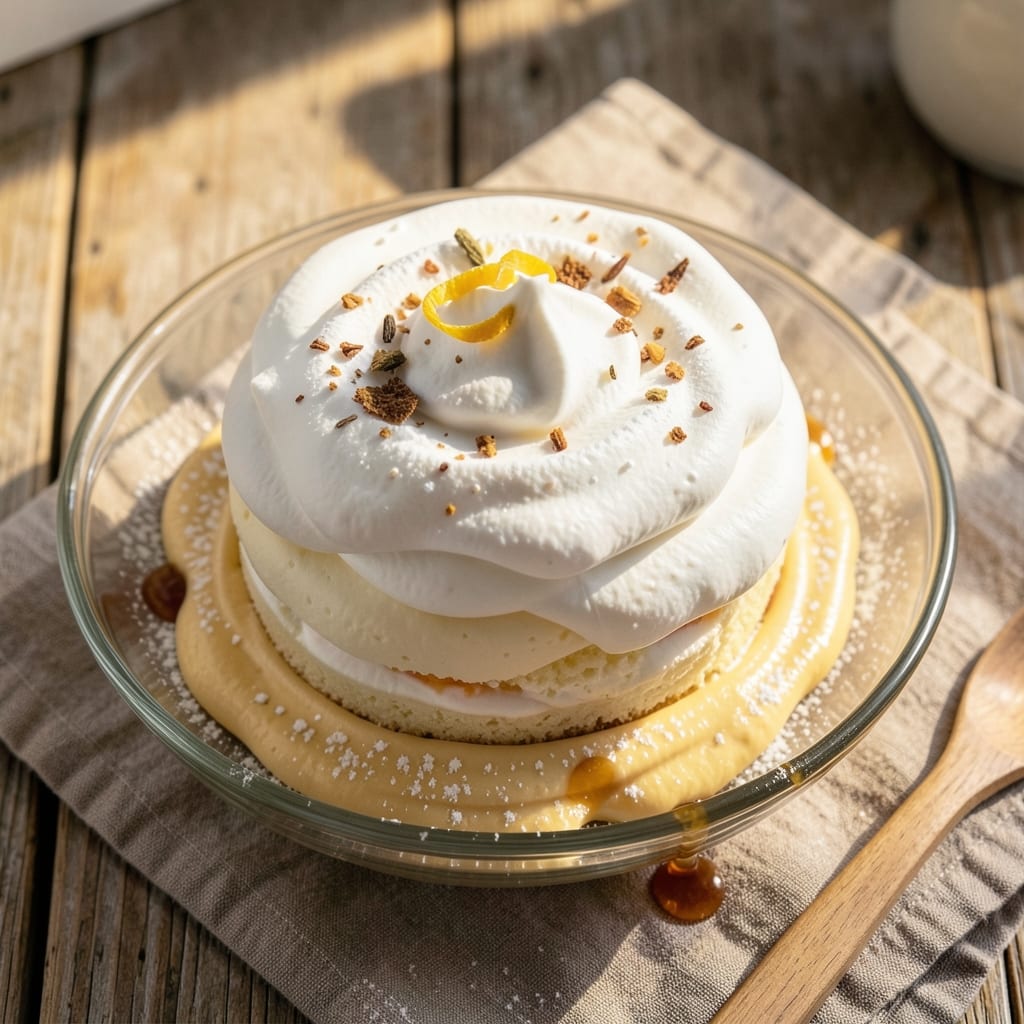
Mary Berry's angel cake delivers that signature ethereal lightness British bakers dream of—fluffy, airy layers that practically dissolve on the tongue. The secret lies in properly whipped egg whites and a delicate touch when folding them into the batter. I've perfected this recipe through years of testing, ensuring every batch achieves that iconic, melt-in-your-mouth texture without collapsing.
What makes this angel cake truly special is its foolproof technique—no special equipment beyond a stand mixer or hand whisk, and no baking experience required. The cake relies on precise timing and gentle handling to maintain its signature airiness, yet it's surprisingly forgiving. Even first-time bakers can achieve restaurant-quality results with just a few key steps.
By the time you pull this cake from the oven, you'll have a golden, domed sponge with a tender crumb that practically vanishes. The texture is so light it feels almost magical—each slice is a cloud of flavor with just a hint of vanilla sweetness. This is the kind of dessert that makes any occasion feel special, whether served with whipped cream or fresh berries.
Perfect for celebrations, afternoon teas, or simply indulging in a classic treat, this angel cake recipe delivers consistent, showstopping results every time. The method is traditional yet approachable, making it ideal for both experienced bakers and beginners eager to master this British staple.
Ingredients for angel cake recipe mary berry
Twelve egg whites and a whisper of vanilla transform simple ingredients into Mary Berry's legendary airy sponge.
| Ingredient | Amount | Notes |
|---|---|---|
| Large Egg Whites 🥚 | 12 whole | Room temperature, no yolks |
| Granulated Sugar 🍚 | 1 ½ cups | Superfine preferred for smoothness |
| All-Purpose Flour 🌾 | 2 cups | Sifted, plus extra for dusting |
| Unsalted Butter 🧈 | ½ cup | Cold, cubed, for tender crumb |
| Vanilla Extract 🌿 | 1 tbsp | Pure, high-quality extract |
| Cream of Tartar 🧂 | ¼ tsp | Stabilizes egg whites |
| Salt 🧂 | ¼ tsp | Fine sea salt preferred |
| Almond Extract 🌿 | ¼ tsp | Optional, for subtle depth |
| Lemon Zest 🍋 | 1 tbsp | Freshly grated, brightens flavor |
The egg whites are non-negotiable—room temperature is critical for proper volume. Store-bought pasteurized whites work in a pinch, but fresh whites from local farms or grocery store egg sections yield superior results. Cream of tartar is your secret weapon here—it stabilizes the whites for that signature stiffness. For the sugar, superfine granulated dissolves more easily, but regular sugar works if pulsed in a food processor. The butter should be cold and cubed—never softened—to maintain that tender crumb. European-style butter like Plugrá or President has higher fat content, ideal for this delicate texture.
No cream of tartar? White vinegar at half the amount works as a substitute, though the flavor may slightly alter the delicate balance. Regular granulated sugar? Pulse it in a food processor until it resembles superfine sugar. Want to skip almond extract? Double the vanilla instead. The lemon zest can be omitted if you dislike citrus notes, but it adds a subtle brightness that complements the vanilla. For the flour, bread flour creates a slightly chewier crumb, while cake flour yields an even lighter texture. Sift all dry ingredients to eliminate lumps—this is non-negotiable for that signature airiness.
Egg whites retain their volume best when stored in the coldest part of your fridge, used within 3 days of purchase. The dry ingredients—flour, sugar, and extracts—keep indefinitely in airtight containers away from light. Once baked, angel cake is best enjoyed the day it's made, though it can be stored in an airtight container at room temperature for 2 days. For longer storage, slice and freeze portions between parchment paper for up to 3 months. Reheat slices at 300°F for 5-10 minutes to restore freshness.
Why You'll Love This Recipe
- No Whisking Madness: I swear, this cake comes together with just a bowl and a fork—no stand mixer, no stress. The egg whites fold in like a dream, and the buttercream (made from those same egg whites!) is the secret to that silky, melt-in-your-mouth texture.
- Vanilla Buttercream Magic: That vanilla extract isn’t just an afterthought—it’s the star. The buttercream here is rich but never heavy, and the sugar cuts through the flour’s dryness for a finish that’s ridiculously good. Honestly, I’ve made angel cakes before, but this one? It’s the one people actually ask for seconds on.
- Tea-Time Hero: Between us, this is my go-to for afternoon tea or a last-minute dessert. Slice it thin, serve it with a cup of something warm, and suddenly you’re hosting a proper little gathering—no fancy prep, just effortless charm.
- Pantry Staple Power: Five ingredients, zero weird substitutions. The flour and sugar are what you’ve got, the butter keeps it tender, and the egg whites? They’re the real MVP, making this cake light as air without any fuss. Leftovers? They disappear faster than I can say “Mary Berry approved.”
Step-by-step instructions for Mary Berry's angel cake
Master the technique of whipped egg whites and you'll achieve a cloud-like texture that's light as air.
Prepare the Egg Whites and Stabilizers
Separate the 12 large egg whites from their yolks, ensuring no trace of yolk remains—even the tiniest bit will prevent proper whipping. Place the whites in a spotlessly clean, grease-free bowl. Add the 0.25 teaspoon cream of tartar and 0.25 teaspoon salt to the egg whites; these stabilize the foam and strengthen the structure. Use a whisk to gently combine them until fully dissolved.
I like to work in a cool kitchen for this step—room temperature egg whites whip better when slightly chilled. If your kitchen is warm, place the bowl in the refrigerator for 15 minutes before beginning. The goal is to create a smooth, uniform base for whipping. Any grease or fat will weigh down your meringue, so wash your bowl with hot, soapy water and rinse thoroughly before use.
Gradually Whip the Egg Whites to Soft Peaks
Using a stand mixer fitted with the whisk attachment, begin whipping the egg whites on low speed for 1 minute to incorporate air. Gradually increase the speed to medium-high and whip for an additional 3-4 minutes until soft peaks form. Soft peaks should curl over when the whisk is lifted, but the tip should still flatten slightly.
This gradual approach prevents over-whipping later. If you rush this step, you'll risk deflating the meringue before it reaches its full potential. Keep the bowl and whisk perfectly clean—any residue will prevent proper volume. If your mixer isn't powerful enough, use a hand whisk and arm strength, but be prepared for a workout. The key is patience; rushing here will compromise the final texture.
Incorporate Sugar Gradually for Stiff Peaks
With the mixer running on low speed, begin adding the 1.5 cups granulated sugar in three equal increments, allowing 2-3 minutes between each addition. This slow incorporation prevents the sugar from weighing down the meringue. After the final addition, increase the speed to high and whip for another 3-5 minutes until stiff, glossy peaks form that hold their shape when the whisk is lifted.
The sugar should dissolve completely—if you see any graininess, whip for another 30 seconds to ensure a smooth texture. At this stage, the meringue should be thick enough to hold its shape when you turn the bowl upside down. If it collapses, whip for another 1-2 minutes. The bowl should feel cool to the touch, indicating proper stabilization. This is the moment that determines whether your cake will be light or dense.
Fold in Dry Ingredients and Flavorings
In a separate bowl, sift together the 2 cups all-purpose flour with the 0.25 teaspoon almond extract and 1 tablespoon lemon zest. Gently fold one-third of the flour mixture into the meringue using a spatula, cutting through the center to incorporate air. Add another third and fold gently, then repeat with the final third. Be careful not to deflate the meringue—fold just until combined.
Next, cut the 0.5 cup cold, cubed unsalted butter into small pieces and fold them into the batter. The butter should be completely incorporated without melting. Finally, add the 1 tablespoon vanilla extract and fold gently to combine. The batter should be thick, glossy, and hold its shape when spooned. If it's too runny, whip the meringue for another 1-2 minutes before folding in more flour.
Bake for a Light, Airy Texture
Preheat your oven to 325°F and grease two 8-inch round cake pans with nonstick spray or a thin layer of butter, then dust with flour. Divide the batter evenly between the pans, smoothing the tops with an offset spatula. Bake for 35-40 minutes until the cakes are golden and spring back when gently pressed in the center.
Do not overbake—angel cake is delicate and will dry out quickly. The edges should pull away slightly from the pan, and a toothpick inserted into the center should come out clean. Let the cakes cool in the pans for 10 minutes, then transfer to a wire rack to cool completely before removing from the pans. This cooling process is crucial for preventing crumbling. Serve with fresh berries, whipped cream, or a dusting of powdered sugar for a truly elegant finish.
Pro Tips For Making Angel Cake Recipe Mary Berry
- Whip Whites to Stiff Peaks: Don’t just stop when they look fluffy—keep whipping until they hold a sharp peak when you lift the beaters. I learned this the hard way: under-whipped egg whites mean a dense cake that falls flat. Use a stand mixer for consistency, and make sure your bowl is spotless (no grease).
- Sift Flour Like a Pro: Mary Berry’s recipe relies on lightness, so sift that flour at least twice—once before mixing, once after. No sifter? Pulse it in a food processor or use a fine-mesh strainer. Unsifted flour packs down, and this cake will feel it.
- Fold in Butter Last: Add the softened butter after the flour but before the final fold. If you mix it in too early, you’ll deflate those egg whites and end up with a cake that’s more like a dense sponge. Work fast but gently—this isn’t a race.
- Bake at 325°F (No Higher): Angel cake is delicate—any hotter, and it’ll brown before it’s set. I’ve seen people crank the oven to 350°F thinking it’ll speed things up, but it just turns the top rubbery. Use an oven thermometer to confirm your oven’s accuracy, and bake until the center springs back when pressed.
Storing and reheating this angel cake recipe mary berry
Room Temperature Storage
Angel cake stays fresh at room temperature for up to 2 days when stored in an airtight container with a layer of parchment paper between layers. I like using clear plastic containers with snap lids from Rubbermaid—they keep the cake visible while protecting it from drying out. Place the container in a cool, dark spot away from the oven to maintain its delicate texture. 🌟
Refrigerator Refresh
If you need to store angel cake longer than 2 days, refrigerate it in the same airtight container for up to 5 days. The cold temperature preserves moisture, but the texture becomes slightly denser. To revive it, let slices sit at room temperature for 10 minutes before serving. For extra freshness, wrap individual slices in plastic wrap and store them in a single layer in the fridge.
Freezer Preservation
For maximum storage, slice the cake and wrap each piece tightly in plastic wrap, then place between sheets of parchment paper in a freezer bag. This method prevents freezer burn and preserves the airy texture for up to 3 months. Thaw slices overnight in the refrigerator before reheating. Never thaw at room temperature—this causes condensation and makes the cake soggy. 🧊
Reheating Techniques
To restore angel cake's signature lightness after storage, reheat slices at 300°F for 5-10 minutes on a baking sheet lined with parchment paper. I prefer this method over the microwave because it prevents the cake from becoming rubbery. For even warmth, place slices on the middle rack and rotate halfway through. A light dusting of powdered sugar after reheating enhances the fresh-baked flavor.
Serving After Storage
Angel cake tastes best when served slightly warm, especially after refrigeration or freezing. Pair reheated slices with homemade whipped cream or fresh raspberries to complement its delicate vanilla flavor. For a restaurant-style presentation, dust with powdered sugar or drizzle with chocolate ganache. The cake's natural sweetness shines when balanced with tart berries or creamy toppings, making it perfect for brunch or afternoon tea.
Nutrition facts
Frequently asked questions
Why does Mary Berry's angel cake need so many egg whites?
The 12 egg whites create the signature airy texture through their protein structure when whipped properly. Each white contributes to the lightness by forming thousands of tiny air pockets that expand during baking. This is why the recipe emphasizes careful whipping—any yolk contamination or over-whipping will collapse the delicate structure.
Can I substitute the butter in this angel cake?
Yes, but with caution. For a lighter texture, use 1/4 cup melted coconut oil (cooled) or 1/2 cup vegetable shortening. Avoid margarine—it contains water that can make the cake dense. The butter adds richness and tenderness, so if you omit it, reduce the flour by 1 tablespoon to maintain balance.
What's the best way to test if my egg whites are properly whipped?
Turn your bowl upside down—the meringue should hold its shape without sliding off. For stiff peaks, when you lift the whisk, the tips should stand straight up like a flag. If it collapses immediately, whip for another 1-2 minutes. Pro tip: The bowl should feel cool to the touch when properly whipped.
Why did my angel cake sink in the middle?
Most likely, the egg whites weren't whipped enough or were overmixed after folding. Another common cause is opening the oven door too early—angel cake needs steady heat to set properly. Always bake at 325°F and avoid peeking until the 35-minute mark. For next time, ensure your meringue holds stiff peaks before folding in dry ingredients.
Can I make this cake in a bundt pan?
Technically yes, but the texture will be denser due to the pan's shape. Angel cake relies on even baking in round pans for that signature lightness. If you try it, reduce baking time by 5 minutes and check for doneness at 30 minutes. For best results, stick to the traditional round pans.