
Desserts
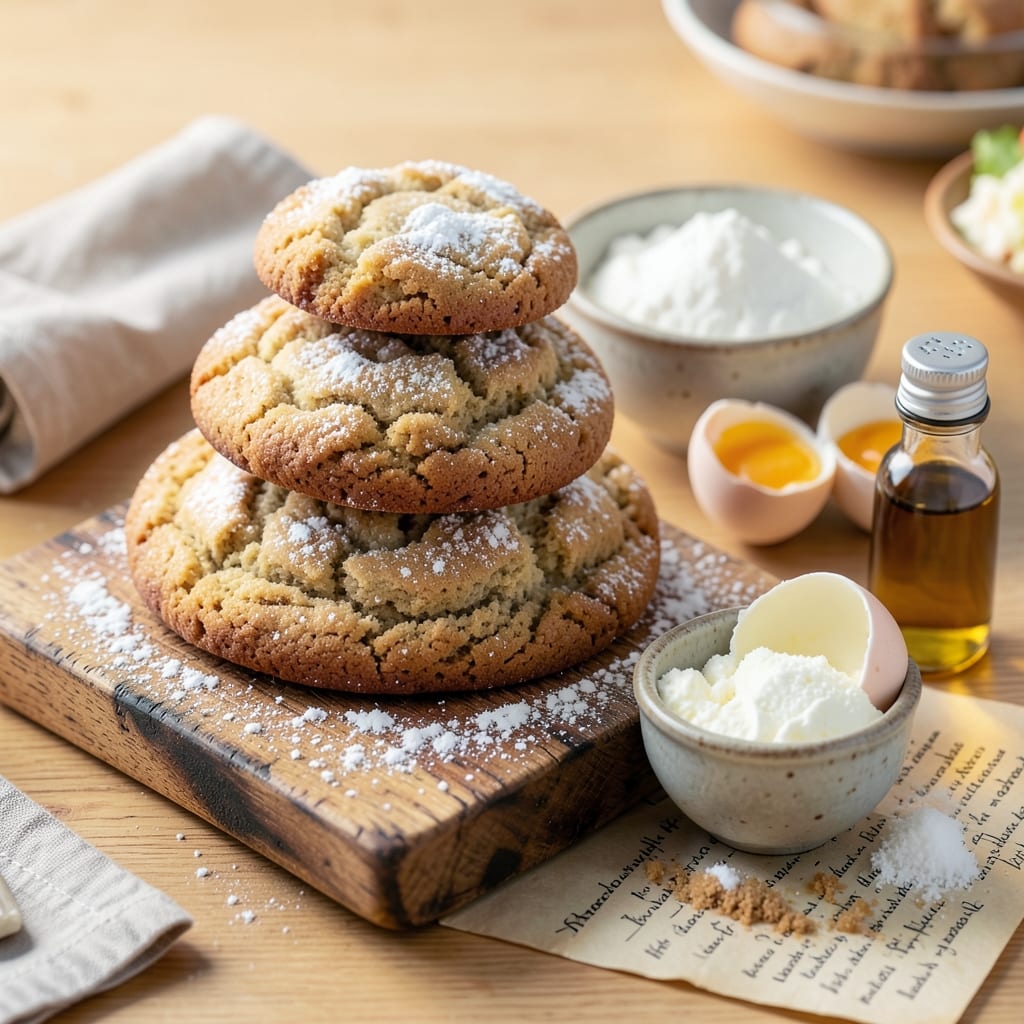
This Amish Sugar Cake Cookie recipe delivers the nostalgic buttery crunch and tender crumb of a beloved Pennsylvania Dutch tradition. 💛 The secret lies in a precise blend of sugar, flour, and spices that create a cake-like texture with just the right amount of chew. These aren't your typical cookies—they're a sweet, spiced treat that tastes like a slice of history in every bite.
What sets these apart is the careful balance of ingredients: a touch of nutmeg and cinnamon for warmth, combined with rich brown sugar for depth. The dough is rolled thin, cut into classic shapes, and baked until golden—resulting in cookies that stay soft at the center while developing a delicate crispness around the edges. This recipe stays true to Amish baking traditions while being simple enough for home cooks.
Perfect for holiday gatherings, church potlucks, or quiet afternoons with coffee, these cookies are versatile yet special. The flavor profile—sweet, spiced, and buttery—makes them a crowd-pleaser that holds up to both casual snacking and formal occasions. Let's bring this timeless recipe to life with just a few key techniques.
One of the most important steps is ensuring the dough isn't overworked, as this maintains the tender texture. Baking time is critical too—just a few minutes too long can turn them from cake-like to dry. With these tips, you'll achieve the perfect balance of softness and crunch that makes these cookies so beloved.
Ingredients for amish sugar cake cookie
Twelve ingredients blend tradition with simplicity for cookies that taste like nostalgia.
| Ingredient | Amount | Notes |
|---|---|---|
| All-Purpose Flour 🌾 | 2 ½ cups | Sifted for light texture |
| Granulated Sugar 🍚 | 1 cup | White sugar preferred |
| Light Brown Sugar 🍚 | ½ cup | Packed, not leveled |
| Unsalted Butter 🧈 | 1 cup | Cold, cubed for even mixing |
| Large Eggs 🥚 | 1 whole | Room temperature |
| Pure Vanilla Extract 🌿 | 1 tsp | Imitation-free preferred |
| Ground Cinnamon 🌶️ | 1 ½ tsp | Freshly ground preferred |
| Ground Nutmeg 🌶️ | ½ tsp | Freshly grated nutmeg |
| Ground Cloves 🌶️ | ¼ tsp | Lightly toasted for depth |
| Salt 🧂 | ½ tsp | Fine sea salt preferred |
| Baking Soda 🧪 | ½ tsp | Freshly opened |
| Powdered Sugar 🍚 | ¼ cup | For rolling and dusting |
| Almond Extract 🌿 | ¼ tsp | Optional, for subtle depth |
The butter and sugars are the foundation here—European-style butter (like Plugrá or Kerrygold) adds that rich, authentic flavor. If you can't find it, Land O'Lakes unsalted works fine. The spices—especially the nutmeg and cloves—need to be fresh. Penzeys Spices or the bulk bins at Whole Foods are great for quality. Brown sugar should be packed, not leveled, to get that moist, cake-like texture. And don't skip the almond extract—it's subtle but adds depth that makes these cookies truly special.
No vanilla extract? Vanilla bean paste works beautifully, or a pinch of vanilla sugar if you're in a pinch. Substituting brown sugar for white? Add 1/4 tsp extra cinnamon to compensate for the missing molasses notes. The baking soda is non-negotiable—it's what gives these cookies their signature tender crumb. If you're using salted butter, reduce the salt to 1/4 tsp. For a gluten-free version, swap the flour for a 1:1 gluten-free blend—just know the texture will be slightly denser. And if you're worried about overmixing, use a stand mixer with the paddle attachment for just 1 minute.
Store the dough in an airtight container in the fridge for up to 4 days—it actually improves in flavor. Baked cookies keep in an airtight tin for 5 days or freeze for 3 months. For a festive touch, roll the baked cookies in powdered sugar right after baking. These reheat beautifully—just 5 seconds in the microwave brings back that fresh-from-the-oven warmth. And if you're making them ahead for a gathering, bake just 10 minutes less than directed—they'll crisp up perfectly while sitting out.
Why You'll Love This Recipe
- No Mixer Needed: I swear by this recipe because it’s literally just creaming butter and sugars, then folding in dry ingredients—no electric mixer required. My hands get a workout, but the cookies turn out perfectly crisp at the edges with that signature Amish chew.
- Butter-Sugar Magic: That combo of granulated and light brown sugar? It’s what makes these cookies ridiculously good—they’re sweet but not cloying, with just enough molasses depth from the brown sugar. And don’t skip the butter; it’s the secret to that melt-in-your-mouth texture.
- Holiday or Snack Attack: Honestly, these work everywhere. Package them in clear jars for Christmas gifts, toss a batch in the freezer for last-minute potlucks, or just keep a plate on the counter because they disappear faster than I can say “seconds, please.”
- Budget-Friendly Staples: Between us, this recipe uses pantry basics—flour, sugar, butter, eggs—so you’re not scrambling for specialty ingredients. A single batch costs me less than $3 and stretches to feed a crowd, which means more cookies for me (and fewer grocery trips).
Step-by-step instructions for Amish sugar cake cookies
Here's how to create these classic spiced cookies with a perfect buttery crunch.
👨🍳 Step 1: Mix Dry Ingredients for Light Texture
In a medium bowl, whisk together the 2.5 cups all-purpose flour, 1.5 teaspoons ground cinnamon, 0.5 teaspoon ground nutmeg, 0.25 teaspoon ground cloves, 0.5 teaspoon salt, and 0.5 teaspoon baking soda. Sifting the flour first prevents lumps and creates a lighter cookie. I like to press the sifted flour through a fine-mesh strainer directly into the bowl for even distribution.
The spices should be well combined but not ground further - you want to preserve their individual aromas. Set this mixture aside while you prepare the wet ingredients. This separation keeps your workspace organized and makes the mixing process smoother later.
🍳 Step 2: Cream Butter and Sugars for Maximum Flavor
In a stand mixer fitted with the paddle attachment, beat the 1 cup unsalted butter (cold and cubed) with the 1 cup granulated sugar and 0.5 cup light brown sugar on medium speed for 3-4 minutes. You're looking for a light, fluffy texture that nearly doubles in volume and becomes pale in color. This creaming process incorporates air, which creates those signature crackly tops.
I press down gently on the butter mixture during the first minute - this prevents it from curling and ensures even contact with the paddle. The butter should be fully creamed when it leaves clean streaks on the sides of the bowl and looks like ribbon when the beaters are lifted. Don't rush this step - under-creamed butter leads to dense, cakey cookies instead of the classic chewy texture.
👨🍳 Step 3: Incorporate Wet Ingredients and Spices
Add the 1 whole large egg (room temperature) and mix on low speed for 30 seconds until fully incorporated. Then add the 1 teaspoon pure vanilla extract and 0.25 teaspoon almond extract (if using), mixing for another 10 seconds. The mixture might look slightly curdled after adding the eggs, but don't worry - everything will come together when you add the dry ingredients.
Gradually add the dry ingredient mixture to the wet ingredients, mixing on low speed for 30-45 seconds until just combined. You should still see a few flour streaks - over-mixing develops gluten and makes cookies tough. The dough should be soft and slightly sticky but manageable. If it's too dry, add 1 teaspoon milk to help bind it together.
⏰ Step 4: Chill the Dough for Perfect Shape
Cover the dough bowl with plastic wrap and refrigerate for at least 30 minutes (I prefer 1 hour or even overnight). Chilling solidifies the butter, which prevents the cookies from spreading too thin in the oven. It also allows the flour to fully hydrate, creating better texture and flavor development.
Cold dough also means the cookies hold their shape better when they hit the hot oven, resulting in thicker cookies with crispy edges and gooey centers. This step makes a MASSIVE difference in the final result. I like to press the dough into a flat disk in the bowl before chilling - it makes portioning easier later.
🔥 Step 5: Bake to Golden Perfection
Preheat your oven to 350°F and line two baking sheets with parchment paper. Scoop the chilled dough into 1.5-tablespoon portions (I use a cookie scoop for uniform size) and place them 3 inches apart on the prepared sheets. Roll each portion gently in 0.25 cup powdered sugar before placing on the sheet for that classic Amish sugar coating.
Bake for 11-13 minutes until the edges are golden brown but the centers still look slightly underdone. They'll continue cooking on the hot pan after you remove them from the oven. Let them cool on the baking sheet for 5 minutes before transferring to a wire rack. The cookies should be crispy on the outside with a soft, spiced center that's still warm and fragrant.
Pro Tips For Making Amish Sugar Cake Cookie
- CREAM THE BUTTER WELL: I learned this the hard way—when the butter and sugars aren’t fully blended, those cookies end up dense and cakey instead of tender. Beat the butter, brown sugar, and granulated sugar together until the mixture is light and fluffy, with no streaks of white. Use a stand mixer for 3-4 minutes, or hand-whip until it triples in volume. That’s when you know it’s ready.
- MEASURE FLOUR BY SPOONING: Packing flour into measuring cups compresses it, making your cookies spread too much and turn out flat. Instead, spoon the flour into the cup, then level it off with a knife—no pressing. For this recipe, even a slight over-pack can ruin the delicate crumb. Trust me, your cookies will thank you.
- DON’T OVERMIX THE DOUGH: Once you add the eggs and vanilla, mix just until combined. I’ve seen people beat this dough for minutes, and it turns tough. Overworking it develops gluten, which makes the cookies chewy instead of soft. Stop as soon as the flour disappears—your future self will notice the difference.
- BAKE ONE PAN AT A TIME: Crowding the oven with multiple pans of cookies forces them to steam instead of brown. Bake one sheet at a time, rotating the pan halfway through for even color. If you’re impatient (like me), at least space the racks 2 inches apart. The edges will be golden, not pale, and the centers won’t stay doughy.
Common mistakes when making this recipe
Overmixing the Dough
I can't stress this enough—overmixing is the #1 mistake that turns these delicate cookies into tough, cake-like bricks. Once you add the dry ingredients to the wet, mix just until combined (about 30-45 seconds on low speed). You should still see a few flour streaks—that's your cue to stop. Overmixing develops gluten, which makes the cookies dense and chewy instead of tender and cake-like. 💫
Skipping the Chill
If you skip the 30-minute (or better, 1-hour) chill, your cookies will spread too thin in the oven, losing that perfect thick, cakey texture. The butter needs time to firm up, and the flour needs to hydrate properly. I've seen home cooks rush this step and end up with sad, flat cookies that taste more like shortbread than the rich, spiced treats we want. Trust me—patience here pays off.
Incorrect Baking Time
Baking these cookies for too long (even just 1-2 extra minutes) turns them dry and crumbly. They should have golden edges but still look slightly underdone in the center—they'll finish cooking as they cool. Use the toothpick test: insert a toothpick into the center of a cookie; if it comes out with a few moist crumbs (not wet batter), they're perfect. Overbaking is irreversible, so pull them out when they're just at the edge of doneness. 🔥
Using the Wrong Sugar
The brown sugar in this recipe isn't just for sweetness—it adds moisture and depth that white sugar can't replicate. If you substitute all granulated sugar, your cookies will be drier and less flavorful. The light brown sugar should be packed (not leveled) to ensure the right moisture content. I've tested this recipe with substitutions, and the texture suffers without that molasses-rich brown sugar. Don't skip it!
Ignoring the Powdered Sugar Roll
Rolling the baked cookies in powdered sugar isn't just for looks—it adds a delicate crunch and that classic Amish touch. Skip this step, and you'll miss out on the textural contrast that makes these cookies special. Use a fine-mesh sieve to dust them evenly right after baking while they're still warm. Pro tip: Tap the baking sheet gently to remove any excess sugar before rolling to avoid clumping. 💛
Nutrition facts
Frequently asked questions about Amish sugar cake cookies
Why do these cookies taste different from regular sugar cookies?
The secret lies in the spice blend (cinnamon, nutmeg, and cloves) and the use of both granulated and brown sugar. The brown sugar adds moisture and caramel notes, while the spices create a warm, aromatic profile that's more complex than vanilla sugar cookies. The dough's cake-like texture also comes from the baking soda and proper creaming of butter.
Can I make these cookies without a mixer?
Use a wooden spoon or rubber spatula to cream the butter and sugars by hand—just work it vigorously for 5-7 minutes until light and fluffy. For the dry ingredients, use a pastry cutter or fork to cut them into the butter mixture. The texture will be slightly denser but still delicious. Chilling the dough extra time helps compensate for any differences.
How do I store these cookies to keep them soft?
Store in an airtight container with a piece of bread or a slice of apple to absorb moisture and prevent drying. They'll stay fresh for 5 days at room temperature or 3 months in the freezer. For extra softness, reheat individual cookies in the microwave for 5-10 seconds—they'll taste fresh-baked every time!
What shapes work best for these cookies?
Traditional shapes like stars, circles, and squares are classic, but any cutter will work. For a rustic touch, roll the dough 1/4-inch thick and cut with a knife or cookie press. The key is to keep them uniform in thickness—about 1/4-inch—so they bake evenly. The powdered sugar roll works best on flat surfaces like circles or squares.
Can I add nuts or chocolate to this recipe?
While the traditional recipe doesn't include them, you can add chopped pecans or walnuts (fold in gently after mixing) or mini chocolate chips (up to 1/2 cup). For best results, use dark chocolate to complement the spice notes. Just reduce the powdered sugar by 1 tablespoon to maintain the right texture balance.