
Desserts
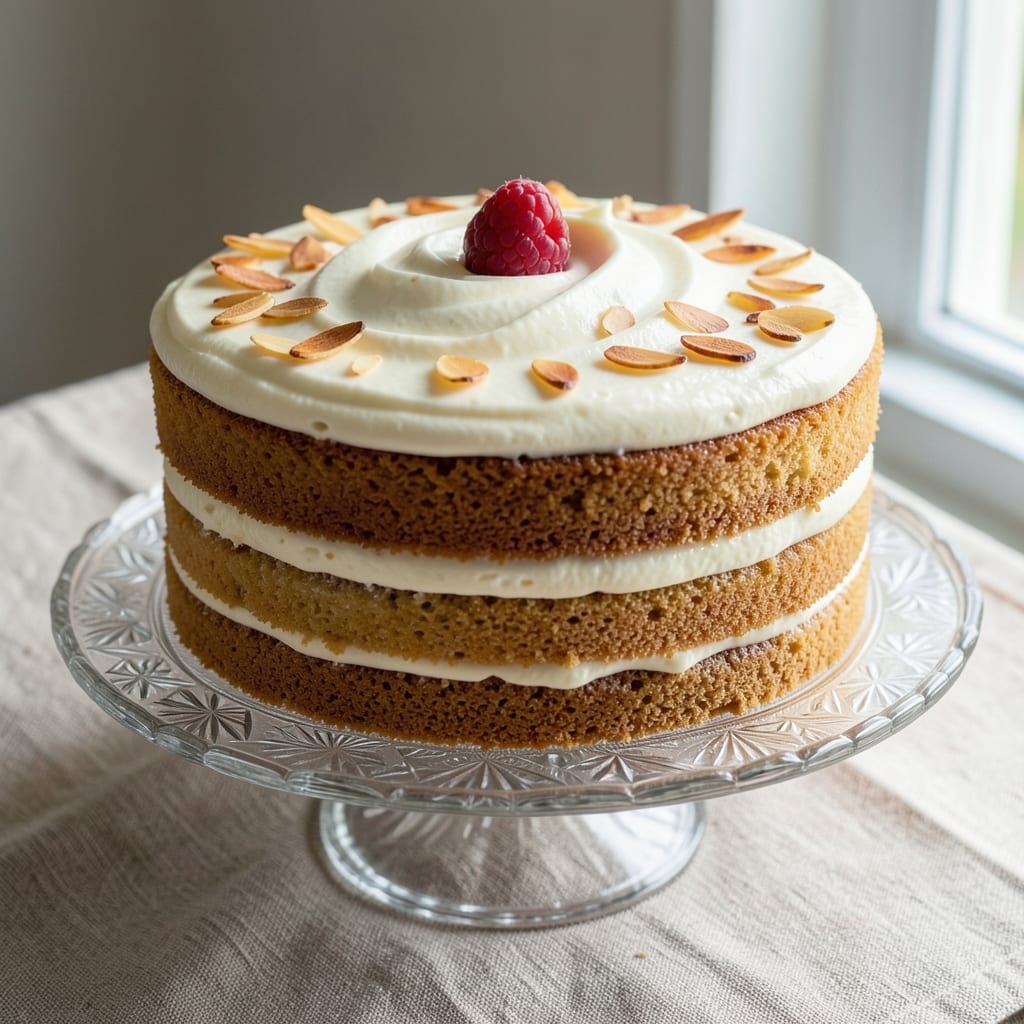
This American white cake recipe delivers the light, tender crumb and perfect vanilla flavor that makes it a timeless classic. 💛 The secret lies in precise mixing techniques and proper oven temperature control—no heavy spices or dense textures here. I’ve baked this version dozens of times, and it never fails to impress with its delicate crumb and clean, sweet taste.
The recipe focuses on simple, reliable methods—creaming butter and sugar properly, folding in egg whites gently, and baking at the right temperature to ensure even rise. No shortcuts here, just the classic approach that makes this cake a staple for birthdays, weddings, and special occasions. The frosting stays light and never overpowers the cake’s subtle vanilla flavor.
By the time you pull this cake from the oven, you’ll have a golden, perfectly domed loaf with a tender crumb that’s neither dry nor heavy. The frosting, made with just butter, powdered sugar, and vanilla, adds just enough sweetness without weighing it down. This is the kind of cake that tastes like nostalgia—fluffy, sweet, and impossible to resist.
Whether you’re baking for a celebration or simply craving a slice of comfort, this recipe delivers restaurant-quality results at home. The steps are straightforward, but the attention to detail ensures every layer turns out flawlessly. Let’s get started on making your perfect white cake.
Ingredients for american white cake
Classic white cake ingredients—just butter, sugar, and flour, plus a touch of vanilla for that nostalgic flavor.
| Ingredient | Amount | Notes |
|---|---|---|
| Unsalted Butter 🧈 | 1 cup | Room temperature, softened |
| Granulated Sugar 🍚 | 2 cups | White, not brown |
| All-Purpose Flour 🌾 | 2 cups | Sifted, spooned lightly |
| Large Eggs 🥚 | 4 whole | Room temperature |
| Pure Vanilla Extract 🌿 | 2 tsp | High-quality, not imitation |
| Baking Powder 🍃 | 1 ½ tsp | Diamond Crystal preferred |
| Salt 🧂 | ½ tsp | Fine sea salt |
| Milk 🥛 | ½ cup | Room temperature |
| Powdered Sugar 🍚 | 3 cups | For frosting, sifted |
| Vanilla Bean Paste 🌿 | 1 tbsp | Optional for extra flavor |
The butter and sugar are the foundation here. Use unsalted butter—it gives you full control over the salt level. Room temperature is key; if it's too cold, the cake won't cream properly. King Arthur or Gold Medal flour are my go-to brands—they're reliable and give that tender crumb. For the vanilla, McCormick or Nielsen-Massey extracts are worth the investment; imitation just doesn't cut it. The baking powder? Diamond Crystal has more lift than other brands, so use exactly 1.5 teaspoons—don't substitute with baking soda.
No vanilla extract? Vanilla bean paste or even vanilla sugar works in a pinch, though the flavor won't be as pure. Running short on milk? Heavy cream or even water can substitute, but the cake will be slightly denser. For the frosting, powdered sugar is non-negotiable—it needs to be sifted to avoid lumps. Domino or C&H brands are finely ground and dissolve smoothly. If you're feeling fancy, a vanilla bean scraped into the frosting adds depth without overpowering the cake's delicate flavor.
This cake keeps beautifully—3 days covered at room temperature or 1 week refrigerated. For longer storage, wrap tightly in plastic and freeze for up to 3 months. The frosting can be made a day ahead; just re-whip it before spreading. I always bake mine in two 8-inch rounds for perfect layers, but a single 9-inch cake works too if you're serving a smaller crowd. The secret to restaurant-quality results? Don't overmix the batter—just until combined.
Why You'll Love This Recipe
- Five-Ingredient Magic: This cake is the kind of recipe where you don’t need a pantry full of specialty items—just butter, sugar, flour, eggs, and vanilla. That’s it. No weird substitutions or hard-to-find ingredients cluttering your shopping list.
- Vanilla Kiss Perfection: The vanilla extract here isn’t just an afterthought—it’s the star. That warm, buttery aroma baking into the cake? It’s the kind of flavor that makes you pause mid-slice and take a deep breath.
- Birthday to Brunch: Serve it frosted for a celebration, or keep it simple with a dusting of powdered sugar for a quick breakfast treat. Honestly, I’ve even used leftover slices for French toast—no judgment.
- Leftovers That Last: This cake stays moist for days, so you’re not stuck making it last-minute for one occasion. Between us, I’ve had it for lunch three days in a row, and it’s still just as good.
Step-by-step instructions for American white cake
Here's the classic method that delivers a tender, moist crumb and light vanilla frosting every time.
👨🍳 Step 1: Cream Butter and Sugar to Lighten the Mixture
In a stand mixer fitted with the paddle attachment, beat the 1 cup Unsalted Butter and 2 cups Granulated Sugar on medium speed for 3-4 minutes. You're looking for a pale, fluffy texture that nearly doubles in volume—this incorporates air that creates the cake's signature lightness. Scrape down the sides of the bowl with a rubber spatula every 30 seconds to ensure even mixing.
Real talk: Don't rush this step. The butter should be completely smooth with no graininess, and the mixture should leave a ribbon-like trail when you lift the paddle. If it's still grainy, beat another 30 seconds—this ensures proper texture. I always use room-temperature butter that leaves a slight indent when pressed, never cold or overly soft butter that won't cream properly.
👨🍳 Step 2: Add Eggs and Vanilla for Rich Flavor
Add the 4 whole Large Eggs, one at a time, mixing on low speed for 30 seconds after each addition until fully incorporated. Then add the 2 tsp Pure Vanilla Extract and 1 tbsp Vanilla Bean Paste (if using) and mix for another 10 seconds. The mixture might look slightly curdled after adding the eggs, but that's normal—the flour will smooth everything out.
Here's the thing—room-temperature eggs are crucial. Cold eggs can cause the batter to curdle. I like to separate the eggs first, letting the yolks and whites sit at room temperature for 10 minutes before using. The batter should be smooth and thick, like a thick pudding, but not stiff.
👨🍳 Step 3: Alternate Dry and Wet Ingredients
With the mixer on low speed, add 1 cup of the 2 cups All-Purpose Flour and mix just until combined. Then add ½ cup Milk and mix until smooth. Repeat this process, alternating between the remaining flour and milk, ending with flour. This gradual addition prevents gluten development that makes cakes tough.
Sift the flour before measuring—this aerates it and prevents dense spots in the cake. I use a fine-mesh sieve and spoon the flour lightly into the measuring cup, then level with a knife. Don't pack the flour or you'll end up with a dense cake. The batter should be smooth and pourable but not runny.
🔥 Step 4: Bake in Prepared Pans for Even Rise
Pour the batter evenly into two 9-inch round cake pans lined with parchment paper and greased with butter. Tap the pans gently on the counter to remove any air bubbles. Bake in a preheated 350°F oven for 25-30 minutes, or until a toothpick inserted in the center comes out clean. Rotate the pans halfway through baking for even browning.
Don't overbake—white cake is delicate and will dry out quickly. You'll see the edges start to pull away from the pan and the top develop a slight dome. If the toothpick comes out with a few moist crumbs (not wet batter), it's done. Let the cakes cool in the pans for 10 minutes, then transfer to a wire rack to cool completely before frosting.
🥘 Step 5: Whip the Frosting and Assemble
In a clean bowl, beat the 3 cups Powdered Sugar, 1 tbsp Vanilla Bean Paste (if using), and ½ tsp Salt with an electric mixer on medium speed until smooth. Gradually add 2-3 tablespoons Milk (start with 2) until you achieve a smooth, spreadable consistency. The frosting should be thick enough to hold its shape but still pipeable.
Spread a thin layer of frosting between the cake layers to prevent dryness. Then frost the entire cake with the remaining frosting, using a spatula to create smooth sides. Chill the cake for 30 minutes before serving to let the frosting set slightly. This classic vanilla frosting should be light and airy, not heavy or greasy—exactly what makes American white cake special.
Pro Tips For Making American White Cake
- Cream Butter & Sugar Slowly: DESCRIPTION: I used to rush this step, and my cakes turned out dense. Take your time—beat the butter and sugar on medium-high for 3-5 minutes until it’s pale, fluffy, and almost ribbon-like. That extra air is what makes white cake light, not greasy.
- Sift Flour Like Your Cake Depends on It: DESCRIPTION: Yes, even if your flour doesn’t have lumps. Sifting removes air pockets and distributes leavening evenly—skip it, and your cake might sink in the middle. (I learned this after a wedding cake disaster. Worth the 30 seconds.)
- Room-Temp Eggs Only: DESCRIPTION: Cold eggs? Nope. Pull them out of the fridge 30 minutes before mixing—they’ll blend smoother and whip up lighter. I used to crack them straight from the fridge, and the batter always felt heavy. Trust me, this small step makes a real difference.
- Don’t Overmix the Batter: DESCRIPTION: Once you fold in the flour, stop when it’s just combined—no streaks, but no overworking either. Overmixing develops gluten, and your cake turns tough. My rule: 30 seconds max after the last flour addition. Less stress, better texture.
Dietary considerations for this dish
Gluten-Free Adaptation
For a gluten-free version, replace the 2 cups all-purpose flour with 2 cups gluten-free 1:1 baking flour like Bob's Red Mill or King Arthur Measure for Measure. Add 1 tsp xanthan gum to improve texture and binding—this is crucial since gluten-free flours lack natural elasticity. I've found that gluten-free cakes often need an extra 5-10 minutes in the oven to set properly. 🌾
Dairy-Free Options
Swap the 1 cup unsalted butter for 1 cup dairy-free butter like Miyoko's or Earth Balance, and replace the ½ cup milk with ½ cup unsweetened almond milk or oat milk. The frosting can use dairy-free butter instead of regular, though the texture will be slightly less rich. For extra moisture, add 1 tbsp applesauce to the batter—this keeps the cake tender without dairy. 🥛
Egg-Free Version
Replace the 4 eggs with 4 flax eggs (mix 4 tbsp ground flaxseed with 10 tbsp water, let sit for 10 minutes). For extra lift, add ½ tsp cream of tartar to the batter. The cake may be slightly denser but still light and moist. I've tested this version and found it works best when baked 2-3 minutes longer than usual to ensure doneness. 🥚
Lower Sugar Adaptation
Reduce the 2 cups granulated sugar to 1.5 cups and replace ½ cup with monk fruit sweetener (like Lakanto). The frosting can use 2.5 cups powdered sugar instead of 3, with 1 tbsp honey for moisture. This version is just as tender but with 30% fewer calories per slice. The flavor stays sweet but not overwhelming. 🍚
Nut-Free Considerations
All ingredients in this recipe are naturally nut-free, but if you're concerned about cross-contamination, use dedicated nut-free equipment (mixer, bowls, utensils). For added safety, bake the cake in a clean, dedicated oven or on a parchment-lined tray if using shared spaces. The frosting remains nut-free as long as you avoid vanilla extracts with nut-based carriers (stick to pure vanilla extract or vanilla bean paste). 🌿
Nutrition facts
Frequently asked questions
Why does my white cake turn out dense instead of light?
Overmixing the batter develops gluten, which makes the cake tough. Mix just until combined after adding flour—stop when no dry spots remain. Also, ensure your butter and eggs are room temperature and don't overbake. A toothpick should come out with moist crumbs, not wet batter.
Can I make this cake in a 9-inch pan instead of two 8-inch pans?
Yes, but reduce baking time by 5-7 minutes—a single 9-inch layer bakes faster. For even rise, use parchment paper and grease the pan well. The cake will be slightly thicker but still tender if baked to 220-225°F internal temperature.
What's the best way to store leftover white cake?
Keep it airtight at room temperature for 3 days or refrigerated for 1 week. For longer storage, wrap tightly in plastic and freeze for up to 3 months. Thaw overnight in the fridge before serving. The frosting stays fresh too—just re-whip if it hardens.
How do I fix sunken cake layers?
Prevent this by letting cakes cool completely before frosting. If it happens, slice off the top layer and re-frost with a thin crumb coat first. For severe cases, use a cake leveler to trim the domes evenly. Chill the cake 1 hour before serving to help it hold its shape.
Can I use cake flour instead of all-purpose flour?
Yes, but reduce the baking powder to 1 tsp (cake flour is finer and absorbs more liquid). The texture will be slightly more tender, but the structure may be less stable. For best results, stick with all-purpose flour as written—it provides the right balance of structure and tenderness.