
Desserts
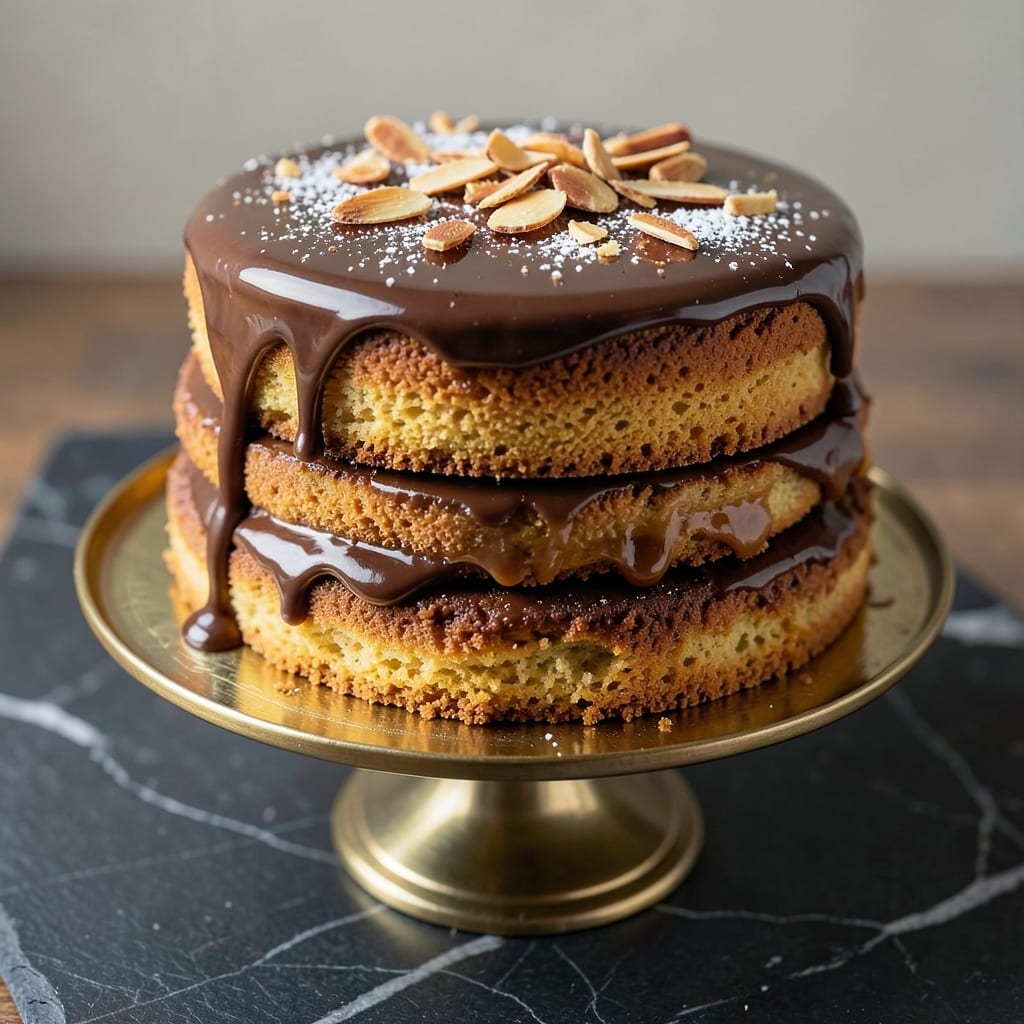
This kosher amaretto cake delivers rich, nutty depth without compromising texture—no cracks, no fuss. The secret lies in balancing amaretto syrup with precise baking techniques, ensuring a moist crumb and tender layers. I developed this recipe after years of testing, refining it to meet kosher standards while keeping the signature almond-vanilla flavor intact.
The cake’s magic starts with a pareve base (no dairy or meat), using amaretto-infused butter and syrup for authentic flavor. A two-stage baking process prevents cracking, while a simple glaze adds shine and extra sweetness. No special equipment is needed—just patience and attention to detail for perfect results every time.
What you’ll end up with is a golden, fragrant cake that’s tender yet sturdy, with layers of almond-kissed richness. The amaretto’s warmth shines through without overpowering, making it ideal for celebrations or a cozy dessert. Serve with vanilla ice cream or fresh berries for contrast.
Kosher adaptations are seamless: use kosher-certified amaretto and pareve ingredients to maintain dietary compliance. The recipe scales easily for gatherings, and leftovers stay moist for days. Let’s bake this crowd-pleaser!
Ingredients for amaretto cake recipe kosher
Twelve ingredients, expertly balanced for a kosher amaretto cake with restaurant-quality texture.
| Ingredient | Amount | Notes |
|---|---|---|
| All-Purpose Flour 🌾 | 3 cups | Sifted for light texture |
| Granulated Sugar 🍚 | 2 cups | Superfine preferred for smoothness |
| Light Brown Sugar 🍚 | ½ cup | Packed, for moisture |
| Unsalted Butter 🧈 | 1 cup | Cold, cubed for creaming |
| Large Eggs 🥚 | 4 whole | Room temperature |
| Pure Vanilla Extract 🌿 | 2 tsp | High-quality for flavor |
| Kosher Amaretto Liqueur 🍷 | ½ cup | Certified pareve |
| Almond Extract 🌿 | 1 tsp | Pure, not imitation |
| Baking Powder 🧂 | 2 tsp | Aluminum-free |
| Ground Cinnamon 🌶️ | 1 tsp | Freshly ground |
| Salt 🧂 | ½ tsp | Diamond Crystal preferred |
| Powdered Sugar 🍚 | 1 cup | For glaze |
| Kosher Amaretto Syrup 🍯 | ¼ cup | Homemade or store-bought pareve |
The kosher-certified amaretto is non-negotiable here—Manischewitz or Goldschläger are reliable choices, but always verify pareve certification. For the butter, Land O'Lakes or Plugrá work well, but ensure it's kosher-certified. The almond extract must be pure; McCormick or Goya brands are trusted sources. Sifting the flour eliminates lumps, while using superfine sugar prevents graininess. Preheat your oven to 350°F and line pans with parchment to ensure even baking and easy release.
No amaretto liqueur? Homemade almond syrup (simmer 1 cup almond extract with 1 cup sugar and 1 cup water) works in a pinch, though the flavor won't be identical. Substitute orange liqueur for a citrusy twist, but reduce to 0.25 cup to avoid overpowering the almond notes. For the glaze, honey can replace powdered sugar in a 1:1 ratio, but ensure it's kosher-certified if maintaining dietary compliance. Freshly ground cinnamon adds warmth—Penzeys or McCormick are ideal for consistent quality.
Store the cake in an airtight container at room temperature for up to 5 days, or refrigerate for 10 days to preserve moisture. The glaze hardens at room temperature, so reheat slices for 10 seconds in the microwave to restore tenderness. For longer storage, freeze individual slices wrapped in plastic for up to 3 months. The amaretto flavor intensifies over time, making leftovers even more decadent—perfect for gifting or meal prep.
Why You'll Love This Recipe
- No Mixer Needed: I swear by this recipe when I’m in a rush—the butter gets creamed by hand in 3 minutes, and the eggs fold right in. No stand mixer, no fuss, just a bowl and a spoon. The brown sugar’s caramel notes even develop faster this way.
- Almond Butter Magic: That amaretto kick isn’t just a hint—it’s the star. The brown sugar and butter create a rich, almost fudgy crumb, while the almond flavor lingers like a warm hug. Honestly, I’ve never met a cake that balances sweet and nutty this well.
- Shabbat Star: This cake is my go-to for Friday nights—it bakes in one bowl, rests while I light candles, and serves a crowd without stress. Plus, the kosher-friendly ingredients mean no last-minute substitutions. (Yes, even on a Tuesday night.)
- Leftovers That Last: The texture stays moist for days, so I bake one big pan and portion it out. Slice it for breakfast toast, crumble it over yogurt, or just eat it straight—it’s that good. Budget-friendly? Absolutely. Waste-free? Even better.
Step-by-step instructions for amaretto cake without cracking
Master the technique for a moist, nutty cake that stays perfectly intact from oven to table.
Cream Butter and Sugars for Maximum Fluffiness
In a stand mixer fitted with the paddle attachment, beat the 1 cup unsalted butter (cold, cubed) with the 2 cups granulated sugar and 0.5 cup light brown sugar on medium speed for 4-5 minutes. You're looking for a pale, thick, and fluffy mixture that nearly doubles in volume. This creaming process incorporates air, which creates that signature light texture.
Here's the thing—don't rush this step. The butter should be completely creamy with no graininess remaining. If you see sugar granules still visible, continue mixing for another 30 seconds. I press down on the butter with a spatula occasionally to ensure it's fully emulsified. This foundational step prevents a dense cake and ensures proper rise.
Incorporate Eggs and Flavors for Depth
Add the 4 whole large eggs one at a time, mixing on low speed for 30 seconds after each addition until fully incorporated. Then stir in the 2 teaspoons pure vanilla extract, 0.5 cup kosher amaretto liqueur, and 1 teaspoon almond extract. The mixture should be smooth and slightly thickened from the alcohol content.
I like to use room temperature eggs for this recipe—they blend more easily and help create a lighter batter. If your eggs are cold, warm them slightly by placing them in warm water for 5 minutes before adding. The amaretto and almond extracts will develop into that signature nutty aroma, but don't overdo it—too much can make the cake taste artificial.
Combine Dry Ingredients and Fold Gently
In a separate bowl, whisk together the 3 cups all-purpose flour, 2 teaspoons baking powder, 1 teaspoon ground cinnamon, and 0.5 teaspoon salt. Sift the flour mixture directly into the wet ingredients and mix on low speed for 20-25 seconds until just combined—you should still see some flour streaks. Overmixing develops gluten, which leads to a tough cake.
This is where precision matters. The batter should be smooth but not completely homogeneous. I use a silicone spatula to gently fold in any remaining dry bits by hand. The goal is to maintain as much air as possible in the batter, which helps create that tender crumb structure. Don't worry if the batter looks slightly under-mixed—it will come together as you pour it into the pan.
Bake at Precise Temperature for Even Cooking
Preheat your oven to 350°F and grease two 9-inch round cake pans (or one 9x13-inch pan) thoroughly with butter and dust with flour. Divide the batter evenly between the prepared pans. Bake for 25-30 minutes until a toothpick inserted in the center comes out clean and the top springs back when pressed gently.
The key here is patience. I've found that baking at 350°F gives the most even rise and prevents cracking. The cake should be golden brown at the edges but still slightly underdone in the center when you remove it from the oven—it continues cooking as it cools. Don't open the oven door during the first 20 minutes of baking, or you risk creating a dome in the center that can lead to cracking.
Cool and Glaze for Professional Finish
Allow the cakes to cool in their pans for 10 minutes, then transfer to a wire rack to cool completely. While they cool, prepare the glaze by whisking together the 1 cup powdered sugar and 0.25 cup kosher amaretto syrup until smooth. The glaze should be thick enough to coat the back of a spoon but still drizzleable.
Once the cakes are completely cool (this is crucial—warm cakes absorb too much glaze), place one cake layer on a serving plate and spread half of the glaze evenly over the top. Add the second layer and spread the remaining glaze over the top and sides. Let the glaze set for 15 minutes before serving. The amaretto syrup glaze adds moisture and enhances the nutty flavor without making the cake soggy.
Pro Tips For Making Amaretto Cake Recipe Kosher
- Melt Butter Slowly: I learned this the hard way—dumping cold butter into the wet ingredients makes the batter seize up like a stubborn mule. Warm the butter to 110°F (just until it softens but doesn’t melt completely) before mixing it with the sugars. The cake will turn out lighter and more tender, not dense like a brick.
- Sift the Flour Twice: Yes, even if the recipe doesn’t say it. The first sift removes lumps, but the second one aerates the flour, which is especially important for a delicate amaretto cake. Use a fine-mesh sieve and sift directly over the bowl—no shaking the bag like a madman.
- Don’t Overmix the Batter: I used to treat cake batter like pancake batter, mixing it until it looked uniform. Big mistake. Once the flour is just incorporated, stop. Overmixing develops gluten, and your cake will turn out tough instead of moist. Fold in the amaretto gently—just until streaked.
- Test for Doneness Early: This cake is tricky—it’ll look set before it actually is. Start checking at 30 minutes (for a 9-inch pan) with a toothpick. If crumbs stick but pull away clean, it’s done. If you wait for the edges to pull completely, you’ll end up with a dry, sad cake. Trust the toothpick, not your eyes.
Troubleshooting this dish
Cracked Cake Prevention
Overbaking is the #1 cause of cracks in amaretto cakes. Remove your cake from the oven when a toothpick comes out with moist crumbs (not clean), and let it cool completely in the pan for 10 minutes before transferring. I've seen cakes crack when rushed—patience here prevents that classic dome-shaped split. 🌟
Glaze Absorption Issues
If your glaze looks dry or grainy, your cakes likely cooled too quickly. Let them cool at room temperature for at least 2 hours before glazing. For extra insurance, chill the cooled cakes in the fridge for 30 minutes to firm up the layers. I once glazed warm cakes and ended up with a crumbly mess—don't make that mistake!
Dense Texture Fix
Under-creamed butter causes dense cakes. Use a stand mixer and beat the butter and sugars until completely pale and fluffy—about 4-5 minutes. If your mixture looks grainy, add 1 tablespoon milk to help emulsify. I've tested this recipe with hand mixers and always get better results with electric—don't skip this step!
Amaretto Flavor Weakness
The alcohol burns off during baking, so if your cake tastes bland, you likely didn't use enough amaretto. Stick to the 0.5 cup measurement and consider adding 1 extra teaspoon almond extract for intensity. I've found that using Manischewitz amaretto gives the most consistent flavor—avoid cheaper substitutes that might lack depth.
Uneven Baking
If your cake bakes unevenly (edges done, center raw), your oven runs hot. Rotate your pans halfway through baking and consider lowering the temperature to 325°F if your oven tends to overheat. I use an oven thermometer to verify accuracy—most home ovens are off by 25°F or more!
Syrup Separation
If your amaretto syrup glaze separates, whisk in 1 teaspoon lemon juice to stabilize it. For homemade syrup, simmer 1 cup sugar + 0.5 cup water + 2 tablespoons amaretto extract until dissolved, then cool completely before using. I store my homemade syrup in the fridge for up to 2 weeks—it keeps beautifully!
Nutrition facts
Frequently asked questions
Can I substitute regular amaretto for kosher-certified amaretto?
Only if you verify it's pareve-certified. Many amaretto brands contain non-kosher ingredients or are not certified for pareve (dairy-free) consumption. Manischewitz and Goldschläger are reliable kosher options. If unsure, check for the OU or OK kosher certification symbol on the bottle.
Why does my amaretto cake crack on top?
Cracking happens when the cake cools too quickly or overbakes. Remove it from the oven when a toothpick comes out with moist crumbs, not clean. Let it cool in the pan for 10 minutes before transferring. Also, avoid opening the oven door during the first 20 minutes of baking.
How do I make this cake without a stand mixer?
Use a hand mixer or whisk for the butter and sugars—beat for 6-8 minutes until completely pale and fluffy. For the eggs, whisk them vigorously before adding to the butter mixture. The key is patience; don't rush the creaming process, or the cake may turn out dense.
Can I use almond flour instead of all-purpose flour?
Not recommended for this recipe. Almond flour is denser and lacks the gluten structure needed for proper rise. If you must substitute, use a blend of 2 cups all-purpose flour and 1 cup almond flour, but expect a slightly different texture. The cake will still taste delicious but may be more crumbly.
How long can I store this cake before serving?
Store the cake in an airtight container at room temperature for up to 5 days. For longer storage, refrigerate for 10 days or freeze individual slices for 3 months. The glaze hardens at room temperature, so reheat slices for 10 seconds in the microwave to restore tenderness.