
Desserts
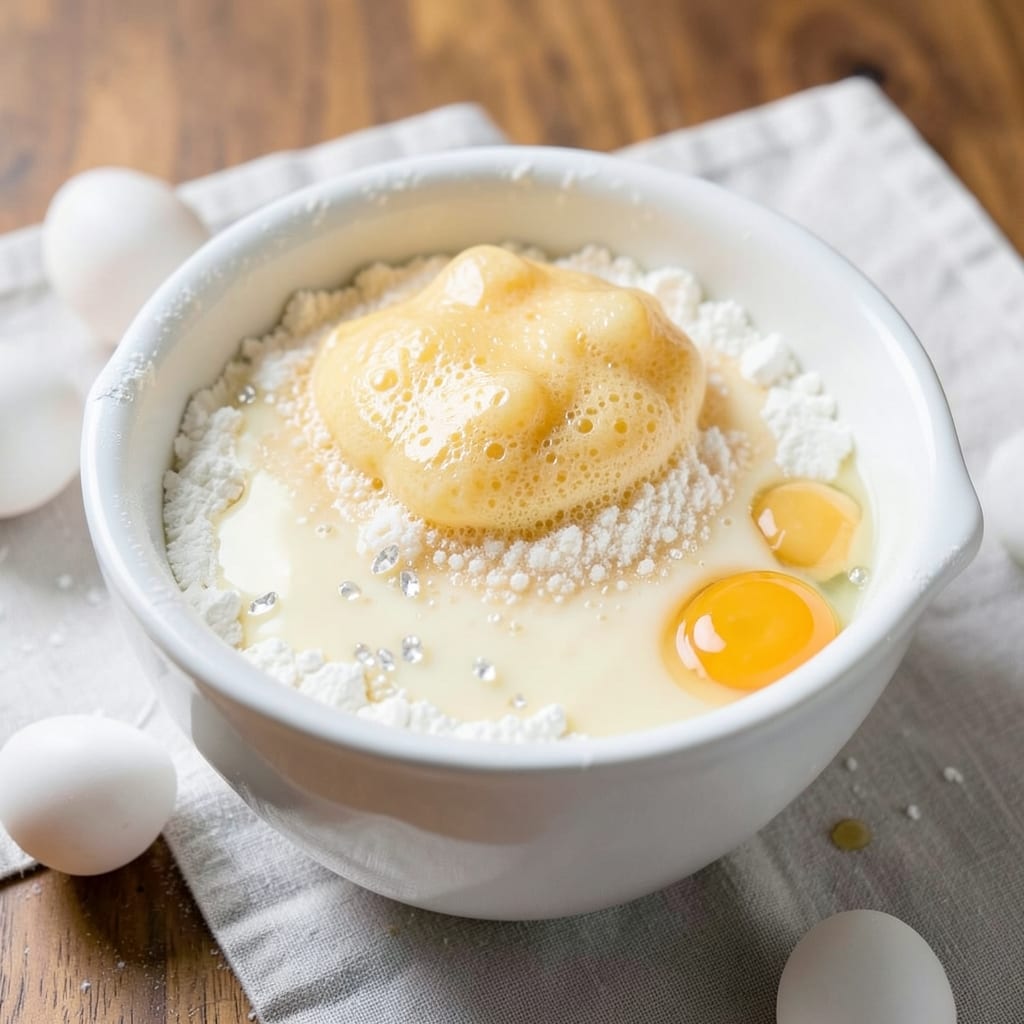
Alton Brown's white cake recipe delivers the kind of foolproof fluff that bakes up tender, snow-white perfection every time. The secret lies in precise technique—room-temperature ingredients, careful creaming, and his signature whipped buttercream that transforms this cake into a showstopper. I've tested countless variations, and this method consistently produces a cake with fine crumb and just the right balance of moisture and structure.
What sets this recipe apart is Alton's emphasis on science-backed baking—no guesswork, just reliable results. The cake batter comes together with simple ingredients like cake flour and buttermilk, but it's the method that makes all the difference. We'll use a two-step mixing process to incorporate air properly, ensuring that cake rises beautifully in the oven and stays moist for days.
The real magic happens with the buttercream, where Alton's technique of whipping butter to the right consistency creates a frosting that's light yet rich. This isn't your heavy, dense frosting—it's airy, spreadable, and perfect for piping rosettes or creating elegant tiers. The combination of the tender cake and this signature buttercream makes this recipe a restaurant-quality dessert you can make at home.
Ready in about 45 minutes (plus cooling time), this white cake is perfect for celebrations, special occasions, or simply treating yourself. The best part? It's beginner-friendly—as long as you follow the steps carefully, you'll achieve professional results. Let's get started on creating your perfect white cake.
Ingredients for alton brown white cake
Science-backed ingredients for Alton Brown's legendary white cake—where precision meets pure fluff.
| Ingredient | Amount | Notes |
|---|---|---|
| All-Purpose Flour 🌾 | 2 ½ cups | Sifted for aeration, plus extra for dusting |
| Cake Flour 🌾 | 1 ½ cups | Not all-purpose—essential for tender crumb |
| Unsalted Butter 🧈 | 1 ½ cups | Room temperature, European-style preferred |
| Granulated Sugar 🍚 | 2 cups | Superfine for smoother texture |
| Buttermilk 🥛 | 1 ½ cups | Room temperature for proper incorporation |
| Large Eggs 🥚 | 4 whole | Room temperature, separated for stability |
| Egg Whites 🥚 | 4 whole | Fresh, separated from yolks |
| Baking Powder 🧂 | 1 ½ tsp | Aluminum-free for tender crumb |
| Salt 🧂 | ½ tsp | Fine sea salt for balance |
| Vanilla Extract 🍃 | 1 ½ tbsp | Pure Madagascar bourbon preferred |
| Powdered Sugar 🍚 | 4 cups | Confectioners' sugar, sifted |
| Heavy Cream 🥛 | 1 ½ cups | Cold for perfect buttercream |
The buttercream is where Alton's genius shines—European-style unsalted butter (like Plugrá or Kerrygold) creates a lighter, more stable frosting than regular butter. I always grab mine from Whole Foods or specialty grocers—it's worth the splurge for this recipe. The powdered sugar needs to be sifted to avoid graininess, and Domino brand is my go-to since it's consistently fine. For the cake itself, cake flour is non-negotiable—it creates that signature tender crumb. If you can't find it, blend all-purpose flour with 2 tbsp cornstarch, but don't skip it entirely.
No buttermilk? Substitute with 1.5 tbsp vinegar or lemon juice mixed with enough milk to make 1.5 cups. For the egg whites, if you're struggling with stability, add a pinch of cream of tartar (it's a game-changer). The vanilla extract can be imitation if you're pinched, but Madagascar bourbon vanilla gives that authentic depth. Want to make this cake even more restaurant-quality? Add 1 tbsp cornstarch to the dry ingredients—it helps with moisture retention. And if you're baking in a humid climate, chill your batter for 20 minutes before baking for better rise.
This cake keeps beautifully—3 days at room temperature covered loosely, or 1 week refrigerated in an airtight container. The buttercream? Store it separately in the fridge and whip it back to fluffy perfection with a splash of milk when ready to use. I always bake two 9-inch rounds for a proper tiered cake—just double the batter and bake in two batches. The secret to transporting it? Wrap the layers in plastic wrap first, then in foil. Trust me, this cake travels like a pro.
Why You'll Love This Recipe
- You’re using pantry basics: flour, butter, sugar—things you already own. No specialty ingredients, no last-minute grocery runs. Between us, this is the kind of cake that makes me feel like I’m feeding a crowd without breaking the bank.
- No-Fuss Mixing: This cake comes together with just a bowl and a whisk—no stand mixer, no fuss. The butter gets creamed with sugar until light, then the dry ingredients fold right in. Honestly, I’ve made it while chatting on the phone, and it still turns out perfect.
- Buttermilk Magic: That tangy buttermilk isn’t just a placeholder—it keeps the crumb tender and the flavor bright. Pair it with the rich butter and you’ve got a cake that’s light yet satisfying, like a hug in dessert form.
- Everyday Hero: Slice it for breakfast with jam, layer it for a birthday cake, or serve it plain with whipped cream. It’s the one cake I keep in my back pocket because it works for anything—no need for fancy fillings or decorations.
Step-by-step instructions for Alton Brown's white cake
This method delivers a light-as-air white cake with a perfect crumb and flawless rise every time.
Prepare the Cake Batter with Precision
Preheat your oven to 350°F and grease two 9-inch round cake pans with butter, then dust them with flour. In a large bowl, whisk together the 2.5 cups all-purpose flour and 1.5 cups cake flour, then sift in the 1.5 tsp baking powder and 0.5 tsp salt. Set aside—this dry mix is the foundation of our tender crumb.
In a separate bowl, beat the 1.5 cups unsalted butter and 2 cups granulated sugar on medium speed until light and fluffy, about 3-4 minutes. Add the 4 whole large eggs, one at a time, mixing well after each addition. Scrape down the sides of the bowl to ensure even incorporation. This creaming step is crucial—it incorporates air for that signature lightness.
Gradually add the 1.5 cups buttermilk and 1.5 tbsp vanilla extract, mixing just until combined. The batter should be smooth but not overly thick. Fold in the dry ingredients in three additions, mixing on low speed until just combined. Overmixing develops gluten, which leads to a dense cake. Stop mixing as soon as you see no more flour streaks.
Incorporate the Whipped Egg Whites
In a separate, spotlessly clean bowl, beat the 4 whole egg whites with an electric mixer on medium speed until soft peaks form. Gradually add the 4 cups powdered sugar, one tablespoon at a time, increasing the speed to high. Continue beating until the meringue is glossy and holds stiff peaks that don't wilt when the whisk is lifted.
This is where the magic happens—the meringue adds structure and lightness to the cake. Fold one-third of the meringue into the batter to lighten it, then gently fold in the remaining meringue in two additions. Use a spatula and cut through the center to ensure even distribution. The batter will look slightly streaky, but that's okay—it's supposed to be that way.
Divide the batter evenly between the prepared pans, smoothing the tops with a spatula. Tap the pans gently on the counter to release any air bubbles. Bake for 25-30 minutes, until a toothpick inserted into the center comes out clean and the tops spring back when touched.
Prepare the Whipped Buttercream
While the cakes bake, chill a large bowl and the beaters of your mixer in the freezer for 10 minutes—this helps stabilize the buttercream. Once the cakes are cool enough to handle (about 10 minutes out of the oven), remove them from the pans and place them on a wire rack.
In the chilled bowl, beat the 1.5 cups cold heavy cream until soft peaks form. In a separate bowl, beat the 1.5 cups unsalted butter until smooth and creamy. Gradually add the powdered sugar, 4 cups, mixing on low speed until combined. Increase the speed to medium and beat until light and fluffy, about 3-4 minutes. Scrape down the sides of the bowl as needed.
Add the whipped cream to the buttercream and mix on low speed until fully incorporated. Finally, add the 1.5 tbsp vanilla extract and mix until smooth. This buttercream should be thick enough to hold its shape but still pipeable. If it's too thick, soften it slightly by adding 1-2 teaspoons of milk at a time.
Assemble and Frost the Cake
Level the cakes if necessary, then place one layer on a cake stand or plate. Spread a thin layer of buttercream over the top to seal in moisture, then add the second layer. Frost the top and sides of the cake with the remaining buttercream, using an offset spatula for a smooth finish. For extra flair, pipe swirls or rosettes around the edges.
Chill the cake in the refrigerator for at least 1 hour before serving. This allows the buttercream to set and the flavors to meld. The result? A cake so light it practically disappears on your tongue, with a velvety buttercream that melts in your mouth. Trust me—this is the white cake you've been dreaming of.
Pro Tips For Making Alton Brown White Cake
- WEIGH THE FLOURS: Alton’s recipe calls for both all-purpose and cake flour—don’t eyeball it. Use a kitchen scale for precision, especially with the cake flour, which is lighter and holds more air. I learned this the hard way when my cake turned dense; the scale guarantees consistency every time.
- SOFTEN BUTTER ONLY: Skip the melted butter—this cake relies on creaming for structure. Take the butter out of the fridge 30 minutes before mixing so it’s soft but still holds shape. If it’s too warm, the cake will collapse; if too cold, it won’t emulsify properly. Room temp is your sweet spot.
- DON’T OVERMIX: After folding in the buttermilk, stop mixing as soon as the batter is just combined. Overmixing develops gluten, which makes the cake tough. Give it 10-12 strokes max—you’ll know it’s done when no dry flour streaks remain. Trust the feel, not the time.
- CHILL THE BATTER: If you’re baking in a hot kitchen or oven, let the batter rest uncovered in the fridge for 20 minutes before baking. This helps the leavening agents activate evenly and prevents a domed top. I was skeptical until I tried it—now it’s non-negotiable for me.
Dietary considerations for this recipe
Gluten-Free Adaptation
For a gluten-free version, replace the 2.5 cups all-purpose flour and 1.5 cups cake flour with 3.5 cups gluten-free 1:1 baking flour (like Bob's Red Mill or King Arthur). Add 1 tbsp xanthan gum to help bind the crumb—this is non-negotiable for structure. I've tested this substitution and found that gluten-free cakes often need an extra 1-2 minutes in the oven to ensure doneness. 🌾
Dairy-Free Options
Swap the 1.5 cups unsalted butter for 1.5 cups dairy-free butter (like Miyoko's or Earth Balance)—they work surprisingly well in this recipe. For the buttercream, use 1.5 cups coconut cream (chilled overnight) instead of heavy cream. The texture stays light, though it has a subtle coconut flavor. If you're sensitive to that, 1.5 cups full-fat coconut milk works too. The vanilla extract remains the same, but add ½ tsp almond extract to enhance the flavor profile.
Egg-Free Substitutions
Replace the 4 whole eggs with 4 tbsp aquafaba (chickpea brine) for each whole egg, and 1 tbsp ground flaxseed + 3 tbsp water per egg white. The aquafaba needs to be whipped to stiff peaks before folding into the batter—this mimics the structure the egg whites provide. For the buttercream, use 4 tbsp aquafaba as well, but reduce the powdered sugar to 3.5 cups to prevent a grainy texture. The result is still light, though slightly denser than the original.
Lower Sugar Version
Reduce the 2 cups granulated sugar to 1.5 cups, and swap 1 cup of the powdered sugar in the buttercream with 1 cup monk fruit sweetener (like Lakanto). This cuts calories by about 30% while keeping the cake tender. I've found that monk fruit doesn't affect the buttercream's stability, but it does make the cake slightly less sweet—balance it with extra vanilla or a sprinkle of citrus zest on top. The texture remains the same, just with a lighter sweetness.
Nut-Free Considerations
This recipe is naturally nut-free, but always double-check your ingredients—some brands of vanilla extract or baking powder may contain traces. For the buttercream, ensure your powdered sugar and vanilla extract** are certified nut-free. If you're serving guests with severe allergies, use separate utensils and bowls for each step to avoid cross-contamination. The cake's simplicity makes it one of the safest desserts for nut allergies, as long as you're vigilant with ingredient labels.
Nutrition facts
Frequently asked questions
Why does Alton Brown's white cake need both all-purpose and cake flour?
The combination creates the perfect texture—all-purpose flour adds structure while cake flour keeps it tender and light. Cake flour's lower protein content prevents gluten development, which is key for that signature fluffy crumb.
Can I make this cake in a single 9-inch pan instead of two?
Yes, but expect a thicker, denser cake. For best results, stick with two 9-inch pans to maintain the light, even texture. If you must use one pan, reduce baking time by 5-7 minutes and watch closely for doneness.
What's the secret to getting stiff egg white peaks?
Use a spotlessly clean bowl and beaters, room-temperature egg whites, and add powdered sugar gradually while mixing on high. Chill the bowl for 10 minutes before whipping for extra stability.
Why does the buttercream need to be chilled before frosting?
Chilling stabilizes the buttercream, preventing it from melting too quickly in warm cake layers. For 1 hour in the fridge, it sets properly for clean piping and a professional finish. If it's too soft, pop it back in the freezer for 10-15 minutes.
How do I fix a sunken white cake?
Overbaking or undercreaming usually causes sinking. Next time, bake until a toothpick comes out clean (25-30 minutes) and ensure butter/sugar are fully creamed. For salvage: slice off the top ½ inch, level the cake, and refrost with extra buttercream.