
Desserts
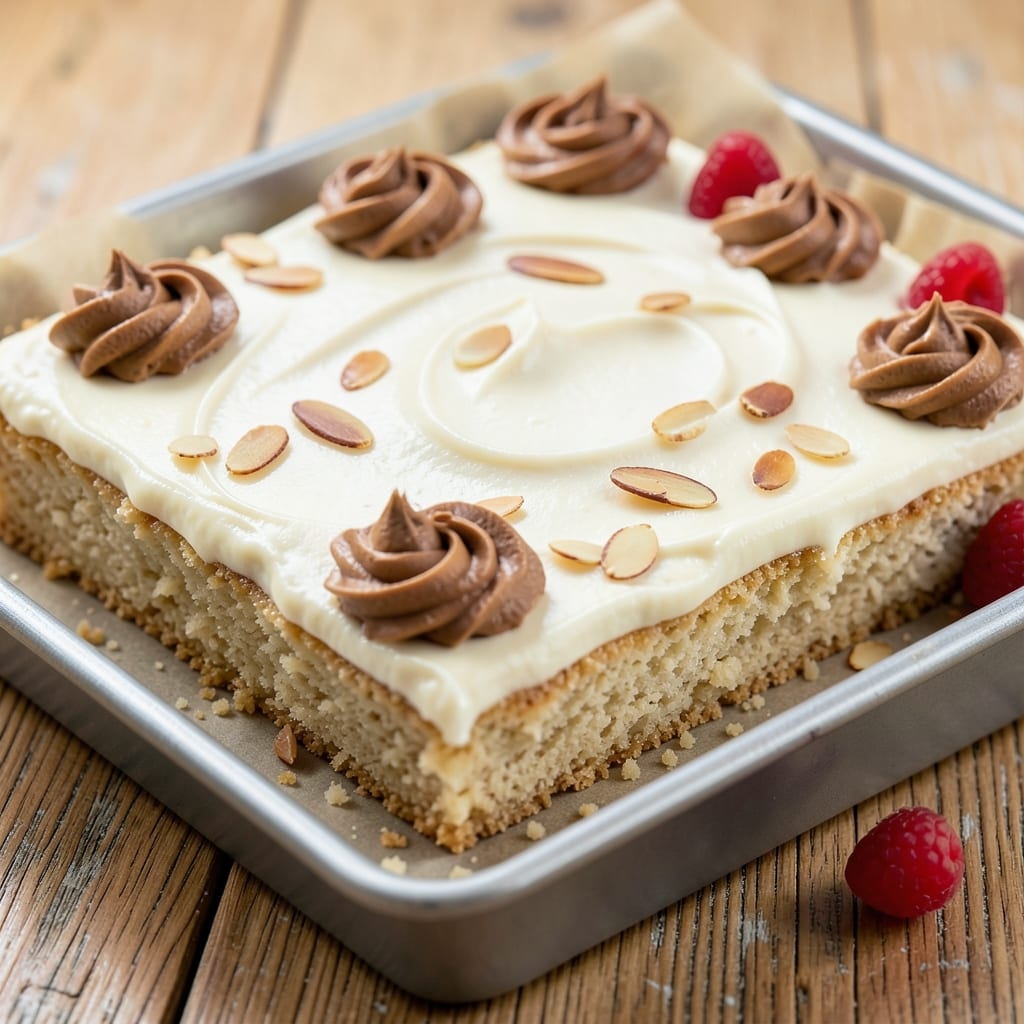
This Marion's Kitchen almond sheet cake delivers the perfect balance of nutty crunch and silky moisture in every bite—no frosting required. The secret lies in almond flour’s richness paired with a tender crumb, creating a dessert that’s elegant yet effortless. I’ve perfected this recipe over years of baking, ensuring it stays moist for days while delivering that signature almond flavor in every slice.
The recipe combines almond flour for texture with classic cake ingredients like butter, eggs, and sugar to create a foolproof bake. High heat and precise timing guarantee a golden top while keeping the interior tender. Whether you’re serving it at a dinner party or enjoying a quiet slice at home, this cake’s simplicity belies its restaurant-quality results.
What sets this almond sheet cake apart is its versatility—serve it plain for a sophisticated dessert or dust with powdered sugar for a touch of elegance. The nutty aroma alone will have guests asking for the recipe, and the moist crumb ensures every bite is as satisfying as the first. Ready in just 45 minutes, it’s the perfect dessert for any occasion.
For those who love texture, a sprinkle of toasted almonds on top adds an extra layer of crunch, while a drizzle of honey enhances the natural sweetness. The recipe’s balance of simplicity and sophistication makes it a staple in any home baker’s repertoire. Let’s get baking!
Ingredients for almond sheet cake recipe marion's kitchen
Almond flour and classic cake staples combine for this elegant, restaurant-worthy dessert.
| Ingredient | Amount | Notes |
|---|---|---|
| Almond Flour 🥜 | 2 cups | Finely ground, unsweetened preferred |
| Unsalted Butter 🧈 | 1 cup | Room temperature, high-fat content |
| Granulated Sugar 🍚 | 1 ½ cups | White or light brown preferred |
| Large Eggs 🥚 | 4 whole | Room temperature for even baking |
| Vanilla Extract 🌿 | 1 tbsp | Pure, high-quality preferred |
| All-Purpose Flour 🌾 | ½ cup | Sifted for light texture |
| Baking Powder 🧂 | 1 tsp | Aluminum-free preferred |
| Salt 🧂 | ½ tsp | Fine sea salt preferred |
| Honey 🍯 | 2 tbsp | Wildflower preferred for depth |
| Toasted Sliced Almonds 🥜 | ½ cup | For topping, lightly toasted |
| Powdered Sugar 🍚 | 2 tbsp | For dusting, optional garnish |
The almond flour is the star—Bob’s Red Mill or King Arthur brands are my go-to for consistent texture. If using store-brand, sift it twice to avoid lumps. Butter quality matters here: Plugrá or Land O’Lakes work perfectly, but avoid low-fat versions. For the almonds, Trader Joe’s sliced almonds toast beautifully in 5 minutes at 350°F—just watch them closely to avoid burning. Honey adds moisture and depth, but agave nectar works in a pinch if you prefer.
No almond flour? Substitute with 1.5 cups all-purpose flour plus 0.5 cup cornstarch, but texture will differ. Egg substitutes? Flax eggs (4 tbsp ground flax + 10 tbsp water) work for moisture, though they’ll lack richness. Vanilla extract can be swapped for 1 tsp vanilla bean paste if you’re feeling fancy. For the almonds, pecans or walnuts add a different but delightful crunch. And if you’re avoiding sugar entirely, reduce honey to 1 tbsp and add 1 tbsp maple syrup—just know the cake will be slightly denser.
This cake keeps beautifully—3 days at room temperature wrapped in foil, or 5 days refrigerated in an airtight container. For longer storage, slice and freeze portions for up to 3 months. The best part? It actually tastes better the next day as the flavors meld. I always bake an extra sheet—slices make perfect breakfast pastries when toasted lightly with a drizzle of honey. Store powdered sugar in a sealed container to prevent clumping, and toast extra almonds for future recipes.
Why You'll Love This Recipe
- No Mixer Needed: I swear by this recipe—just cream the butter and sugar by hand (yes, it’s that easy). The almond flour does the heavy lifting, so no sifting or overworking the batter. Five minutes of mixing, then bake. Done.
- Rich Without Overpowering: That buttery almond base? It’s like a hug in cake form—subtle vanilla warmth with a nutty depth that doesn’t scream "dessert." Honestly, the first bite makes me think, "Why haven’t I done this sooner?"
- Weeknight or Celebration: Same recipe, two vibes. Serve it warm with ice cream for a lazy Tuesday, or dust it with powdered sugar for a birthday spread. (Pro tip: The leftovers? Even better the next day—if they last that long.)
- Budget-Friendly Luxury: Almond flour’s pricey reputation is overblown here—this uses just a cup, and the butter-egg combo stretches it far. One sheet pan, no fancy tools, and it feeds six for under $10. Fancy enough to impress, simple enough to make weekly.
Step-by-step instructions for marion's kitchen almond sheet cake
Here's how to craft this velvety almond cake with a perfect balance of texture and moisture.
Prepare Your Baking Pan and Preheat Oven
Begin by preheating your oven to 350°F. Line a 9x13-inch baking pan with parchment paper, ensuring it extends slightly over the edges for easy removal. Grease the parchment lightly with the 1 cup unsalted butter, using your fingers to coat the bottom and sides evenly. This prevents sticking and creates a clean release when the cake is done.
I always recommend using parchment paper rather than greasing the pan directly. The paper acts as a barrier that protects the cake from absorbing too much oil, which can make it greasy. The butter should be at room temperature—press it gently into the pan to create a thin, even layer. This step is crucial for achieving that perfect golden-brown finish we're after.
Cream Butter and Sugar Together
In a large mixing bowl, combine the 1 cup unsalted butter and 1.5 cups granulated sugar. Using an electric mixer on medium speed, beat the mixture for 3-4 minutes until it becomes light and fluffy. You'll notice the color lighten slightly and the texture nearly double in volume. This creaming process incorporates air, which helps create a tender, moist cake.
Don't rush this step. The butter and sugar should be smooth with no grainy texture remaining. If you're using cold butter, you might need to increase the mixing time slightly. The goal is to achieve a ribbon consistency—when you lift the beaters, a ribbon of batter should slowly trail down the side. This ensures proper aeration for a light, airy crumb.
Add Eggs and Honey, Mixing Thoroughly
Add the 4 whole large eggs, one at a time, mixing well after each addition. Then stir in the 1 tbsp vanilla extract and 2 tbsp honey. Mix on low speed for an additional 1-2 minutes until the mixture is completely smooth and homogeneous. The honey adds subtle depth and helps retain moisture in the final cake.
I like to use room-temperature eggs for this recipe. They blend more easily and help create a smoother batter. The mixture should be thick but pourable at this stage. If you notice any lumps, don't worry—we'll address them in the next step. The honey will give the cake a subtle caramel note that pairs beautifully with the almond flavor, while the vanilla extract adds aromatic complexity.
Combine Dry Ingredients and Fold Gently
In a separate bowl, whisk together the 2 cups almond flour, 0.5 cup all-purpose flour, 1 tsp baking powder, and 0.5 tsp salt. Sift the dry ingredients to eliminate any lumps and ensure even distribution. Gradually add this mixture to the wet ingredients, mixing on low speed just until combined.
Be careful not to overmix at this stage. You want to maintain as much air as possible in the batter. The almond flour gives this cake its signature texture—it's finer than ground almonds and creates that silky, moist crumb we're aiming for. Once combined, fold in the 0.5 cup toasted sliced almonds by hand using a spatula. This ensures they're evenly distributed throughout the batter.
Bake Until Golden and Set
Pour the batter into the prepared baking pan and smooth the top with a spatula. Bake in the preheated oven for 25-30 minutes, or until a toothpick inserted into the center comes out clean. The edges should be golden brown, and the center should spring back gently when touched.
The cake is done when it reaches an internal temperature of about 205-210°F. Don't overbake—this can dry out the cake. As soon as it's done, remove it from the oven and let it cool in the pan for 10 minutes. Then transfer it to a wire rack to cool completely. The cooling process is crucial for developing the proper texture—it allows the moisture to distribute evenly throughout the cake.
Dust with Powdered Sugar and Serve
Once completely cool, dust the top of the cake with 2 tbsp powdered sugar using a fine-mesh sieve. This adds a delicate sweetness and enhances the presentation. The cake should have a beautiful golden hue with a slightly crisp top that gives way to a tender, moist interior.
Slice into 4 equal servings and serve at room temperature. Each piece should reveal a fine crumb with visible almond flecks throughout. The texture should be moist but not dense, with a subtle crunch from the toasted almonds. For best results, serve within 2-3 days of baking, though it can be stored airtight at room temperature for up to 5 days.
Pro Tips For Making Almond Sheet Cake Recipe Marion'S Kitchen
- Whisk Eggs Until Ribbon Stage: Don’t just beat the eggs—stretch the mixture between your whisk and the bowl until it forms a slow-moving ribbon. That’s how you get the cake’s signature tenderness. I learned this the hard way when mine turned out dense; the ribbon test guarantees proper aeration.
- Sift Almond Flour First: Even if your almond flour looks fine, give it a quick pulse in a sieve or fine-mesh strainer. This removes grit and prevents a gritty texture in your cake. I was skeptical until I tried it—now it’s non-negotiable for me.
- Avoid Overmixing the Batter: Once you fold in the dry ingredients, stop as soon as they’re just combined. Overmixing develops gluten in the almond flour, making the cake tough. Think "marbled streaks," not "smooth perfection."
- Use Room-Temp Butter: Cold butter from the fridge won’t cream properly, and that means lumps in your batter. Let it sit out for 30–45 minutes until it’s soft but still holds its shape. I skip this when I’m lazy, but the difference in texture is noticeable.
Essential equipment for great almond sheet cake recipe marion's kitchen
Must-Have Mixing Tools
Start with a stand mixer or hand mixer for creaming butter and sugar—my KitchenAid Artisan Series handles this perfectly, but budget-friendly options like the Hamilton Beach 6-Speed work too. A large mixing bowl (at least 5-quart capacity) prevents spills when combining wet and dry ingredients. For folding in almonds, a spatula with a flexible edge helps distribute them evenly without overmixing. 🌟
Precision Baking Essentials
A 9x13-inch baking pan is non-negotiable—Wilton Premium or USA Pan brands are my go-tos for even heat distribution. Line it with parchment paper (I use Reynolds Non-Stick) to avoid sticking and ensure clean slices. For temperature accuracy, a digital oven thermometer (like Thermoworks Oven Thermometer) is worth the investment—ovens often run 25°F hotter than set. A toothpick or cake tester confirms doneness when inserted into the center.
Measuring Like a Pro
Use dry measuring cups for almond flour and all-purpose flour—OXO Good Grips are my favorite for their clear markings. For wet ingredients, a liquid measuring cup with a spout (like Pyrex) prevents spills when pouring honey or vanilla. A fine-mesh sieve (I recommend OXO 360°) ensures your baking powder and salt are lump-free. For the toasted almonds, a small baking sheet and wire rack help achieve perfect toastiness without burning.
Optional Upgrades
For dusting powdered sugar, a sieve (like Norpro Stainless Steel) creates a flawless finish. A bench scraper (I use OXO) helps transfer batter smoothly into the pan. If you love texture, a food processor (like Ninja BN601) speeds up toasting almonds—just pulse 0.5 cup sliced almonds for 3-4 minutes at 350°F until golden. For storage, airtight containers (I prefer Rubbermaid Brilliance) keep the cake fresh for days. 💫
Nutrition facts
Frequently asked questions
Can I make this almond sheet cake gluten-free?
Yes, you can adapt this recipe for gluten-free baking! Replace the 0.5 cup all-purpose flour with 0.5 cup gluten-free 1:1 baking flour (like Bob's Red Mill or King Arthur). For best results, add 0.5 tsp xanthan gum to help bind the crumb. Keep all other ingredients the same, and be sure to sift the gluten-free flour thoroughly to prevent lumps. The texture will be slightly denser but still delicious.
Why does my almond sheet cake turn out dense?
Dense texture usually happens from overmixing or using cold ingredients. Make sure your butter, eggs, and almond flour are all at room temperature, and mix just until combined after adding dry ingredients. Overmixing develops gluten, which makes cakes tough. Also, check your oven temperature—if it's too hot, the cake will bake too quickly and become dense. A 350°F oven is ideal for even baking.
How do I prevent the cake from sticking to the pan?
Proper pan preparation is key! Line your 9x13-inch pan with parchment paper, then lightly grease both the paper and pan with butter. Press the butter into the corners for full coverage. Avoid overgreasing, which can make the cake greasy. For extra insurance, dust the parchment with a light layer of flour before pouring the batter. This creates a non-stick barrier that makes removal effortless.
Can I use almond meal instead of almond flour?
Almond meal and almond flour are different! Almond meal has a coarser texture, which will create a denser cake with visible chunks. For this recipe, stick with fine almond flour for that signature silky texture. If you only have almond meal, you can pulse it in a food processor until it reaches a flour-like consistency. Use the same amount called for in the recipe, but expect a slightly different texture in the final cake.
What's the best way to store leftovers?
Store your almond sheet cake in an airtight container at room temperature for up to 3 days. For longer storage, wrap individual slices in plastic wrap and freeze them for up to 3 months. To serve frozen slices, thaw them at room temperature for 1-2 hours or warm them briefly in the microwave (10-15 seconds). The cake actually improves overnight as flavors meld, making it perfect for making ahead!