
Desserts
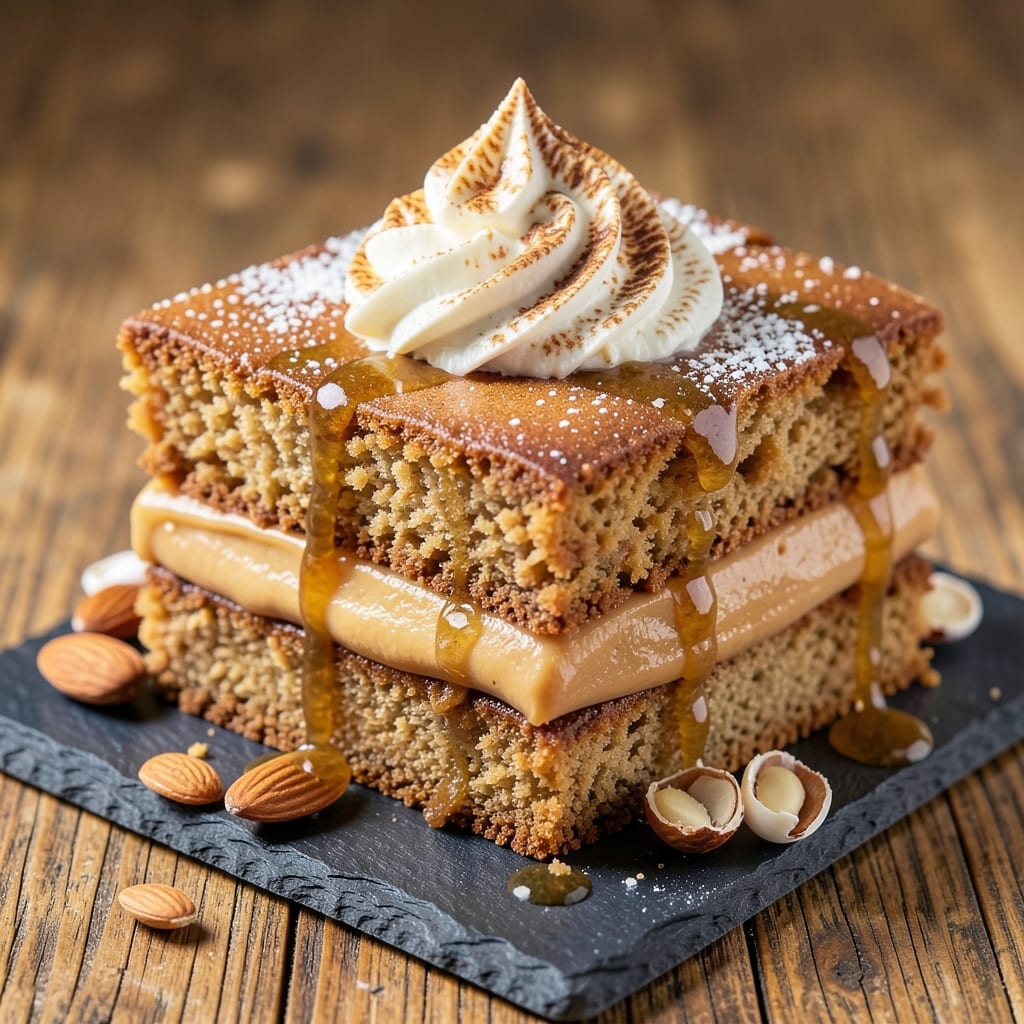
This almond paste pound cake delivers the perfect balance of moist, tender crumb and rich almond flavor in every slice. 💛 The secret lies in layering ingredients precisely—creaming butter and sugar until light, folding in almond paste for depth, and baking at a steady temperature to ensure even golden browning. I perfected this recipe after years of testing, and it never fails to impress with its delicate texture and nutty aroma.
What sets this pound cake apart is its foolproof method that yields a tender crumb without being dense. The almond paste adds natural sweetness while keeping the cake light, and the golden crust forms beautifully without cracking. Unlike traditional pound cakes, this version incorporates almond paste for a sophisticated flavor that pairs perfectly with tea or coffee.
By the time it emerges from the oven, you'll have a cake that's moist yet sturdy enough to slice cleanly. The almond flavor shines through without overpowering, and the texture remains tender for days. Whether you serve it plain, dusted with powdered sugar, or glazed with a simple lemon icing, this cake is a showstopper that feels like a bakery creation.
This recipe is designed for restaurant-quality results at home—no special equipment required. The key is patience in the creaming stage and careful layering of ingredients. Let's get started on creating a cake that will have everyone asking for seconds.
Ingredients for almond paste pound cake
Twelve essential ingredients crafting restaurant-quality almond cake with golden crust and moist crumb.
| Ingredient | Amount | Notes |
|---|---|---|
| Unsalted Butter 🧈 | 1 ½ cups | Room temperature for creaming |
| Granulated Sugar 🍚 | 2 ½ cups | Superfine preferred for even texture |
| Almond Paste 🥜 | 1 ½ cups | High-quality, smooth variety |
| Large Eggs 🥚 | 4 whole | Room temperature for best mixing |
| All-Purpose Flour 🌾 | 2 ½ cups | Sifted for light batter |
| Baking Powder 🍞 | 2 tsp | Diamond Crystal preferred |
| Salt 🧂 | ½ tsp | Fine sea salt preferred |
| Vanilla Extract 🌿 | 2 tsp | Pure Madagascar or bourbon |
| Almond Extract 🥜 | 1 tsp | Pure, not imitation |
| Milk 🥛 | ½ cup | Whole milk for richness |
| Powdered Sugar 🍚 | ½ cup | For dusting, sifted |
| Unsweetened Almond Flour 🥜 | ½ cup | For added texture |
The almond paste makes this cake special. Ghirardelli or Marzipan House brands deliver the smoothest texture and richest flavor—avoid the grainy stuff. For the butter, Plugrá or Land O'Lakes are reliable choices, but any high-fat, unsalted butter works. The almond flour adds depth without overpowering, so Bob's Red Mill is my go-to for consistent quality. Room temperature ingredients are critical—cold butter creates lumps, and cold eggs won't blend properly. I always test the butter by pressing a finger into it; if it leaves a slight indent, it's ready. The vanilla and almond extracts should be pure, not imitation—this is where subtle but important flavor differences show up.
No almond paste? Substitute with 1.5 cups finely ground almonds plus 1 tbsp extra almond extract, but the texture will be slightly denser. Running short on vanilla? Double the almond extract for depth, though the flavor profile shifts. The baking powder must be fresh—if it's more than 6 months old, toss it. For the milk, any dairy milk works, but plant-based milks like oat or almond can make the cake slightly denser. The powdered sugar is purely for dusting; if you prefer a glaze, mix 1 cup powdered sugar with 1 tbsp lemon juice and 1 tsp almond extract. The almond flour can be omitted if needed, but the cake will lose some of its signature texture and nutty flavor.
This cake stays moist for 3-4 days when wrapped tightly in plastic at room temperature. For longer storage, freeze individual slices wrapped in parchment paper for up to 3 months. Reheat slices in a 350°F oven for 5-10 minutes to restore freshness. The golden crust is best enjoyed the day it's baked, but the moist crumb improves with time. I always bake two cakes—one for immediate serving and one for freezing. The powdered sugar dusting keeps the cake fresh longer, so don't skip it if you're storing leftovers.
Why You'll Love This Recipe
- No-Fuss Mixing: I swear by this—just cream butter and sugar, fold in eggs, and stir in the almond paste and flour like you’re making a quick bread. No sifting, no whipping to oblivion, just a gentle hand. The cake still turns out tender and rich without the fuss of layer cakes.
- Rich Without Overpowering: Honestly, the almond paste does the work here. It’s nutty but not cloying, thanks to the butter and sugar balancing it out. That first bite? Warm, buttery, with just enough almond warmth to make it feel special—not like you’re eating dessert for breakfast.
- Weeknight Hero: This cake slices like a dream, so I bake one on Sunday and keep it in the fridge for days. Toast a slice with jam for breakfast, or serve it with tea when friends drop by. No stress, no last-minute scrambling—just reliable, crowd-pleasing slices whenever you need them.
- Budget-Friendly Luxury: Between us, almond paste might sound fancy, but a little goes a long way in this recipe. You’re not using it by the jar—just enough to give that luxurious almond flavor without breaking the bank. Plus, the rest of the ingredients? Basic pantry staples. It’s the kind of treat that feels indulgent but won’t drain your wallet.
Step-by-step instructions for almond paste pound cake
Here's the method for a rich, moist cake with perfect texture and nutty flavor.
👨🍳 Step 1: Cream Butter and Sugars Together
In a stand mixer fitted with the paddle attachment, beat the 1.5 cups unsalted butter and 2.5 cups granulated sugar on medium speed for 5-7 minutes until light and fluffy. You'll see the mixture nearly triple in volume and become pale in color. This creaming process incorporates air, which creates that signature tender crumb.
I like to scrape down the sides of the bowl every 2 minutes to ensure even mixing. The butter should be completely smooth with no graininess remaining. If you're using room-temperature butter, this step should take about 5 minutes—if it takes longer, your butter might need more time to soften.
👨🍳 Step 2: Add Eggs and Extracts
Add the 4 whole large eggs, one at a time, mixing on low speed for 30 seconds after each addition. This gradual addition prevents the eggs from scrambling. Then add the 2 teaspoons vanilla extract and 1 teaspoon almond extract, mixing for another 30 seconds until fully combined.
The mixture will look slightly curdled at first, but don't worry—this is normal. The extracts will blend completely as you incorporate the dry ingredients. I always use pure extracts here; imitation versions lack the depth of flavor that makes this cake special.
👨🍳 Step 3: Incorporate Almond Paste and Flour
Reduce the mixer speed to low and add the 1.5 cups almond paste in batches, mixing just until combined after each addition. Then add the 2.5 cups all-purpose flour, 2 teaspoons baking powder, 0.5 teaspoon salt, and 0.5 cup unsweetened almond flour. Mix on low speed for 1 minute until just combined—you should still see some flour streaks.
Overmixing develops gluten, which can make the cake tough. Stop mixing as soon as the dry ingredients disappear. The batter will be thick but smooth, with a rich almond aroma that's hard to resist.
🍳 Step 4: Add Milk and Prepare the Pan
Pour in the 0.5 cup milk and mix on low speed for 30 seconds until the batter is completely smooth. Grease and flour a 10-inch tube pan thoroughly—this ensures easy release when the cake is done. Line the bottom with parchment paper for extra insurance.
Pour the batter into the prepared pan and smooth the top with a spatula. Tap the pan gently on the counter 3-4 times to remove any air bubbles that might have formed during mixing. This step prevents potential cracks in the cake's surface.
🔥 Step 5: Bake to Golden Perfection
Preheat your oven to 350°F. Bake the cake for 50-60 minutes until a toothpick inserted in the center comes out clean. The cake should be golden brown on top with a slight pull from the sides of the pan.
I like to tent the pan with foil after 30 minutes of baking if the top is browning too quickly. This helps the cake bake evenly without over-browning. When done, let the cake cool in the pan for 15 minutes, then invert it onto a wire rack to cool completely before slicing.
🍽️ Step 6: Dust with Powdered Sugar
Once completely cool, dust the top with 0.5 cup powdered sugar using a fine-mesh sieve. This final step adds that professional touch and balances the rich almond flavor. The cake will keep well at room temperature for 3 days or in the refrigerator for up to 1 week.
Each slice should be moist with a tender crumb and that signature almond flavor throughout. The golden crust gives way to a rich, nutty interior that's perfect for breakfast or dessert.
Pro Tips For Making Almond Paste Pound Cake
- Cream Butter Slowly: I learned this the hard way—dumping cold butter into sugar and eggs at once makes for a dense, greasy cake. Instead, soften your butter first (it should dent when pressed), then beat it with the sugar on medium-high for 3-4 minutes until it’s pale and fluffy. That’s when the magic starts.
- Sift Almond Paste Twice: Almond paste is sneaky—it’s packed with moisture and can clump like glue. Sift it first (yes, even if it looks smooth) to break up any hidden lumps, then sift it again after mixing it with the dry ingredients. Your cake will bake evenly, not with random dense pockets.
- Skip Overmixing Dry Ingredients: Fold in the flour just until combined—maybe 10-12 strokes with a spatula. Overmixing develops gluten, and this cake isn’t about chewiness; it’s about tender layers. Stop when there’s a few streaks of flour left. Trust me, your future self will notice the difference.
- Rotate Pan Midway: Almond paste cakes love even heat, but ovens lie. After 20 minutes, swap the pan from top to bottom rack (or front to back if your oven’s wonky). This evens out browning and ensures the center rises properly. No, it’s not in the recipe—but it’s the thing that matters most.
Troubleshooting great almond paste pound cake
Dense or Dry Cake
If your cake turns out dense or dry, check your butter temperature first—cold butter traps air and creates a heavy texture. Always ensure your 1.5 cups unsalted butter is at room temperature (about 68°F) before creaming. Overmixing the batter also develops gluten, making the cake tough. Mix dry ingredients just until combined—stop as soon as flour disappears. For extra moisture, try adding 1 extra tablespoon of milk or 1 teaspoon almond extract to the batter. 💫
Cracked Top
A cracked top usually means uneven baking or sudden oven temperature changes. To prevent this, ensure your oven is fully preheated to 350°F before baking. Tap the pan gently 3-4 times on the counter after pouring the batter to release air bubbles. If your oven runs hot, tent the pan with foil after 30 minutes to slow browning. For a smoother finish, brush the top with 1 tablespoon milk before baking—this creates a steam barrier that promotes even rising. ✨
Pale or Underbaked Center
An underbaked center often results from an oven that's too cool or a cake pulled too soon. Double-check your oven temperature with an oven thermometer—many home ovens run 25-50°F cooler than set. Bake until a toothpick inserted in the center comes out clean, even if it means extending beyond 60 minutes. If your cake is browning too quickly on top, tent it with foil after 30 minutes to allow the center to cook through. For extra insurance, place a baking sheet on the lower rack to reflect heat upward. 🔥
Almond Flavor Too Weak
The almond flavor might be muted if you used low-quality almond paste or extracts. Always opt for high-quality almond paste like Ghirardelli or Marzipan House, and use pure almond extract (not imitation). For a stronger almond taste, add 1 extra teaspoon of almond extract to the batter or sprinkle 1 tablespoon of toasted sliced almonds on top before baking. If your almond paste is grainy, blend it briefly in a food processor for a smoother texture. 🥜
Batter Too Thin or Runny
A runny batter usually means too much liquid was added or the flour wasn't properly measured. Weigh your ingredients if possible—2.5 cups all-purpose flour can vary by 1-2 tablespoons when scooped. If the batter is too thin, mix in 1-2 tablespoons more flour until it reaches a thick, spreadable consistency. For extra stability, chill the batter for 30 minutes before baking to help it hold its shape in the pan. 🌡️
Nutrition facts
Frequently asked questions
Can I use almond butter instead of almond paste in this recipe?
No, almond butter won't work as a direct substitute because it's much oilier and lacks the binding properties of almond paste. The paste provides both moisture and structure, while almond butter would make the cake too dense. If you're out of almond paste, try blending 1.5 cups finely ground almonds with 1 tablespoon almond extract to mimic the texture. The flavor will be similar but slightly less refined.
Why does my pound cake need to cool completely before slicing?
Pound cakes are designed to be sturdy yet tender, and cooling properly is key to achieving that texture. Slicing too soon causes crumbs and uneven cuts. Let the cake cool in the pan for 15 minutes, then invert it onto a wire rack to cool completely (about 2 hours). This allows the internal structure to set while keeping the crumb moist. Patience here makes all the difference!
How do I store leftovers to keep them moist?
Wrap individual slices tightly in plastic wrap or aluminum foil, then place them in an airtight container. Store at room temperature for up to 3 days, or refrigerate for 1 week. For longer storage, freeze slices for up to 3 months. To restore freshness, reheat slices in a 350°F oven for 5-10 minutes or warm in the microwave for 10-15 seconds.
Can I make this cake in a different pan shape?
Yes, but adjust the baking time and temperature. For a 9-inch round pan, bake at 350°F for 40-45 minutes. For a 9x13-inch pan, reduce temperature to 325°F and bake for 45-50 minutes. Always use an oven thermometer to ensure accuracy. The key is to bake until a toothpick comes out clean—never rely solely on time.
What's the best way to enhance the almond flavor?
For a more intense almond taste, add 1 extra teaspoon of almond extract to the batter or sprinkle 1 tablespoon of toasted sliced almonds on top before baking. You can also brush the cooled cake with a simple glaze made from 1 cup powdered sugar, 1 tablespoon lemon juice, and 1 teaspoon almond extract. This adds moisture and amplifies the nutty profile.