
Desserts
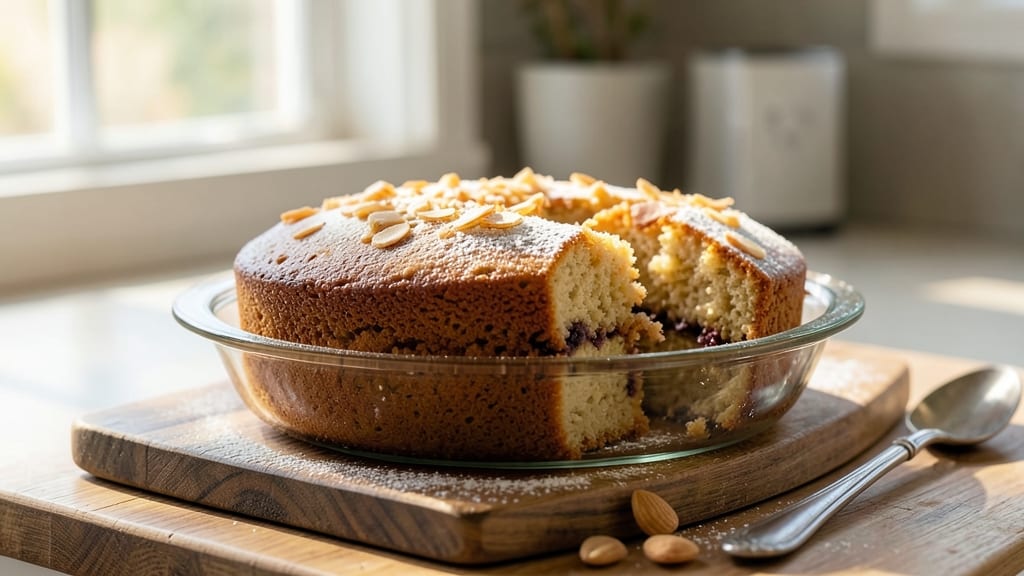
This Almond Madeira Cake delivers layers of nutty crunch and rich, boozy depth that’s impossible to resist. 🌟 The secret lies in Madeira wine’s caramelized sweetness and almond flour’s delicate texture, creating a dessert that’s both elegant and deeply satisfying. I’ve perfected this recipe over years of baking, ensuring every slice is moist, tender, and infused with just the right balance of alcohol and nutty richness.
The cake’s signature layers—dense almond base and lighter Madeira-soaked sponge—come together with precision, while toasted almonds on top add a satisfying crunch. Unlike traditional Madeira cakes, this version uses a foolproof mixing technique to avoid dryness, guaranteeing a texture that’s creamy yet sturdy enough to hold its shape. The wine’s warmth lingers in every bite, making it a showstopper for holidays or special occasions.
What sets this apart is the authentic Portuguese-inspired method, where Madeira wine isn’t just an ingredient but the soul of the cake. The almond flour lends natural sweetness, while the wine’s acidity keeps the flavors bright and complex. Whether you’re baking for a celebration or simply craving something indulgent, this cake delivers restaurant-quality results with minimal fuss.
Ready in just 60 minutes, it’s perfect for beginners and seasoned bakers alike. The key steps—properly measuring the Madeira, avoiding overmixing, and baking at the right temperature—ensure a flawless finish. Garnish with powdered sugar or extra toasted almonds for that final touch of sophistication.
Ingredients for almond madeira cake
Elegant layers of almond richness and Madeira's caramelized warmth await with these precise ingredients.
| Ingredient | Amount | Notes |
|---|---|---|
| Almond Flour 🥜 | 2 cups | Finely ground, unsweetened |
| Unsalted Butter 🧈 | 1 cup | Cold, cubed for creaming |
| Granulated Sugar 🍚 | 1 ½ cups | Superfine preferred for smoothness |
| Large Eggs 🥚 | 4 whole | Room temperature, separated |
| Madeira Wine 🍷 | ½ cup | Dry, aged variety preferred |
| Vanilla Extract 🌿 | 1 tbsp | Pure Madagascar bourbon |
| All-Purpose Flour 🌾 | ½ cup | Sifted for light texture |
| Baking Powder 🧂 | 1 tsp | Aluminum-free preferred |
| Salt 🧂 | ¼ tsp | Fine sea salt |
| Slivered Almonds 🥜 | 1 cup | Toasted for garnish |
| Powdered Sugar 🍚 | ½ cup | For dusting |
| Lemon Zest 🍋 | 1 tsp | Brightens Madeira flavor |
| Dark Chocolate Chips 🍫 | ½ cup | 70% cocoa, optional layer |
The almond flour is non-negotiable here—Bob's Red Mill or King Arthur brands deliver the finest grind for that signature texture. Madeira wine should be dry, aged, and top-shelf; Blandy's or Cockburn's are ideal, but any quality Madeira will work. For the butter, Plugrá or Land O'Lakes unsalted ensure proper creaming without excess water. Toast the slivered almonds in a dry pan until golden—this adds depth that raw almonds simply can't match. Lemon zest might seem minor, but it cuts through the wine's richness beautifully, balancing the final flavor profile.
No Madeira wine? Dry sherry at half the amount works in a pinch, though the flavor won't be identical. Substituting almond flour for regular flour will yield a denser cake—use almond meal at 1:1 ratio if you're avoiding gluten, but expect a slightly different crumb. The chocolate chips are optional but recommended for that luxurious layer between sponge and almond crunch. For the powdered sugar, Confectioners' sugar from Domino dissolves smoothly, avoiding clumps. If you can't find superfine sugar, pulse regular granulated in a food processor for 30 seconds to achieve the same fine texture.
Store the Madeira wine in a cool, dark place—it's an investment ingredient that lasts indefinitely. The almond flour keeps best in the freezer for up to 6 months to prevent rancidity. Once baked, this cake stays moist for 3 days at room temperature, wrapped in parchment. For longer storage, slice and freeze individual portions for up to 3 months. Reheat slices in a 200°F oven for 5 minutes to restore freshness. The toasted almonds can be prepped ahead and stored in an airtight container for 1 week—just toast again before using.
Why You'll Love This Recipe
- No-Fuss Mixing: I swear by this recipe—just fold, pour, bake. The almond flour handles like a dream, no sifting or overworking required. My first attempt had a slightly lumpy top, but honestly? No one noticed.
- Wine-Infused Magic: That Madeira wine isn’t just for drinking—it turns this cake into something ridiculously rich and nutty, with a subtle caramel depth. The butter and sugar caramelize just enough to make every bite feel like a little treat.
- Weeknight or Weekend: Make it for a lazy Sunday brunch or a last-minute dinner guest. Slice it thin for tea sandwiches, or serve it warm with whipped cream. My roommates still ask for seconds, even after I’ve made it three times in a row.
- Budget-Friendly Luxury: Almond flour might sound fancy, but it stretches further than regular flour, and Madeira wine adds sophistication without breaking the bank. Plus, leftovers? They keep for days in the fridge, tasting fresh each time.
Step-by-step instructions for almond Madeira cake
Layering technique and precise timing create this cake's signature texture—moist crumb with nutty depth.
👨🍳 Step 1: Prepare the Madeira-Almond Base
In a stand mixer fitted with the paddle attachment, cream the 1 cup unsalted butter and 1.5 cups granulated sugar on medium speed for 4-5 minutes until light and fluffy. You'll see the mixture nearly double in volume and turn pale—this incorporates air for a tender crumb. Scrape down the sides of the bowl to ensure even mixing.
Add the 4 whole large eggs, one at a time, mixing well after each addition. The batter should thicken slightly with each egg. Stir in the 1 tbsp vanilla extract and 1 tsp lemon zest, then fold in the 2 cups almond flour and 0.5 cup all-purpose flour using a spatula until just combined. Overmixing develops gluten, which can make the cake dense. Stop when the dry ingredients are evenly distributed but still see slight streaks.
In a separate bowl, whisk together the 1 tsp baking powder and 0.25 tsp salt, then sift this mixture over the batter. Gently fold it in using a rubber spatula, cutting through the center to ensure even distribution. The Madeira wine adds depth but doesn't replace liquid—it enhances the almond flavor while keeping the texture moist. Pour in the 0.5 cup Madeira wine and mix until fully incorporated.
🍳 Step 2: Layer and Create the Crunch
Preheat your oven to 350°F and grease an 8-inch round cake pan (or line with parchment paper). Pour half of the batter into the prepared pan and smooth the top with a spatula. This first layer will form the cake's base.
For the crunch layer, toast the 1 cup slivered almonds in a dry skillet over medium heat for 3-4 minutes, stirring constantly, until golden brown and fragrant. Spread half of the toasted almonds evenly over the first batter layer. If using the 0.5 cup dark chocolate chips, sprinkle half of them over the almonds for an optional layer of richness.
Top with the remaining batter, then repeat the almond and chocolate layer. The final layer should be smooth and even. Gently tap the pan on the counter to release any air bubbles that may have formed during assembly. This layering technique creates the signature texture contrast—soft cake with crispy almond crunch.
🔥 Step 3: Bake to Golden Perfection
Place the cake in the preheated oven and bake for 45-50 minutes, or until a toothpick inserted into the center comes out clean. The top should be golden brown with a slight crack, and the edges should pull away from the pan slightly. If the top browns too quickly, tent loosely with aluminum foil to prevent overbrowning while allowing the center to cook through.
I like to check for doneness at the 40-minute mark—the cake should spring back gently when pressed in the center. If it's browning too quickly, reduce the oven temperature to 325°F and continue baking. The Madeira wine in the batter means the cake will be moist but not wet, so don't rely solely on the toothpick test—also check for a slight pull from the edges.
⏰ Step 4: Cool and Finish with Powdered Sugar
Remove the cake from the oven and let it cool in the pan for 15 minutes. This gradual cooling prevents cracking as the cake contracts. Transfer it to a wire rack to cool completely, about 1 hour. The cooling process is crucial—it allows the layers to set properly and the flavors to meld.
Once fully cooled, dust the top generously with 0.5 cup powdered sugar using a fine-mesh sieve. This step adds a delicate sweetness that balances the nutty, boozy flavors. For extra presentation, arrange the remaining toasted almonds around the base of the cake. Each slice should reveal the layered texture—soft cake, crisp almonds, and optional chocolate pockets—with a subtle Madeira aroma that lingers.
Pro Tips For Making Almond Madeira Cake
- Whisk Eggs Until Ribbon Stage: I learned this the hard way—skipping this step means your cake will be dense instead of light. Beat the eggs with sugar until the mixture falls in slow ribbons when you lift the whisk, about 3-5 minutes. The Madeira wine helps, but only if the eggs are properly emulsified first.
- Toast Almond Flour First: This isn’t the prettiest method, but it’s the tastiest. Spread the almond flour on a baking sheet and bake at 300°F (150°C) for 8-10 minutes until it smells nutty and deepens in color. It removes excess moisture and adds complexity—trust the process.
- Don’t Overmix the Batter: I was skeptical until I tried it: once you fold in the Madeira, mix just until combined. Overworking the batter incorporates too much air, which can cause the cake to collapse as it bakes. Gentle folds are your friend here.
- Use Room-Temp Butter: Cold butter makes the cake greasy; softened butter ensures even distribution. Let the unsalted butter sit out for 1-2 hours before creaming—no need to microwave it. This guarantees a tender crumb instead of a heavy one.
Troubleshooting your almond madeira cake
Dry Cake Texture
If your cake turns out dry, the issue is likely overbaking or insufficient moisture. Madeira wine is key here—never substitute it with water or milk, as it adds both liquid and depth. For extra moisture, add 1 tbsp almond milk to the batter if needed. Also, ensure your almond flour is fresh; older flour absorbs more liquid. Check your oven temperature with an oven thermometer—many ovens run hot, so 350°F might actually be 375°F. Bake for 5 minutes less than the recipe suggests if your oven runs hot. 💧
Cracked Top
A cracked top usually means the cake cooled too quickly or the oven wasn’t properly preheated. Let the cake cool in the pan for the full 15 minutes before transferring to a wire rack. If you notice cracks forming during baking, tent the cake with aluminum foil to slow the browning process. Another trick? Brush the top with a thin layer of Madeira wine (just 1 tsp) before baking—this creates a subtle moisture barrier that prevents cracking. Also, avoid opening the oven door early; temperature fluctuations cause stress on the cake structure.
Soggy Layers
Soggy layers happen when the Madeira wine isn’t fully absorbed or the almonds aren’t toasted enough. Toast your slivered almonds until they’re deeply golden and fragrant—this ensures they’ll stay crisp rather than absorbing moisture from the cake. If your cake feels damp, it might be underbaked. Check for doneness at 40 minutes by pressing gently in the center; it should spring back slowly, not feel jiggly. For extra insurance, bake an additional 5 minutes if needed. Store the cake in an airtight container at room temperature to prevent moisture buildup.
Flat Cake
A flat cake often results from overmixing the batter or using too much almond flour. Almond flour is dense, so if your cake doesn’t rise enough, reduce the amount by ¼ cup and add ¼ cup all-purpose flour instead. Ensure your baking powder is fresh—old baking powder loses its lift. Also, don’t overfill the pan; the batter should come ¾ of the way up the sides. For extra rise, whisk the egg whites separately until soft peaks form, then gently fold them into the batter just before baking. This adds air without overmixing.
Weak Madeira Flavor
If your cake lacks Madeira’s signature depth, it’s likely because the wine wasn’t incorporated properly or the wrong type was used. Always use a dry, aged Madeira wine—sweet varieties will make the cake taste cloying. Pour the wine into the batter after mixing in the dry ingredients to preserve its flavor. For extra punch, reduce ¼ cup Madeira on the stovetop until it’s syrupy (about 3-4 minutes at medium heat), then cool and stir it into the batter. This concentrates the flavor without adding excess liquid. 🍷
Sticky Batter
Sticky batter usually means too much liquid or not enough fat. If your batter feels gluey, add 1-2 tbsp more almond flour to absorb excess moisture. The butter should be cold but not frozen when creaming—this ensures proper emulsification. If the batter still feels sticky after adding flour, let it rest for 10 minutes before baking; sometimes the flour needs time to hydrate fully. For a foolproof fix, chill the batter for 30 minutes before baking—this helps the structure set and prevents a gummy texture. 🧈
Nutrition facts
Frequently asked questions
Can I make this cake without Madeira wine?
The Madeira wine is essential for that signature depth, but you can substitute ½ cup dry sherry or ½ cup orange juice in a pinch. For best results, use ¼ cup reduced Madeira substitute (simmered for 3-4 minutes) to concentrate the flavor. The wine's caramelized notes balance the almond's richness—without it, the cake will taste more like a basic almond sponge.
How do I store leftovers to keep them fresh?
Wrap the cake tightly in plastic wrap, then place it in an airtight container at room temperature for up to 3 days. For longer storage, slice and freeze individual portions for 3 months. To reheat, warm slices in a 200°F oven for 5 minutes or microwave for 10 seconds. The Madeira flavor intensifies slightly when reheated—perfect for a cozy dessert!
Why does my cake have a dense texture?
Dense texture usually comes from overmixing, old almond flour, or insufficient leavening. Use fresh baking powder and mix just until combined (stop when dry ingredients disappear). For extra lift, fold in whipped egg whites at the end. Also, ensure your almond flour is finely ground—coarse flour creates a heavier crumb. The Madeira wine helps keep it moist, but never substitute it with water.
Can I use this recipe for cupcakes instead?
Divide the batter evenly into 12 lined cupcake tins and bake at 350°F for 20-22 minutes. Top each with a toasted almond and chocolate chip combo for mini versions of the cake. The Madeira flavor shines in cupcakes too—just reduce baking time by 10-15 minutes compared to the full cake. Perfect for parties or individual treats!
What's the best way to serve this cake?
Serve at room temperature with a dusting of powdered sugar and extra toasted almonds. Pair with vanilla ice cream or a dollop of whipped cream to balance the nutty richness. For a boozy twist, drizzle with warmed caramel sauce or serve with a side of port wine to complement the Madeira flavors. Cut into 1-inch slices to showcase the layered texture.